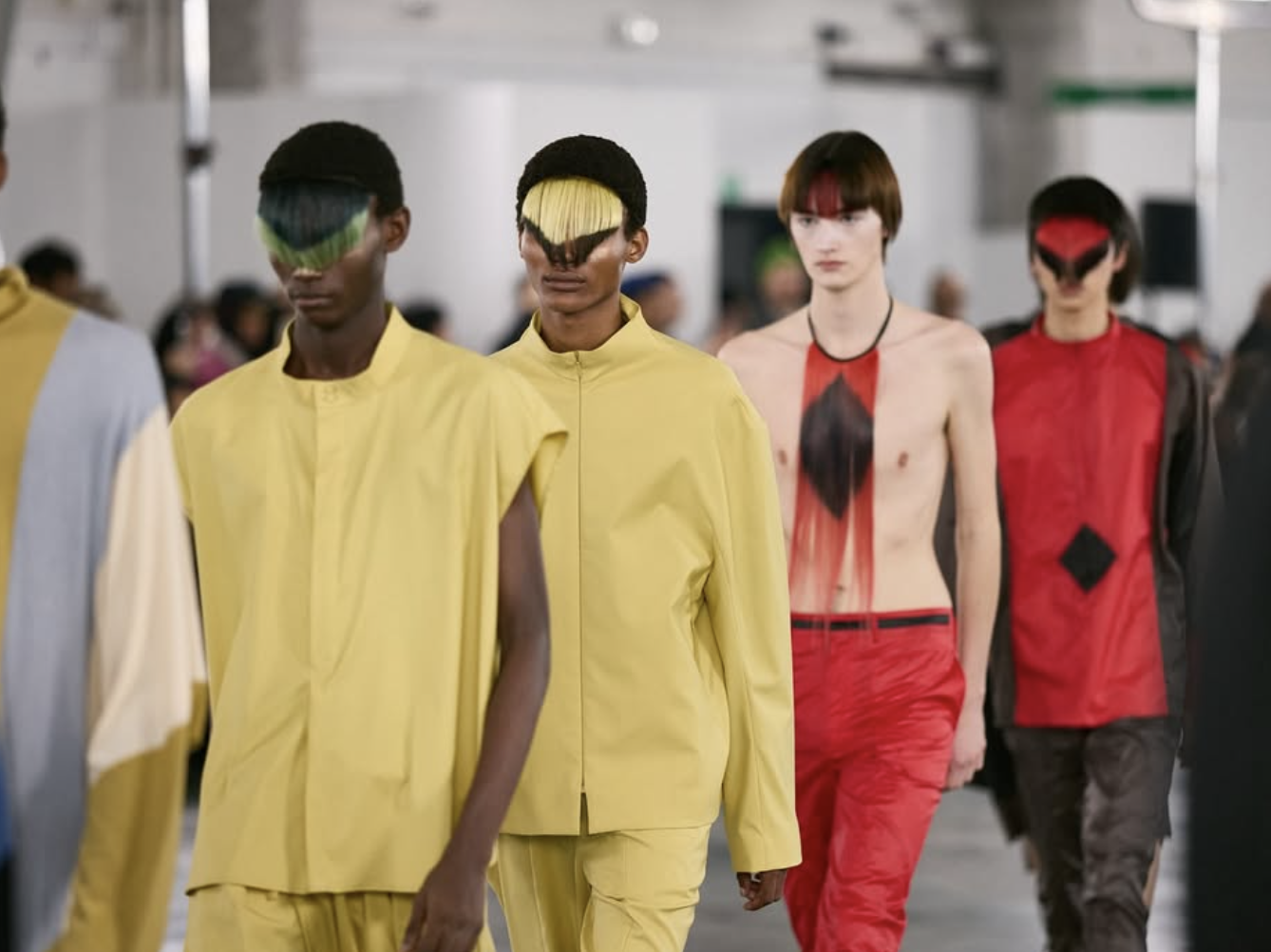
From Soshi Otsuki’s playful reworks at Pitti Uomo to Dries Van Noten’s storytelling through knit and tailoring, this season’s menswear shows balanced precision and looseness. Across the fashion capitals, the brands redefined what modern menswear looks like.

Pitti Uomo can feel like a hectic celebration of menswear, a place where the dialogue between past and future often plays out on the shoulders of emerging designers, which is why Soshi Otsuki’s presentation there mattered. Fresh off his LVMH Prize win, Otsuki brought an energy to Italy that made it feel like one of the most exciting recent editions of Pitti: the excitement came from clothes that reward looking closely. Otsuki’s work has always been defined by nuance, a trailing silhouette with a faint Eighties hum; the Japanese salaryman suit, in his words, recalibrated for a European gaze. A shirting-and-trouser look that reveals itself to be a romper. Otsuki left the crowd quietly stunned.
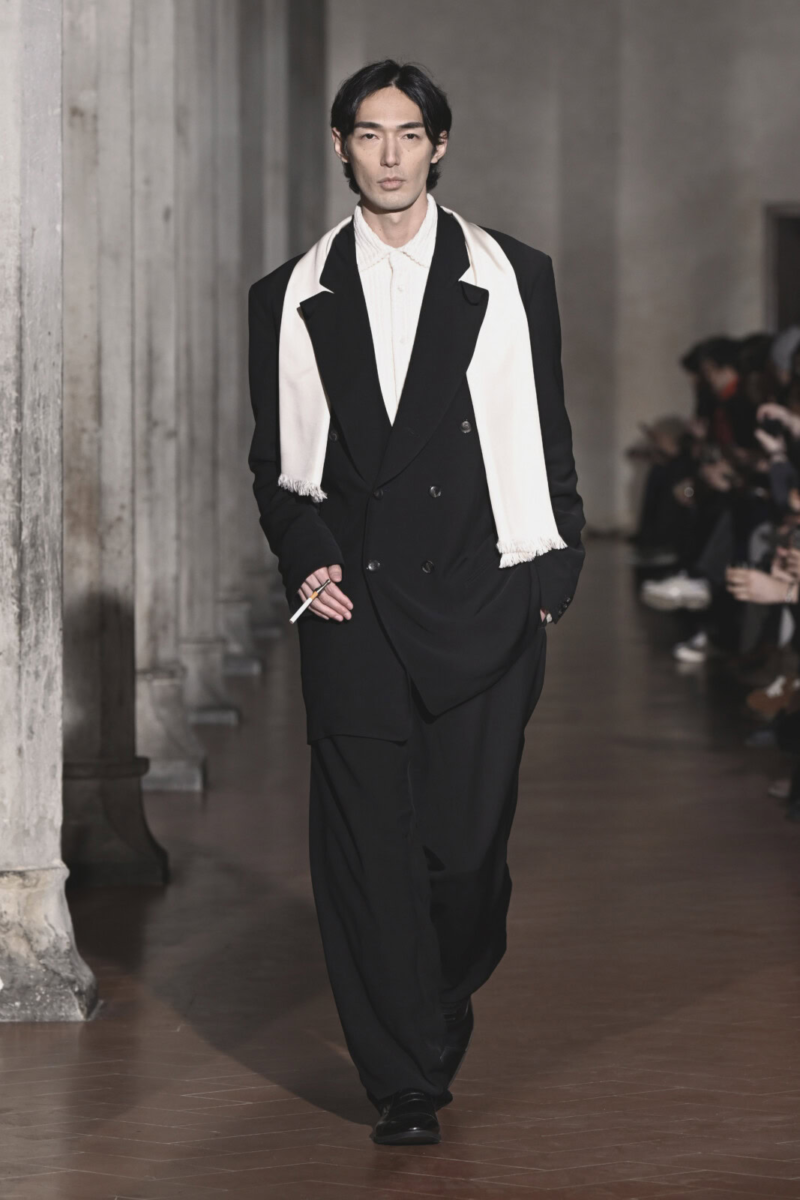
Elsewhere in Italy, Ralph Lauren himself was conspicuously absent, reportedly preparing for a major New York proposal of his womenswear. But in Milan, the clothes did the talking anyway. His vision of how men dress every day, traveling, working, going to the opera, even the gym, felt relaxed, almost loose by Ralph standards. Tailoring softened into baggier silhouettes, with Western notes, Ivy stripes, and polo-club nostalgia drifting through.
Sportswear took a more literal turn at Dsquared2, which delivered a barrage of very Canadian, Winter Olympics ready looks for their combined mens and womens proposal: puffer bravado, skin-tight tech wear and vinyls, exposed midriffs, and national clichés were all present (and heelless ski boots!), though they may have been upstaged by the heated rivalry star Hudson Williams who closed the show.
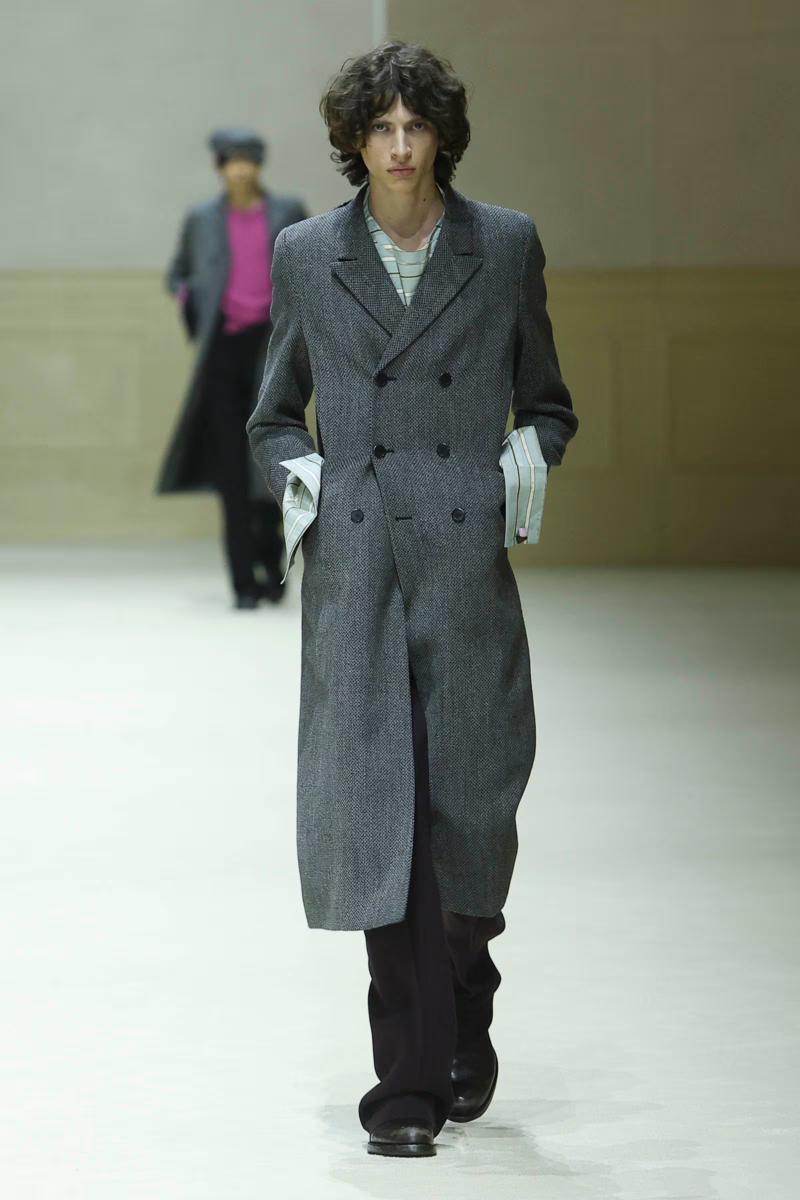
Prada, as usual, acted as a palette cleanser. Raf Simons and Miuccia Prada asked, “What should remain, from the past, and what can you build from what you learn?” backstage, a line that summed up their intent to excavate and re-engineer familiar menswear ideas while probing what relevance they hold now. The answer came in clothes that looked unsettled: oversized collars, stained and elongated cuffs, garments that felt worn into being rather than polished into perfection. Slim, elongated silhouettes threaded through the collection, the tailoring close to the body with slightly flared trousers that stretched the frame, while shirts bore marks as if shaped by use and time in contrast to jewelled cuffs. Visually, the casting reinforced this mood: skinniness was everywhere this season, with clothes cut for a narrow range of bodies, an undertone of exclusion beneath Prada’s intellectual rigour.
At Giorgio Armani, the mood was inevitably reflective. This was the first time the great Italian designer wouldn’t be involved in the collection, since his passing last September. Leo Dell’Orco, head of menswear, wisely resisted the urge to replicate the master. Instead, he pursued lightness and a more personal touch, loosening Armani’s rigor without dismantling it.
Wales Bonner, meanwhile, continued her streak of assured hits, this time via a collection that didn’t need physical spectacle to be consumed, featuring knits, leather and jacquard textures inspired by Indian modernism and modernist architecture. Anticipation is already building for her Hermès debut, which made this collection feel like a calm before another ascent.
That sense of transition carried into Hermès itself. This was Véronique Nichanian’s final show at the house after 38 years, the longest tenure of any Hermès creative director, and she bowed out with her greatest hits. Confident luxury at its most refined, reminded everyone just how uncompromising Hermès is.
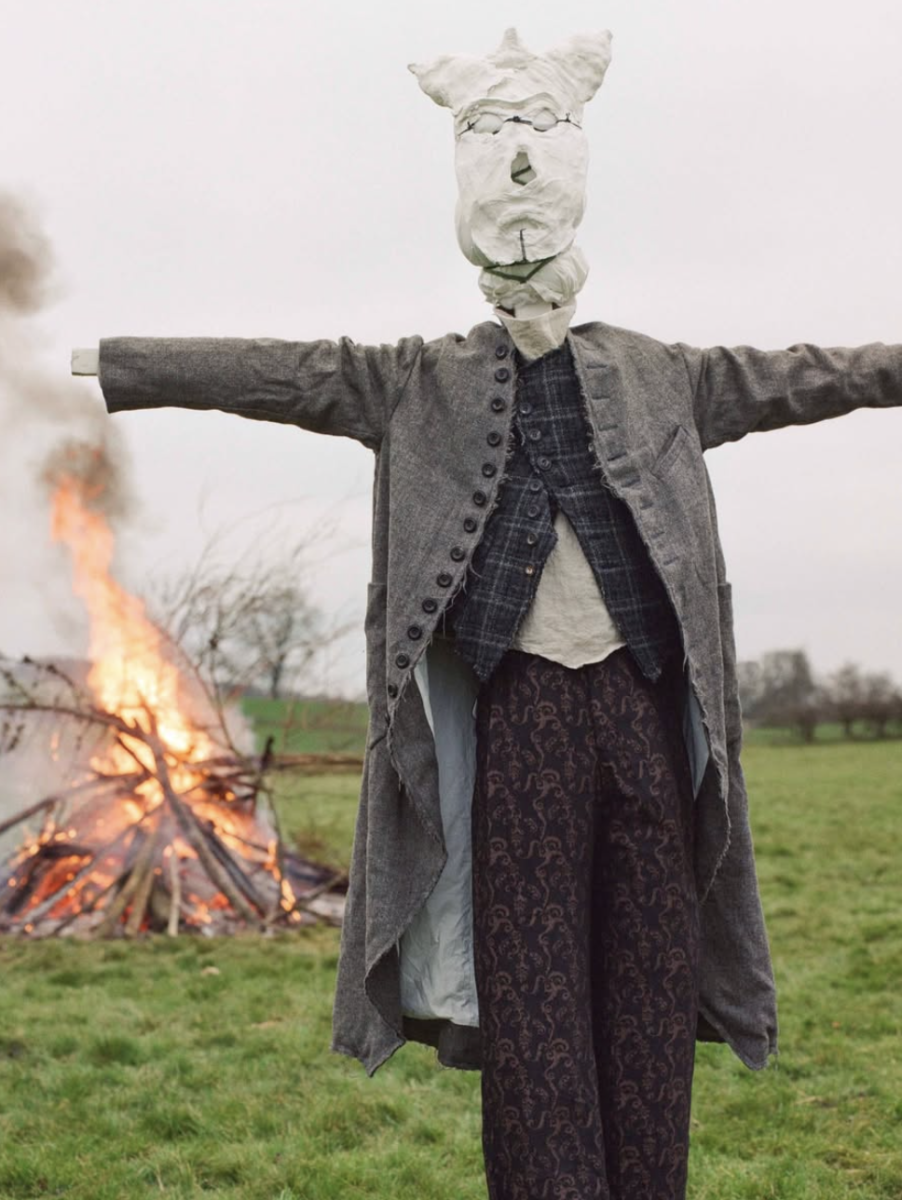
London barely registered on the men’s calendar, but John Alexander Skelton broke through the noise with the city’s only presentation: intimate, eccentric, and deeply felt, it managed to capture press attention amidst the noise of Milan and Paris. The looks were worn by scarecrows, inspired by Celtic culture and folklore, elegant and earthy clothes with frayed hems, tweeds, and button-up jackets that felt as if plucked from a Dickens novel.
By contrast, Paris, predictably, leaned into spectacle, with Louis Vuitton as the showmaster. Rick Owens, one who doesn’t shy away from social commentary, collaborated with recent fashion graduates Sarutanya, Lucas Moretti, and Straytukay, constructed a universe riffing on police uniforms and symbols of power, embedding critique directly into cropped flight jackets, leather‑and‑Kevlar hybrids, utilitarian shirting and floor length masks worn by blank‑eyed models moved through dry ice. American designer Willy Chavarria, meanwhile, created an immersive world, part live-action film, part festival presentation, pulling audiences into his universe where he presented his new collection alongside his ongoing collaboration with Adidas.
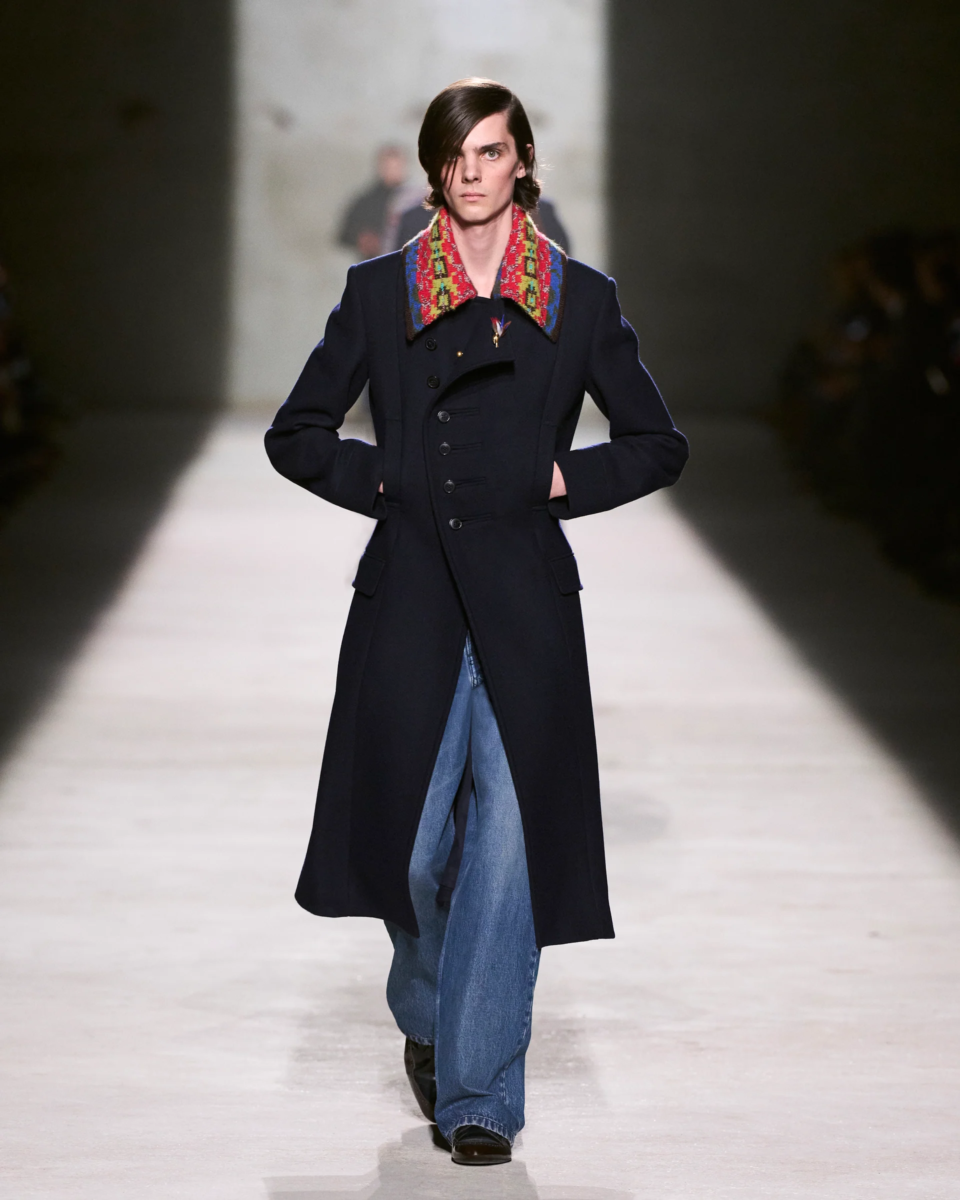
The real delight, though, came from Dries Van Noten. With now four collections under his belt, Julien Kalusner’s menswear felt confident and exact: tailoring that hit just right, colours that resonated, capelets, shrunken knits and reworked cropped sarongs that belted at the waist, but resembled the tails of a shirt, a story inspired by a coming of age, leaving your home for the first time and taking special hand me downs on a new journey. Klausner’s were pieces that trusted the intelligence of the wearer.
To close the official week, Kiko Kostadinov showed a designer fully entering his maturity. Riding the success of a growing business, and the recent opening of his London flagship, his third worldwide, Kostadinov proposed a reset, seemingly simple, but not in construction: no stitching, buttons, or zippers were shown and the result was precise and clean. The collection, as he put it, “is happy being challenging.”
The final word of the men’s season belonged to Saint Laurent. Anthony Vaccarello crashed Couture week and drew inspiration from Giovanni’s Room, the queer literary classic, and translated it into long, lean lines and darker clothes: vinyl coats and leggings, scoop-neck knits, and silhouettes that stretched the body into something both provocative and restrained. Vaccarello danced between the sensual and the conventional and provided, as always, an impeccable wardrobe.
Menswear may be loosening up, but the season suggested the teams behind it are also preparing themselves for what comes next with a clarity and precision that feels quietly commanding.