From Addison Rae’s Louboutins to the share-your-shoe collection trend, we’re back on our toes.
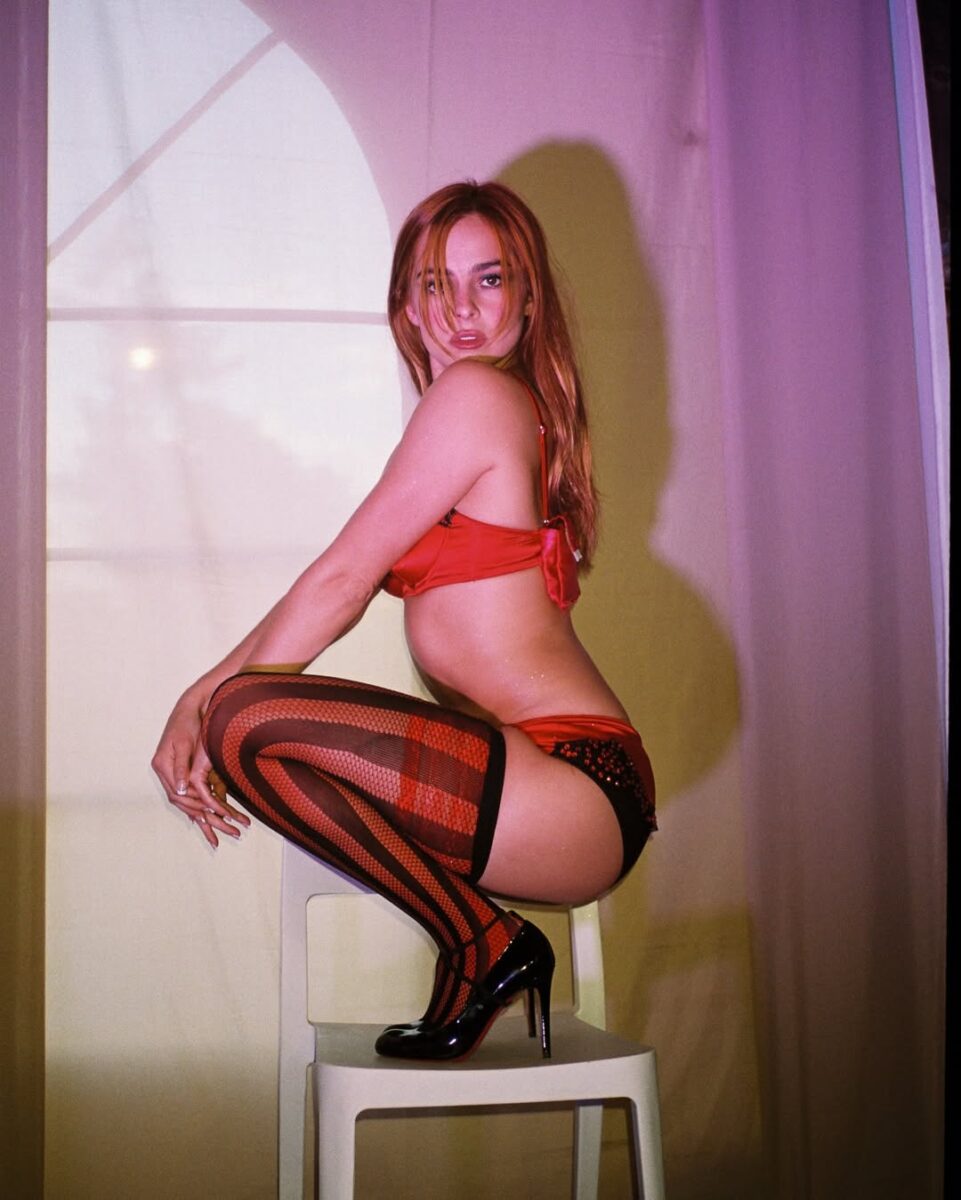
Even in the dim-lit club, she immediately caught my attention. First, the body, swaddled in a gold strapless I AM G.I.A-ified BCBG bandage dress, lilting gently side to side, restricted in movement by its body-contouring silhouette. Inevitably, my eyes travelled South, stopping at her feet. Metatarsals flat on the ground, her heels were balanced at no less than a 60-degree angle in the tallest, pointed-toe stilettos I’d seen on a civilian. Unable to contain myself, I crossed the dance floor. She told me she was 21, and this is how she dressed to go out now.
If you’re noticing an abundance of higher heels right now, you’re not alone. Addison Rae ushered in the peep toe’s return. ADÉLA alleged the more scratched the Louboutin, the better. Trendsetters paired casualwear or athleisure with platforms. Everywhere you look, or listen, is the discovery of Jessica Simpson heels as the most comfortable. Online, women are showcasing their heel collections en masse — the higher and less practical, the more engaging. One video from London Fashion Week featuring a model’s stationary feet in clear PVC mules that has racked up almost 24 million views.
“I notice people in the fashion world really embracing them again,” says Harper’s Bazaar senior fashion editor Camille Freestone. “I think that coincides with some of the ‘It’ shoes of the moment: pumps from Matthieu Blazy’s Chanel or Dario Vitale’s short-lived Versace stint. This follows the Barbie Manolo Blahnik mules and the Bottega green ones that seemed to be everywhere a few years ago.”
For most of Gen Z and their antecedents, this is a brand new business. Coming of age mid-pandemic meant a comfort correction — welcoming an onslaught of Birkenstock Bostons and UGGs to malls and classrooms. Offices, once soundtracked by symphony of clacking, went silent as ballet flats exited the elevator. As the ‘clean girl’ — effortless and pared down — became the girl, date night or dance floor uniform included a moto boot or, most radically, kitten heels.
“In high school, sky-high heels held a certain allure — this was in the early 2010s when they were considered the ultimate fashion shoe,” Camille says. “I would wear them to school dances or even to get dressed up and go to dinner with friends. Between growing up and heels falling out of fashion, I really distanced myself from them outside of designated formal occasions.”
The reclamation of flats felt like an expression of both new-age feminism and free will. Collectively, we figured commuting in tennis-shoes, only to slip on slingbacks at the function felt unnecessary, if not totally arbitrary. Podiatrists and industry analysts claimed nearly 41 percent of women reduced high heel usage due to foot strain and back pain concerns, while classic stiletto sales reportedly dropped 12 percent in 2025.
“The past few years, I barely wore them [though] I don’t know if it’s entirely about comfort per se — sometimes my low-profile flats barely put any material between my foot and the cement — I just don’t want to feel silly teetering around.”
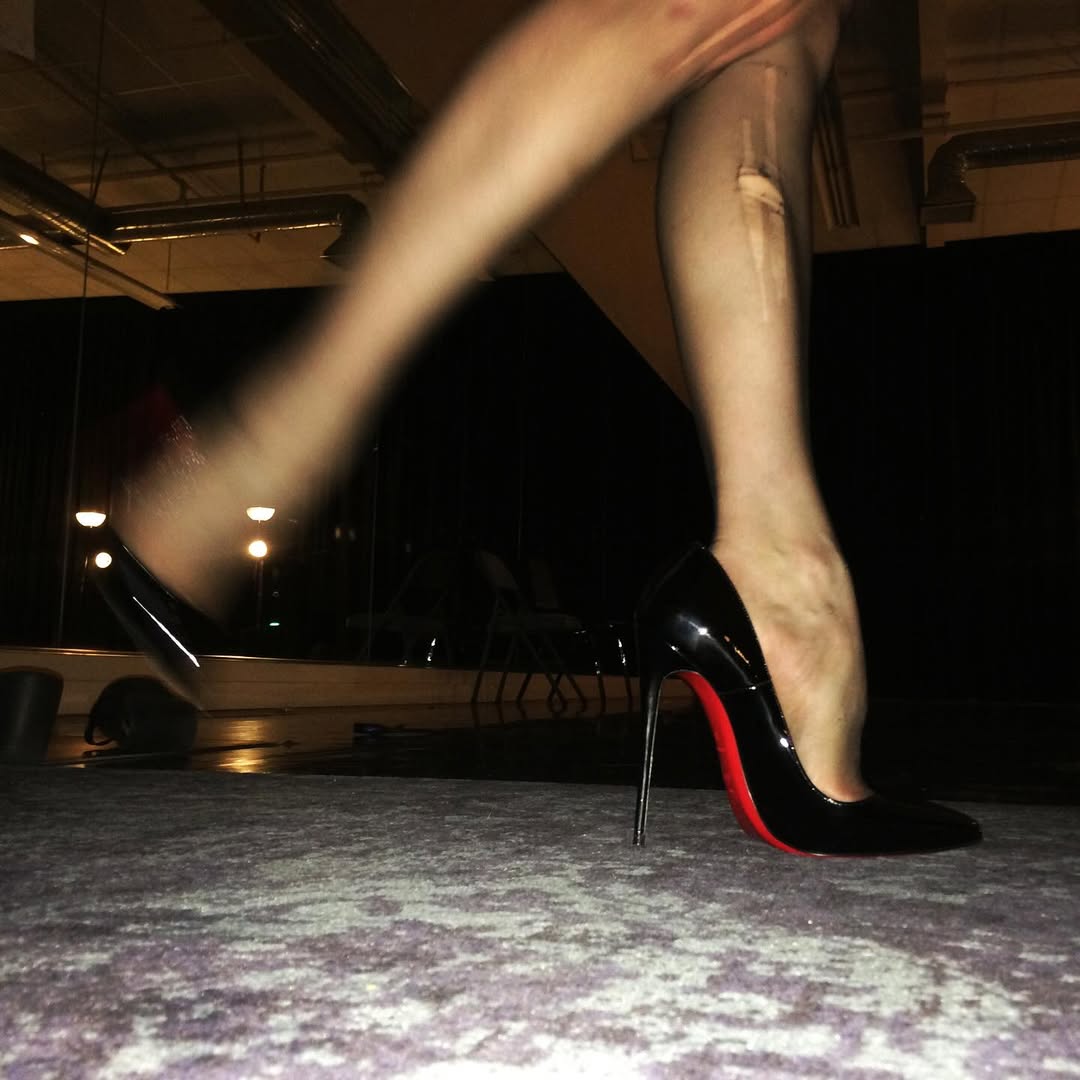
This perceived “silliness” has more to do with media messaging, than the individual’s ability to balance. In the 2006 comedy She’s the Man, Amanda Bynes’ character Viola memorably argues, “Heels are a male invention designed to make women’s butts look smaller… and to make it harder for them to run away.” For decades, the association between heels and the male gaze has mostly been inextricable — even as Carrie Bradshaw was blowing $400 dollars on Manolo Blahnik’s that Big would never notice (until the movie, of course).
But now, the tides are turning — at least for vintage. Last year, Vestiaire Collective reported searches for vintage heels have gone up 37 per cent year on year. The Global High Heels Footwear market was valued at 38 million USD in 2024 and is projected to reach 48 million by 2034, exhibiting a 3.3 percent annual growth rate.
“We’ve certainly seen growing demand [for heels] across the business,” says Britt Netta founder, Brittany Netta. “What has shifted is that consumers are now more receptive to dressing up again and embracing pieces that feel glamorous and intentional.”
“Post-Covid, we’ve seen a strong return to more dressed-up and feminine footwear, in contrast to the dominance of sneakers that characterized the previous years,” echoes Romain Broussard, the Artistic Director Image, Collaborations & Global Communication of Parisian footwear brand Carel. “Both Millennials and Gen Z consumers are looking for styles that feel more elegant and sophisticated. Shoes have become statement pieces — we’ve noticed a growing appetite for more playful designs, with bold colors, materials, and details that bring a sense of fun to fashion.”
Camille Freestone anticipates “subtly wacky” styles from rising brands to take over in the coming months (specifically keep an eye out for the sculptural offerings of Jude, Christen, and Herbert Levine, she says).
“From a fashion angle, it could simply be a yearning for more provocative clothing and accessories…we’re bored of the quiet luxury-CBK core and could use something a bit more exciting,” she explains. “Is it a coincidence that as our current administration strips back women’s rights as trad-wife fashion and high heels start trending? There’s no way.”
Certainly it’s difficult to ignore a possible correlation between the comeback of hyperfeminine dressing — body-con dresses, corsets, and high heels — and the conservative swell across the Western hemisphere. For brands like Britt Netta, this represents renewed creative freedom.
“That broader return to femininity in fashion has naturally aligned with what we were already creating, it’s really allowed customers to connect more deeply with our pieces. Rather than chasing a specific trend, we focus on creating styles that feel authentic to the brand.”
Embracing traditional femininity isn’t easy, but there is power in meeting that challenge. Heels might be exhausting and painful, but choosing to wear them anyway is just another way women prove their resilience. When presidential candidate Nikki Haley was swiped at during a debate for her “three-inch” heels, she rebutted with the fact her shoes are not only five-inches tall, but she can “run in em.” The Washington Post ran a story on the repartée titled “Backwards and in heels,” in reference to the famous Ann Richards quote about dancers Ginger Rogers and Fred Astaire ([Ginger] did everything that Fred Astaire did. She just did it backwards and in high heels.”
“I wear heels, and they’re not for a fashion statement,” Nikki Haley told her opposition. “They’re for ammunition.”
And today, they are ammunition. Growing an extra four or six inches feels like quiet protest in the face of rampant GLP-1 use with the expectation of professional or romantic success. In addition to advocating for heels’ capacity to aesthetically elevate an outfit, Designer Isaac Mizrahi once claimed heels are auratically transformative: “You put high heels on and you change.” Dame Vivienne Westwood, a designer whose subversion of feminine silhouettes has often been described as ‘punk,’ sent Naomi Campbell toppling in nine-inch stilettos…with a five-inch platform.
“Shoes must have very high heels and platforms to put women’s beauty on a pedestal,” she said.
“Over the past two seasons, we’ve seen growing demand for higher heels,” says Romain Brussaud. “We have responded by offering several of our iconic styles in different heel heights. For example, our signature Kina has been reimagined with an 8.5 cm heel, creating a sexier silhouette.”
Fundamentally, heels are style over substance, but maybe being substantive is a little overrated. In an era of extreme optimization — less drinking, more protein — embracing pretty over practicality certainly feels a little “silly,” but it’s also somewhat freeing. Of course, heels may not be for everyone, or everyday, but pushing your sartorial limits might reap benefits beyond sophistication. Maybe it’s standing, ten toes down, to tell the world who’s boss.
And, when the time comes to kick them off, that’s okay too.
Words – Beatrice Hazlehurst


