Few designers make clothes quite like Ellen Poppy Hill. Ahead of her next runway show, she discusses her latest project, 10 Dresses, 10 Hangers, rebuilding garments from the ground up and the freedom found in working with what already exists.

I was so heartbroken to miss Ellen Poppy Hill‘s second show, titled No Point in Making Myself Comfortable, at Longfield Hall just about a year ago, that I considered rushing my way back to the city just to attend. The affair drew much of London’s creative community, who gathered inside the south London hall to witness Hill’s theatrical cast of characters inhabit the space like performers, with each look crafted from second hand and surplus materials.
I did, however, watch her graduate collection at Central Saint Martins about two years earlier, which generated a similar level of fascination for its DIY approach. When she announced she was selling a few pieces, my friends and I naturally made our way to her studio; I left with a reworked grey wool peacoat finished with black velvet ribbon – one that, every time it sees the light of day, earns me compliments and, even more often, curious questions about where it’s from. Since then, Lily Rose-Depp, Caroline Polachek and NEW YORK have all worn her garments.
Originally from West Norwood in South London and a Central Saint Martins BA and MA graduate, Ellen Poppy Hill’s work, which spans repairing, reworking, and remaking existing garments, is built on the idea of giving new life to existing pieces and discarded materials. As a teenager working in a charity shop, instead of seeing garments as finished objects, she learnt to see them as materials waiting to be dismantled and rebuilt.
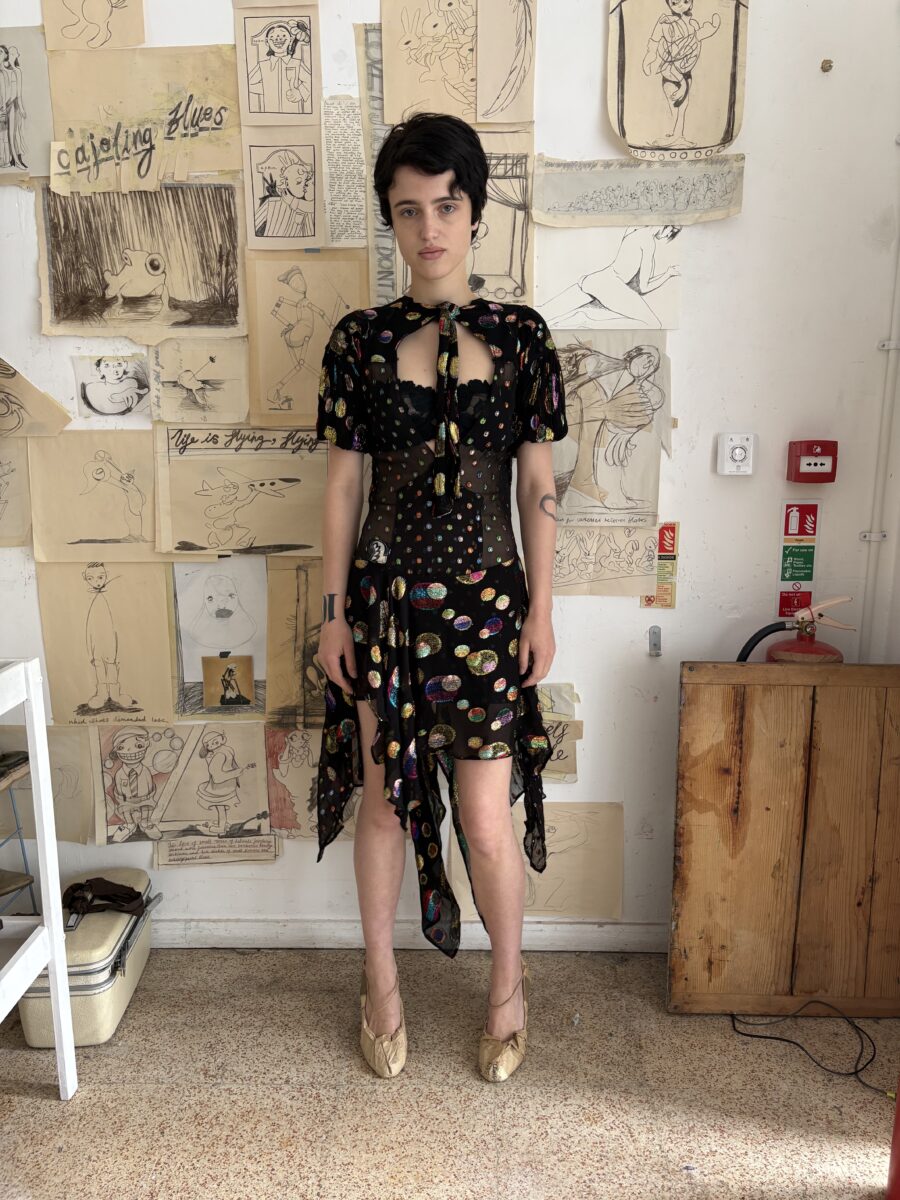
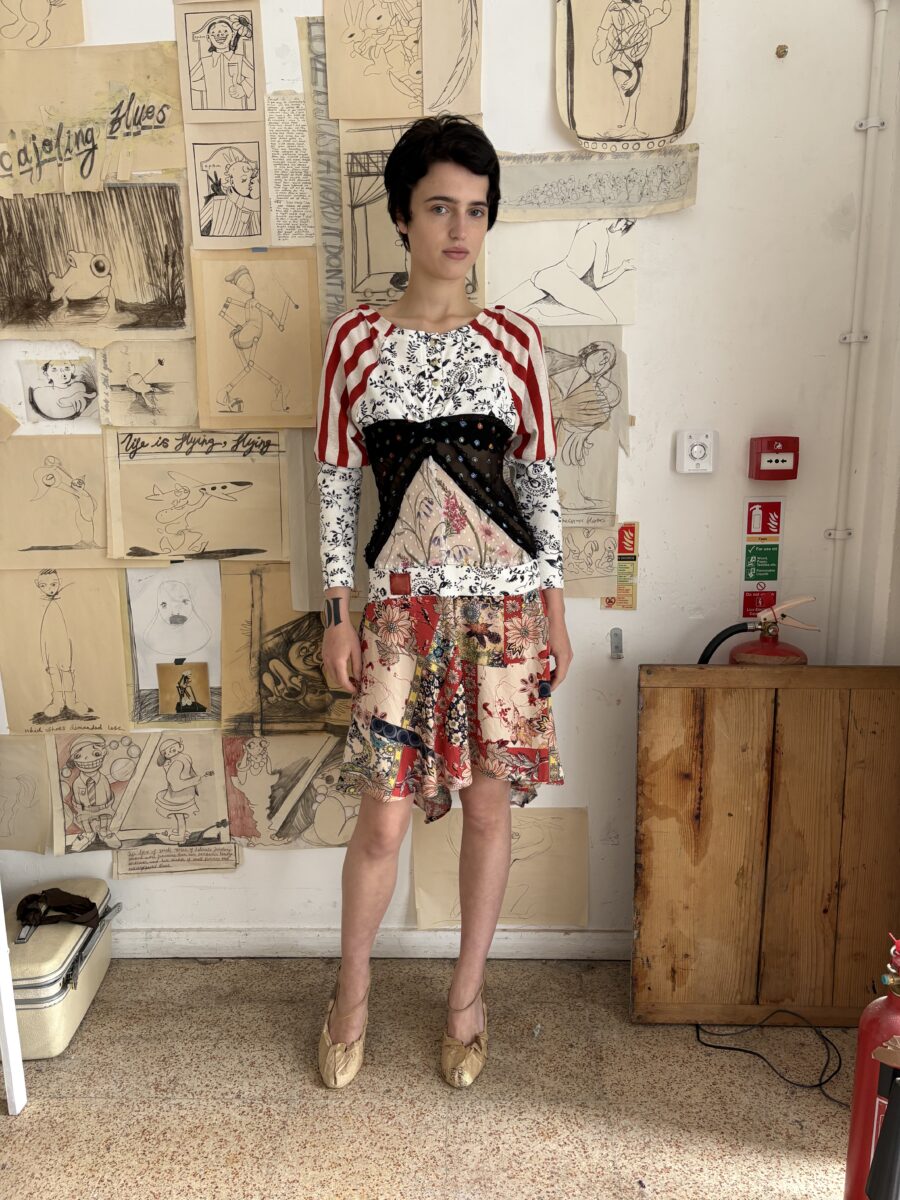
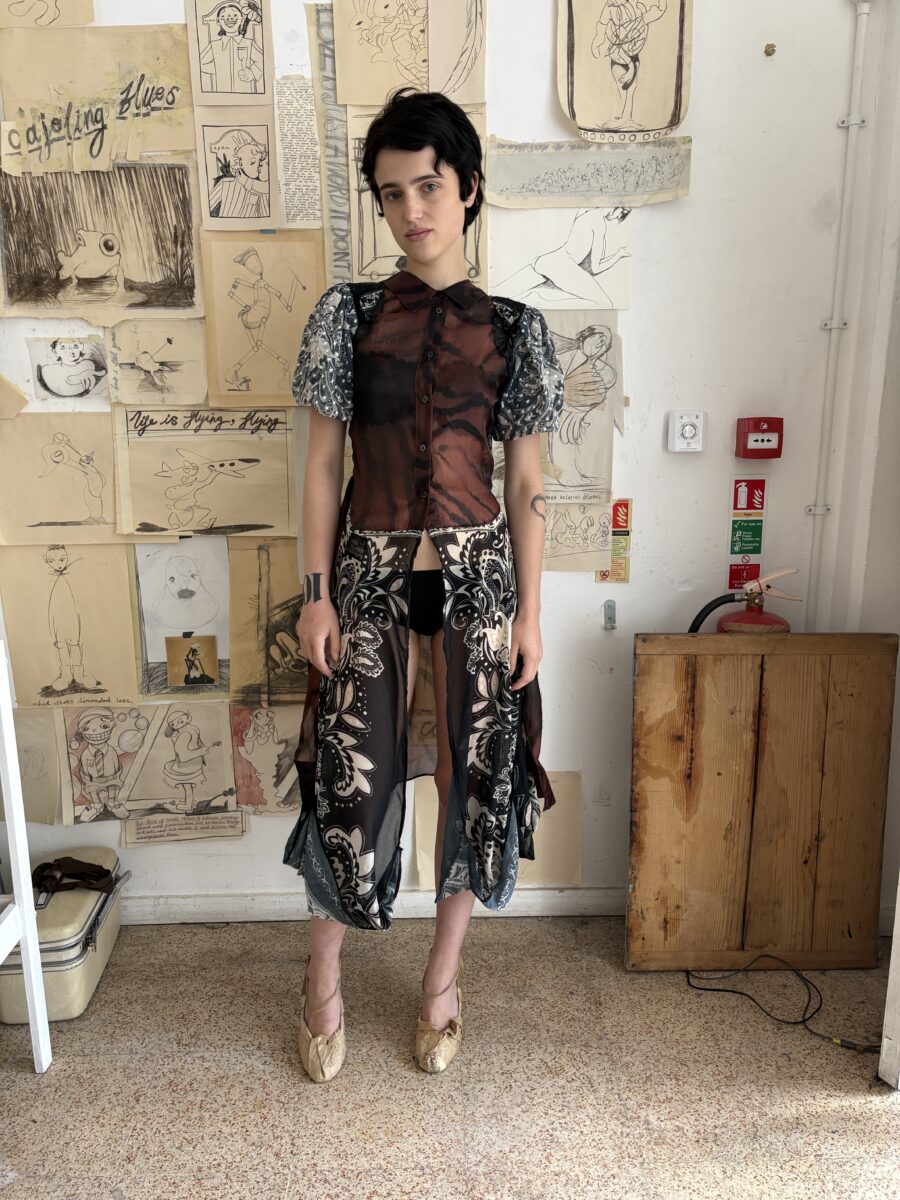
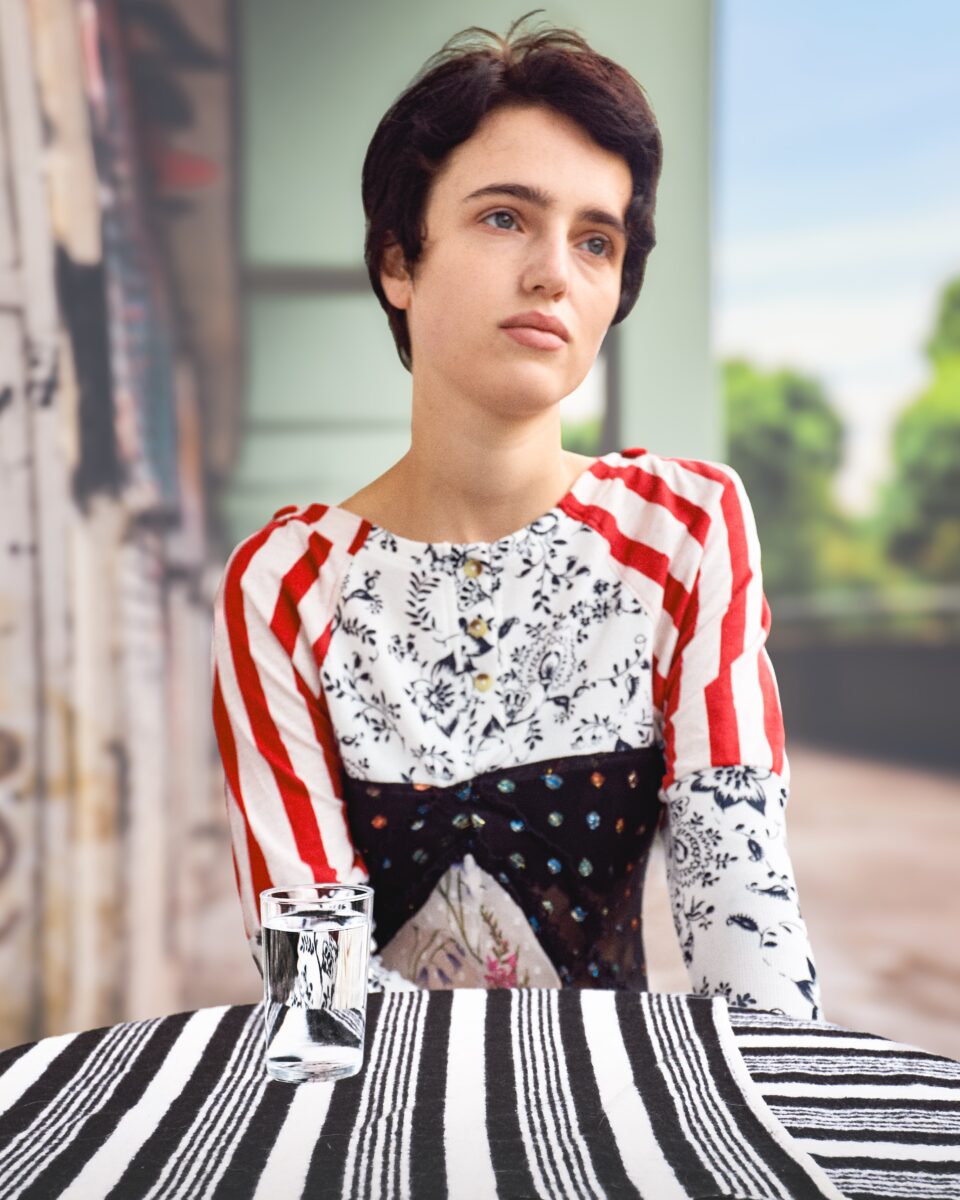
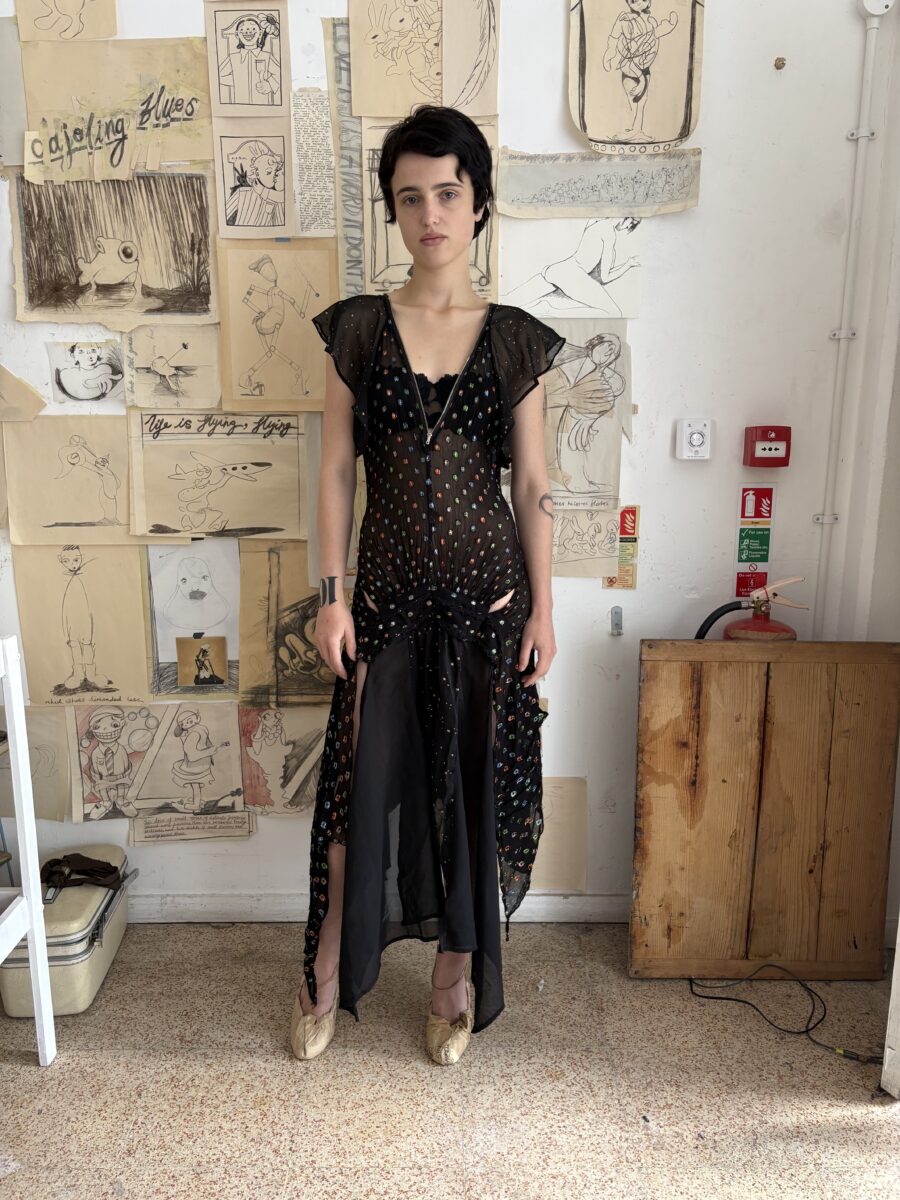
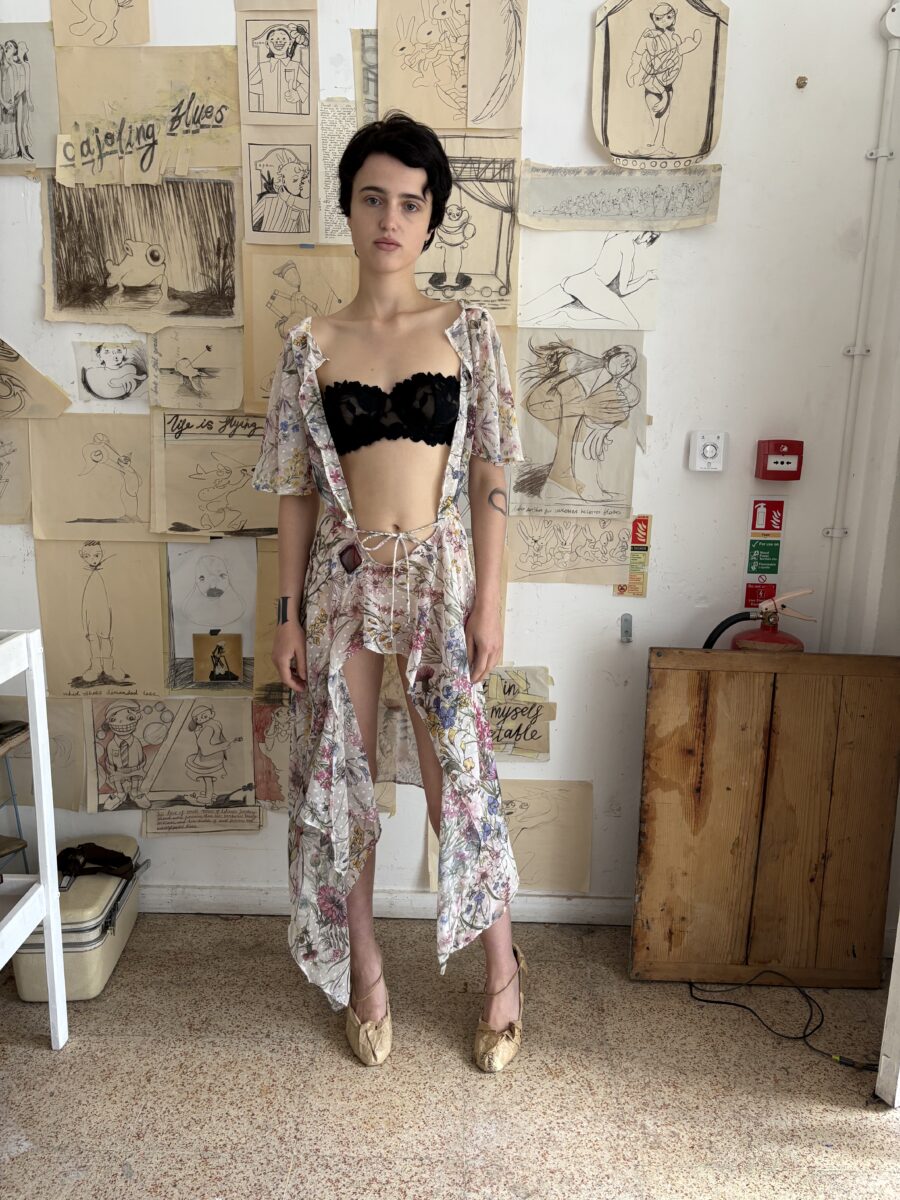
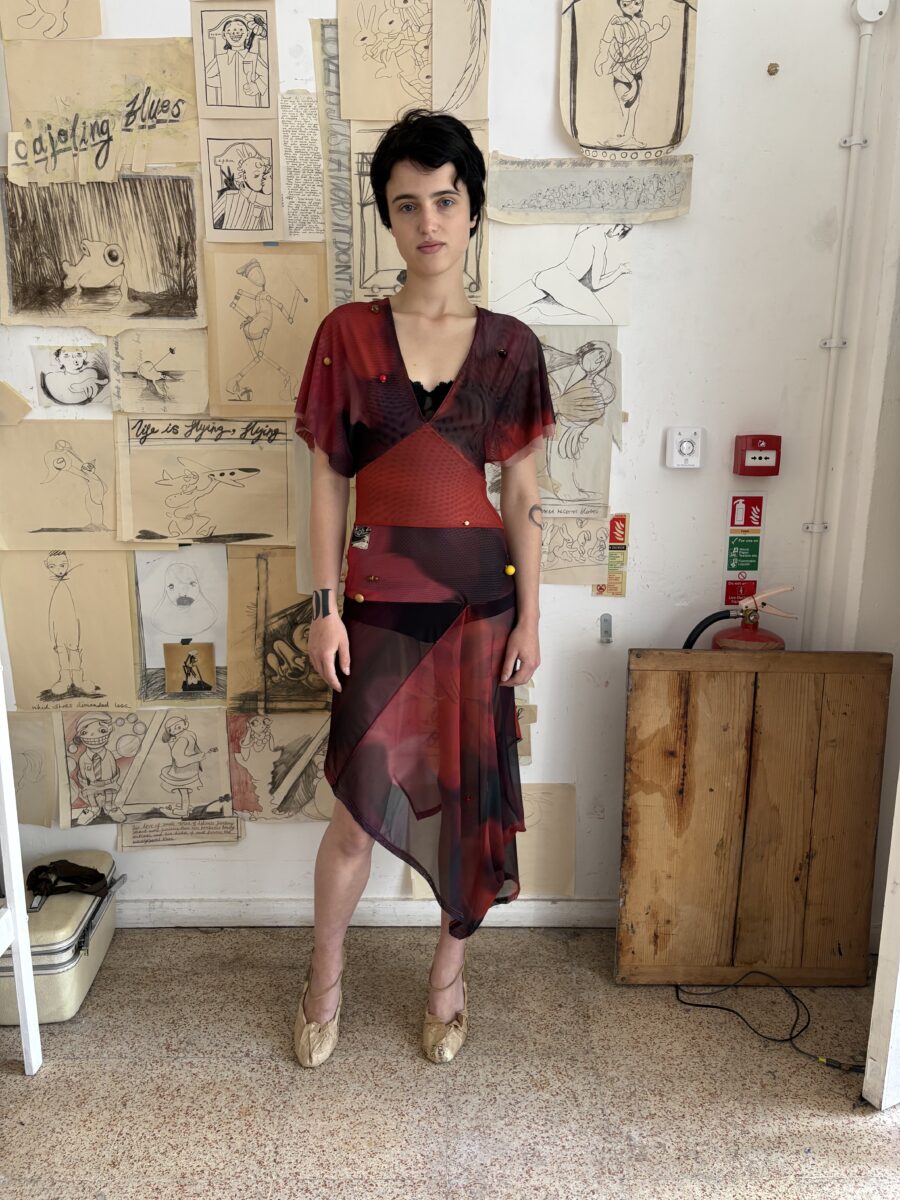
For her latest offering, aptly titled 10 Dresses, 10 Hangers, Hill set herself a challenge: to make one piece a day over two weeks, pushing herself back into the intuitive rhythm of making that she felt she’d been missing while working across smaller projects. Created from unworn factory-return garments sourced from her local market, the dresses were draped directly onto the mannequin and shaped instinctively.
Presented at Bolding, the not-for-profit contemporary art and performance gallery inside Alfies Antique Market, the project focuses on what she enjoys most: making and remaking clothes — and the result is 10 one-of-one dresses with asymmetrical drapes, deconstructed shapes and panels of mesh and jersey that are so singular they would stand out in any rail.
Ahead of her next show, due this September, Ellen Poppy Hill sits down with Wonderland to reflect on 10 Dresses, 10 Hangers, her practice, and the joy she finds in making, remaking and trusting her instincts.
Where did the idea to make 10 dresses and 10 hangers for this project come from?
I was feeling a little itchy from not making a nice full body of work the way I usually do and I was in between many small projects that weren’t heavily clothing based. I had slightly forgotten how I usually get going and the stimulating feeling that I get from making one thing a day. So I just set myself a challenge for two weeks with the shop at the end of it. So I stormed down to the market, got some garments and didn’t stop until the shop. Sometimes it’s healthy to be your own worst enemy and I’m a true nerd at heart so this format really works for me….
How is approaching a project like this different from designing a full collection?
I abandoned all elements that I associate with a show, so took away the storyline, characters and players then just focussed on the fabrics and had a muse in mind. I get a lot of pleasure from draping straight on to a mannequin and letting the fabric lead the way, cutting immediately as I go and relying on my knowledge of construction to make decisions. It’s my way of recalibrating.
How do you hope people interact with the dresses and hangers in a setting like Alfie’s/bolding compared to a traditional retail or gallery environment?
I don’t think my work is expected to be seen in a traditional retail environment at all. Not to say that eventually it could be, but I also do see myself an artist alongside my clothing practice, so it’s important for me to stay aligned amongst spaces that also celebrate art and give me an opportunity to be seen as that too. It’s also an intimate space and I like to meet the people who come and try on the clothes and see the clothes, I love to meet strangers, make new friends and be surprised so it’s a pleasure to have that proximity to my customers.
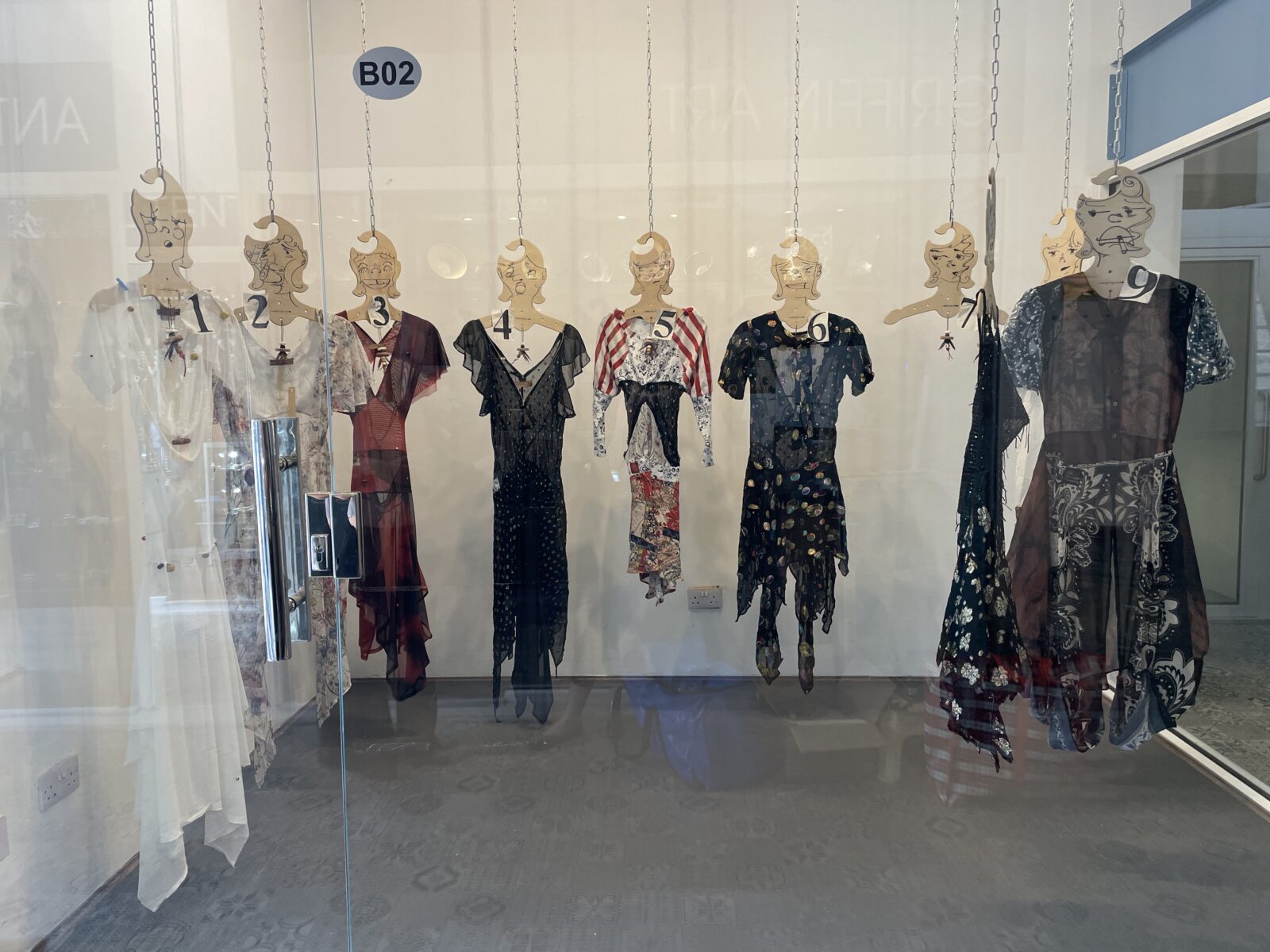
What’s the importance of spaces like this in London?
That it is important. Esme who runs Bolding and organises the spaces in Alfie’s is such a wonderful person and it’s a no brainer for her to let people uses these spaces that are empty to allow artists to have their work seen and re-contextualised outside the spaces that are expected of them to be in. It’s important for artists to challenge themselves to think about how their work can exist in different kinds of four walls of all shapes and sizes and Alfie’s is very extravagant and exciting place to be.
What keeps you in this city despite how difficult it can be for independent designers?
I think it’s hard for designers period, no matter where they are. In order to move forward with the times and accept what London has turned in to, the community and culture has to also accept that it’s different and have alternative standards and expectations of creatives to produce the way that they did 30/40 years ago. It’s impossible to be an independent designer in the shadow of the ones from the 80s, whose rent cost 50 quid, materials between 20p and a pound from Portobello market and host fashion shows in queer clubs in Soho for free and it was all shot on VHS. That isn’t London anymore so you have to carve your own way. Once you’ve accepted that the standards are impossibly high it’s actually easier. I work within the confines that I can and I do my best at it. The rest is a blessing and it’s up to the Fashion industry if they want to accept that (and the likelihood is that they don’t). So yeah, I’m very free and I won’t suffer for my art because I love it too much.
What are the references or thinking behind the dresses? What was your process like when designing them?
I went to the market by my studio and got unworn garments that were factory returns and chose them solely by their materials and patterns. I wanted them to be party dresses, something off-pies to my usual and definitely funky. To be a style that I imagined seeing on a rail alongside other dresses and would surprise myself to pick up and try it on. I then dismantled all the garments to allow myself to see them solely as fabrics and just start with my favourite parts. I let the fabric guide me very intuitively then drape and cut them on the mannequin. I have a real thing for bias dresses and skirts, there’s so much surprise and sauciness with how a fabric can curve around the body, so I often start there, cutting around the curves of the body and instinctively working with what I know to feel nice when something fits or touches the body in certain ways. The dresses often end up being something I’d like to wear, draped in a couple of hours and sewn together after I’m happy with it. I’d been watching an anthology of Tinto Brass movies *X rated warning* lol, that week, so I also think the ladies in those movies left an impression on me, the dresses are seductive, youthful and elegant and result in some nudity and exposing, very Brass coded. So no drawing or anything, just straight to it!
Drawing seems to be a fundamental part of your practice. Can you talk about the relationship between your drawings and the finished garments?
This kind of making with the 10 dresses had no drawing involved at all, as it was a process to help me recalibrate and get back into my pleasure of making quickly and intuitively. The drawing and world building part of my practice is much more associated with my presentations, where the points I’m trying to make have much more depth and intention. Very much more of a part of my identity as a whole rather than the practice of purely making.
You often repurpose garments and materials to make new ones. What first drew you to repair as a visual and conceptual language?
It’s funny when people ask me about repurposing as a visual or conceptual thing and forget the origin of repurposing and that it comes from necessity. It started for me as a necessity because I couldn’t afford nice rolls of fabric and worked in a charity shop as a young teen, so I had a close relationship to second hand clothing. If you can’t buy what you desire then you find a way to make it yourself. That’s just how I’ve always done it. Some people find freedom in a big expansive roll of fabric and find a way to make it come alive into something three dimensional. But I enjoy the opposite, how can I have multiple different puzzles and make them merge into one. I still went to fashion school, did internships, learnt the rules and how to pattern cut, my joy in making comes from learning all of these things and then implementing those rules into my own way of constructing a language for myself.
What conversations do you hope your work contributes to within fashion today?
What is it…? Fashion I mean. I just hope it makes people think about who they are, who they want to be and if they’re being true to themselves? What is the essence of something and why does it make us feel good? I only want to be a part of something that has soul, heart, love and good intentions (without sounding corny) that’s where all the best stuff comes from. Who are we idolising? What does beauty look like? And do we like it for the right reasons? I hope that my work gets people to think about these things and is used as an example for something honest and with heart.
Who’s Ellen Poppy Hill’s client/ who do you design for?
Clothes speak before we do in many situations, so I want whoever wears my clothes to understand the clothes, see things also from my perspective as well as their own and want to be a part of something bigger and better for which they stand for whole heartedly. So it’s no surprise I hope that it often ends up being artists, creative, intelligent bodies and queer people.
What does success look like to you as an independent designer? What’s next for Ellen Poppy?
As long as I’m keeping my independence and integrity I’m happy. Not to say I don’t want to grow, just that I’m more of a tortoise than a hare. The next show is in September and then we will be making more moves to grow a more sustainable business outside of my own two hands, which is very exciting. I’m always looking forward and buzzing to see what possibilities are next.


