After four years on the road and a cataclysmic heartbreak, Remi Wolf called up some of her oldest friends to sing through the grief. By the time she had finished her third studio album, the 30-year-old Grammy nominee for Best New Artist was nearly six months sober.
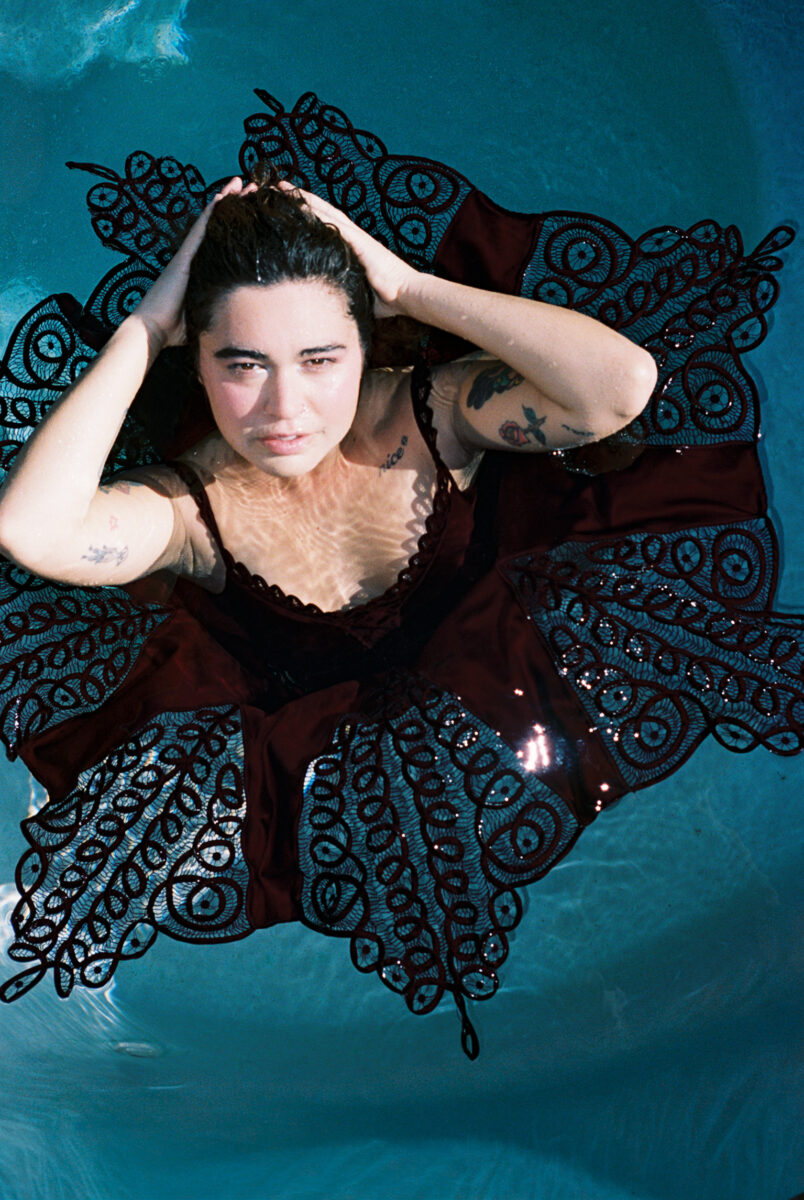
Remi Wolf is telling me about getting her stargazing app out during her free time in Joshua Tree. I’m about to ask how John Mayer ended up on “Moon So High” when her dog starts barking. “Come here, bro. Come here, buddy.” I guess John Mayer can wait a second.
It’s around eight in the evening in London and I’m tucked into a corner of a bookshop café on a video call with Wolf, who’s in California. I’m silently praying the café stays open long enough for me to get through my questions. She’s talking about how she was “dying to get” Mud, her third album, which came out on 9th October via Island Records, out into the wild, and she’s already thinking about the next one.
Wolf – recently announced as a GRAMMY Award 2027 nominee for Best New Artist – wrote about 130 songs for this new record. Eleven made it. The first song she knew she was onto something with was “I Won’t Cry”. Wolf was in a rented house by Big Bear Lake in California with a group of friends, cooking dinner every night. At one point, she was laying sheets of lasagna and the microphone was being passed over the kitchen counter. The relationship she’d been in for two and a half years had just ended. She found herself singing about how unwanted she’d felt.
“We were just high on the magic of writing that song,” she recalls. It took about three hours to write and record the whole thing. Of the 15 or so songs they got through on that trip, it’s the only one she remembers making the album. When I ask why she’s especially proud of it, she’s quite happy to tell me it’s the first song she’s written that she reckons she’d have envied if it were somebody else’s. She’s also still a bit shocked she sang about what she was going through in front of other people. “It is a bit of a devastating song,” Wolf shrugs. And she isn’t sure she can explain exactly what makes a song that good. “It just has to hit you in the gut and hit you in the heart.”
And it does. The drums sit gently beneath her voice before she lets it go in the chorus. I don’t know if anyone’s ever said “I won’t cry” and gone on to have a particularly dry-eyed evening.
Wolf had spent roughly four years touring by then. She’d watched Olivia Rodrigo and Paramore put on arena shows from close quarters and come away thinking, “I want to do that. And I’m totally capable of doing this too.” Ask her about Hayley Williams and she’s just as keen to tell you how nice she is. But for Mud, the first thing she wanted was a room full of people she knew very well. “I was just in such a vulnerable place. Like, I didn’t want to deal with any bullshit.”
Wolf calls Mud a breakup record and a Saturn return record. When she started it, she says, she was drinking, exhausted and in a relationship that was very much on the rocks. She’d spent so much time on the road that even after the first leg of the Big Ideas tour ended, her immediate instinct was to get going on another album. She knew fairly early on that she wanted it to be more stripped back than her previous records, but she was still working out how that would sound.
She and Jared Solomon, aka Solomonophonic (the producer behind Lola Young’s ‘Messy’, with credits for SZA and BROCKHAMPTON), have known each other since they were both 15. Jack DeMeo (guitarist and songwriter, with credits for Robbie Williams and Eliza McLamb) has been around for more than a decade. Gigi Grombacher (songwriter for the likes of Ava Max and aespa) is her sister-in-law, and Jamie McLaughlin (the Nashville songwriter who co-wrote Morgan Wallen’s ‘I’m the Problem’), a newer friend from sessions in Nashville, came along to Big Bear too.
Wolf gives them the affectionate collective name of her “family band”. When they went to New York to record at Electric Lady, they stayed down the street together and said their goodnights and I love you’s in the lift. “I need to be surrounded by people that I love,” she remembers thinking. “And luckily, they’re all very talented people on top of it.”
At Electric Lady, Wolf realised she’d quite like to have been a drummer. She wishes she’d started playing as a kid, though she’s perfectly happy to keep banging away at it now. She started writing at the kit, singing whatever came to mind as she played. With all four limbs doing something, “I was just able to say shit without even thinking about it.” They’d listen back and find a song in there. That’s how she wrote “Covered In Mud”.
And it was “Covered In Mud” in particular that helped the band work out what the record could sound like. Wolf adopts a country-esque twang, as she turns down someone she fancies and goes home to find comfort and escapism from the telly and cheap red wine. Then the guitars come crashing in as she breaks down.
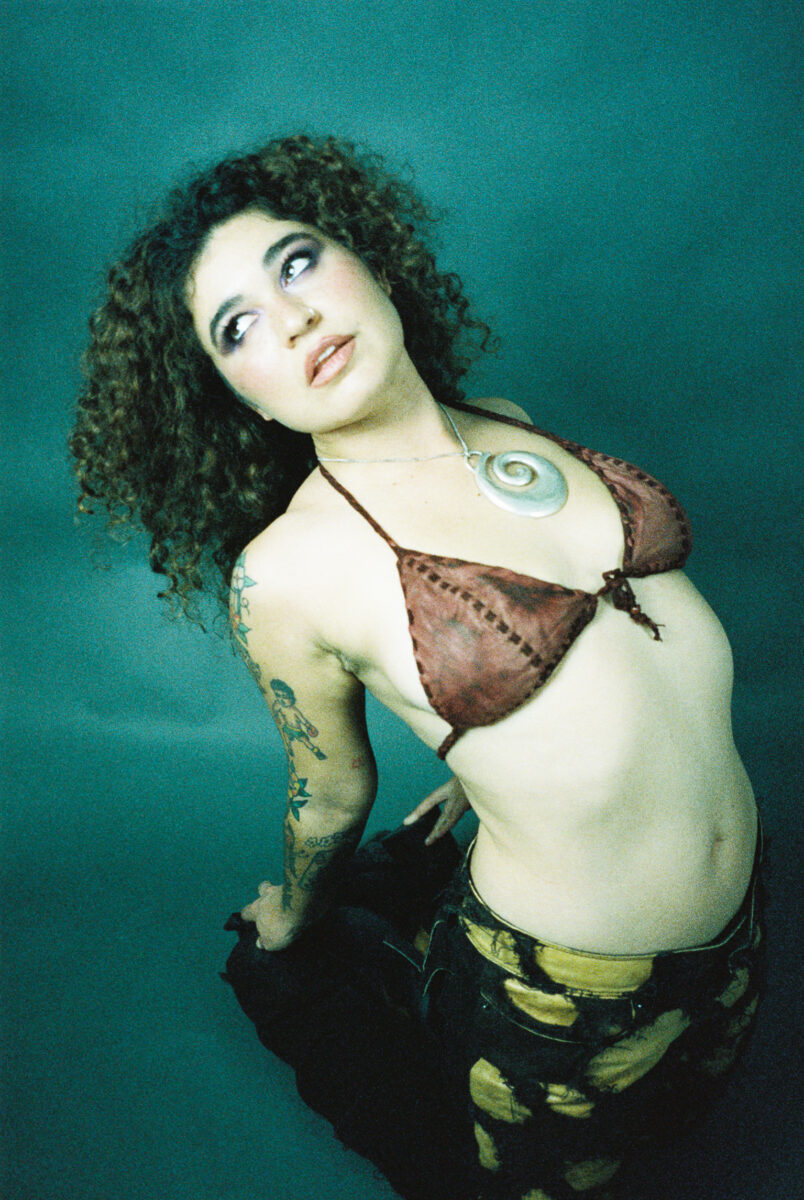
There’s less synth and more live playing here than on either of her previous records, 2021’s Juno or 2024’s Big Ideas. When it came to choosing the tracklist for Mud, Wolf tells me about the campfire test. She wanted to be able to pick up an acoustic guitar and play any of them around a campfire. However much they’d done to the recording, the melody and the words had to have the strength to carry it alone. She also wanted the songs to feel “emotionally raw and vulnerable and kind of dirty”.
The finished recordings had another test. Wolf and the band called it “SpongeBob Ascendance”, after the meme where SpongeBob floats into a watercolour sky armed with only an iPod and earphones. Wolf describes it as the feeling of “being suspended in space”. They found it on “Bottle”, which they wrote only a few days after “Covered In Mud”. You can hear it as soon as the chorus lifts. It’s the sort of soft-rock hook you could happily sing along to in the car, only it might take you a couple of choruses to realise she’s bargaining with herself over whether to get out of bed and reach for a drink.
Actually getting that feeling she wanted from the record could be quite a pain indeed. “Burn Me Blue” began as two songs, one of which Wolf had spent months being angry at. The band had tried producing “Head Rush” five times before she accepted that the chorus just wasn’t working. Then she was in the shower, singing through the verses, and went straight into the chorus of something she’d written in Nashville. She brought it to the band the next day. “Finally we fucking cracked the code.”
“Twiggy”, meanwhile, had been sitting around for three years. Wolf and DeMeo started it in the very room she’s speaking to me from. Every so often one of them would bring it up again – the bridge was what they couldn’t finish. On the record it’s the bit where she keeps finding one more thing to reel off about this man, as if she’s recalling every reason to be angry at him in quite the stream of consciousness. In Joshua Tree, when everyone was a bit sick of starting new songs, Wolf suggested they give it another go. She, DeMeo and McLaughlin got the bridge down and finished the track that day. They barely touched it afterwards.
By the time they got to Joshua Tree, Wolf was nearly six months sober and about to turn 30. Most of the album was done. I ask if that last stretch felt any different, but she can’t point to a single great revelation for me. All she knows is that they were having fun and how quickly the songs came. “They’re either really shitty or really good if they’re written fast,” she says. At night she’d get her star app out and they’d stand around looking up at the constellations around them. “We were just vibing out, bro.”
One of those last songs was “Moon So High”. Wolf finished writing it and could already hear Mayer singing on it, so she sent him a DM. A week later she was in the studio with him and Pino Palladino. She got to sit next to someone she’d been listening to since she was young and watch him play guitar for about three hours. “I was like, this is fucking awesome.” They also got to compare notes about their careers, which Wolf says she rarely gets to do with another artist. “It was great to have a little artist therapy.”
She’s taking the family band on tour across the States. It’s unusual, she points out, to play a record every night with the people who wrote it with you, unless you’re in a band to start with. She sounds especially excited to see how proud everyone will be to play these songs together.
Before we go, I ask Wolf where we’d end up if we could walk into Mud. Somewhere swampy. Trees, dirt, frogs, a bit of rain. She adds that there’d probably be animals in the distance “ripping each other’s heads off”.
And there I was thinking it sounded quite nice.
Listen to Mud…
Photography – Natalie Hewitt
Words – Hannah Breen
Styling – Lucy-Isobel Bonner
Makeup – Francie Tomalonis


