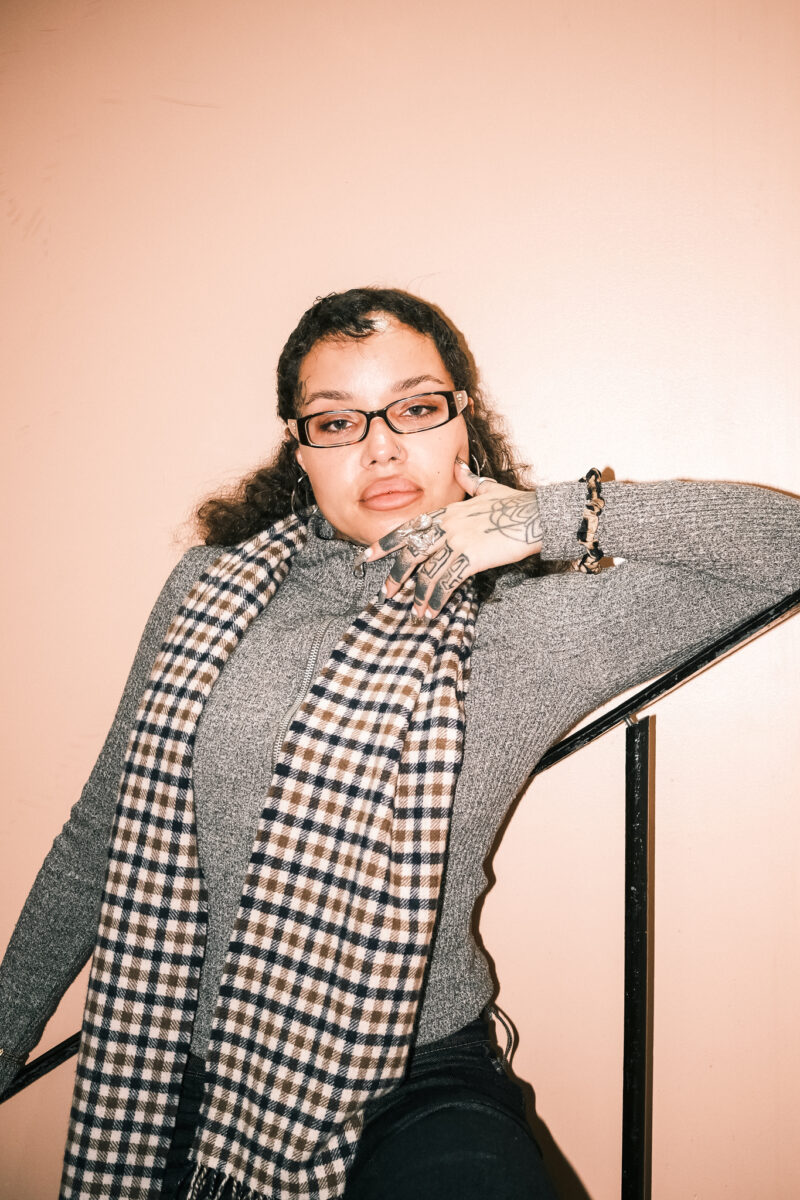
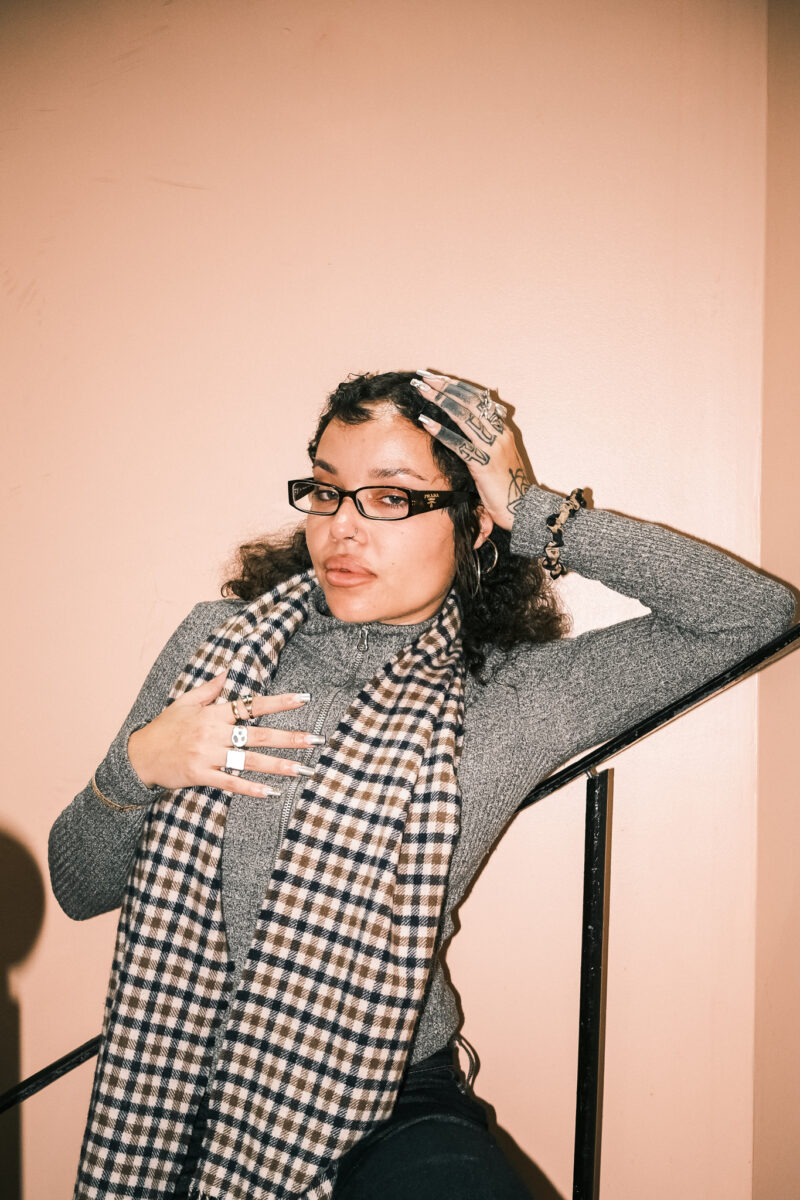
A long time coming: South London’s finest JGrrey has shared her eclectic and endearing debut album, you, me and jen, a life-affirming body of work of refreshing resonance.

Identifying reality has become an unrelenting job in the three years since JGrrey’s last project. Guards are up more than ever, online personalities are taking over, and real personas simmer away in the background. But with the recent release of her debut album, you, me and jen, it’s clear that the artistry shines through. Her propensity to lean into an authentic self embodies the freedom with which she approaches artistry. JGrrey is back.
you, me and jen is a bittersweet depiction of life. It’s articulated with rawness and shines a light on the good, the bad and what could be considered ugly, all of which make her journey ever more tantalising to those who love to gain a deeper understanding of the art. To do justice to such an incredibly veracious body of work, every track needed to bring the same intention to the production as to the narrative – that is clear in every instrumental, verse, bridge, chorus and feature – M Huncho, Erick The Architect, Kofi Stone and Bel Cobain add sprinkles of magic throughout the tracklist.
Wonderland sit down with the South London artist to unpick the mind behind the music.
Listen to the album…
Read the interview…
you, me and jen is your debut album. Why did now feel like the right time to put it out?
I think there’s been a big shift in the way we consume music, and in the way we make it. The word “passive” often comes before “listening” when people talk about certain songs, playlists and genres. It’s the idea that music is now a passive thing: not important, not the frontrunner, not the lead, just something we think about later.
What did you want this new album to say about where you were at?
When people ask how I am, my answer is often that I’m trying my best. I think that’s what this album is an offering of. It’s a soundtrack to me trying my best when I was younger. Even now, it’s less about trying my best and more about getting through the days. Art, recording and songwriting are my therapy.
I’d like someone who has heard JGrrey before to listen and think, “Okay, those were the first two, and this does make sense as a debut.” I’d also like it to give context about where I’ve come from, what I’ve experienced, and the parts of myself I’m able to tap into. Ultimately, I wanted it to say: I’m still here, trying my best, just like everyone else.
Your statement lists a lot of versions of yourself: a daughter, a comedian, a stylist, a bad friend, a good time. Which of those was hardest to put into songs, and which came most naturally?
Being a bad friend was very easy to write about. So was being an addict: I could write about it all day, every day, and if it were up to me, all my songs would probably be about it. Being a daughter is probably one of the hardest things to write about, because of my relationship with that role.
The title brings in a “jen” alongside “you” and “me”. Who or what is Jen, and why did she earn a place in the title?
When I talk about my music, we’re talking about JGrrey, and JGrrey is made up. It’s a name I made up, an idea I made up. Jen is also made up, I think. Having grown up in care, I can often tell when I meet someone new that they have a certain expectation based on the way I look. They’ve never met me and don’t know Jen or JGrrey, but they expect a certain kind of person. I think that comes from being in care and meeting people who might potentially adopt you: behave well, act nice, don’t make a mess. There’s always been a pressure on me to be the idea of Jen.
I also changed schools a lot as a kid, in London and elsewhere, and on that first day it was always: who am I going to be? Who do these people want me to be? So Jen is me behind JGrrey, but ultimately she’s a part of myself that I’ve felt I’ve had to become.
You’ve said “there is no me without you”. When did you realise the connection was a thread running through the record?
Connection only became important to me when I started making music. I’ve done all sorts of weird and wonderful jobs, but we won’t get into that. Then I started making music, and it wasn’t that serious. And then I did COLORS Berlin.
After that, connection became everything, because people started approaching me in real life and asking, “Are you JGrrey?” It wasn’t just about being recognised. It was the feeling that this whole universe of a person, who I don’t know, knows me through the things I’ve said.
I’ve been making music for 10 years, and I’ve made some undeniably important connections because of it. I’m not someone with many friends. I can be social, but it doesn’t come naturally. Many of the people who stop me in the street or message me are really going through it too. That’s when I thought, “This isn’t about me.” It makes my process easier. When I think about what I’m going to say, it gets meta and cryptic. When I think that someone might relate, or that it’s someone’s story, and I stop worrying about wording or hooks, that’s when it gets exciting.
I can’t make music without you. This interview doesn’t exist without you. I only exist if you’re here. I was lucky to realise that early: it isn’t about me, it’s about everyone who listens.
The album covers addiction, identity and self-worth in a very open way. Was there a point while writing where you worried you’d gone too far, or were you more worried about holding back?
I refer to myself as a mixed breed, as a runt. The last song on the album is “yes, please”. It paints a picture of an ideal person, but actually I’m talking about how much I used to love doing cocaine. I’ve only really started to realise that now that I’m playing it to people. At my listening events, I’m seeing people react to it, and it’s triggering for some, which I hadn’t considered, perhaps selfishly, at the time. On “stomach turns”, I say I was about six, and that it was bad, with no mum and certainly no dad.
Even while writing that song, I thought, “Do I really want to open that can of worms?” I don’t really ever talk about my experience, and with the press, people naturally want to ask questions. So I realised this almost in hindsight. But I’m really happy to be putting those songs into the world, because I know I’m not the only person to have had those experiences.
You’ve said your mum, Sadra, told you that you could do anything. How does being adopted, and that message from her, shape the way you write about family and belonging?
When I was younger, I never had an end to the sentence “When I grow up, I want to be…”. I didn’t know why it mattered so much, and I think that’s because nothing in my life felt certain. I’m lucky to still be making music, because it was never my intention. Music was a happy accident: it happened to me, and I’m still here with it.
That lack of certainty is heavily present in my process. I don’t physically write lyrics for many of my songs. I’ll listen to a beat, and if within the first five seconds I think, “Oof,” I’ll stop and press record. So I start with no real certainty or idea of where it’s going. That’s how [2023 track] “THEIRS13” was made, and it has really shaped what makes a JGrrey sound. Sometimes nobody really knows where it’s going to go, or whether it’s going anywhere at all.
Now the record’s out, what do you hope someone leaves feeling after listening to it?
My ideal situation is that someone listens to the album and goes a little easier on themselves, approaching themselves, their place in the world, and their perception and identity a little more softly. I also hope people come away feeling less alone.
Words – Josh Clubbe


