In I Want You To Be Happy, situationship is the word and Jem Calder is the writer. With his buzzy debut novel – a story that turned into a summer hotpick – millennials and Gen Z meet at an awkward crossroads where, in the game of love, the winner can’t quite be decided.
On Christmas Day 2017, Irish-Canadian writer Colin Barrett’s short story Whoever Is There, Come On Through was published in the New Yorker. The story intricately traces the inner world of friends, Murt and Eileen, whose relationship is altered by mental health and distance. Despite the odds stacked against them, they remain mostly lovable, but still, their niggles make you tut your tongue occasionally. “Not that she wanted to impose structure on him. But she wanted to be there if structure was what he needed,” becomes the line that their bond feels best summarised by.
The story, recommended to me by Jem Calder, the author of this summer’s literary hot pick I Want You To Be Happy, feels most prominent considering it’s the story that reignited Calder’s love for reading and literature after a period of apathy after studying English Lit at university. That line in particular reminds me much of Calder’s ‘unfortunate’ debut tale of a love lost – the ones that linger after you’ve turned the last page, closed the back of the book, and are left with everything you didn’t confront while reading.
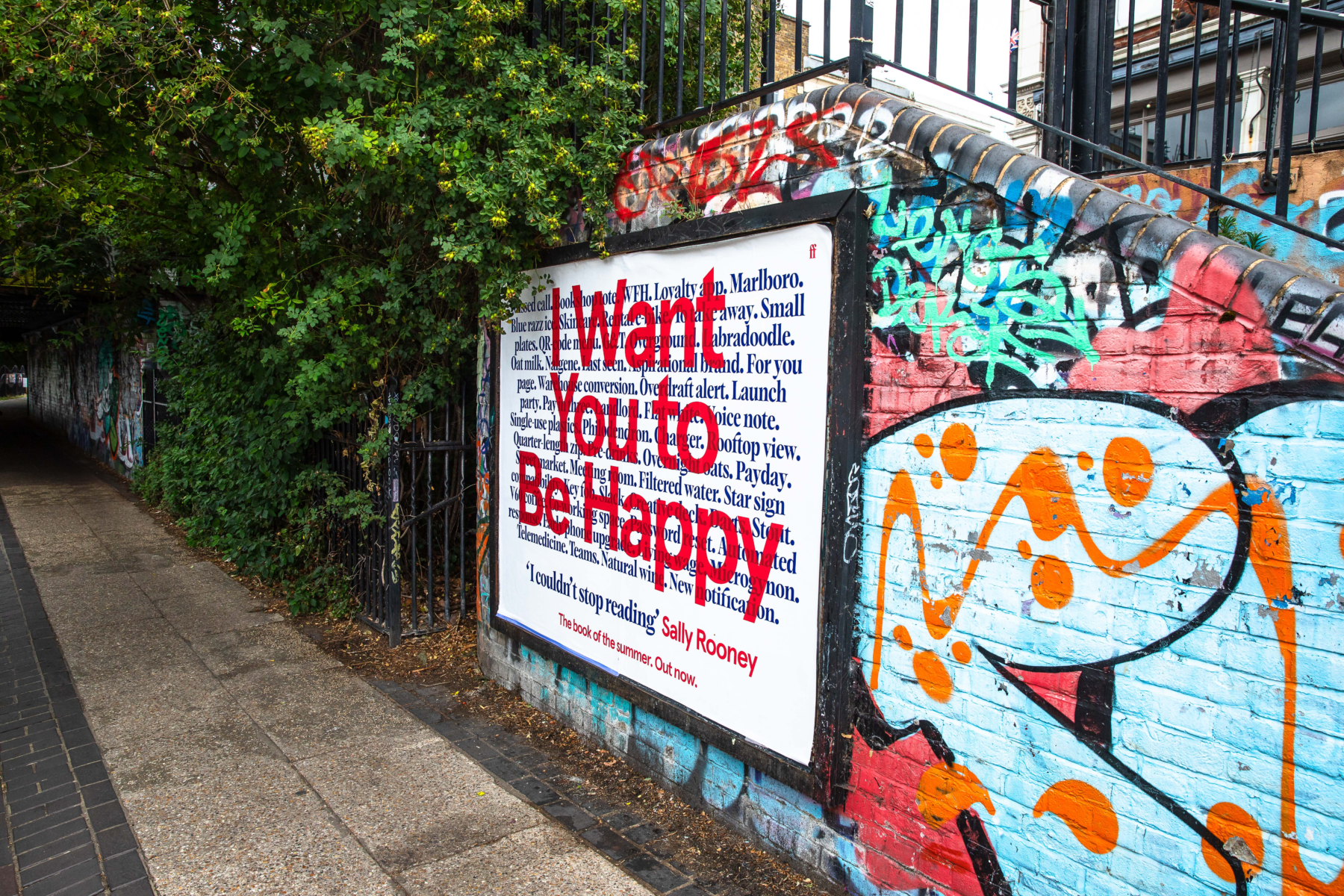
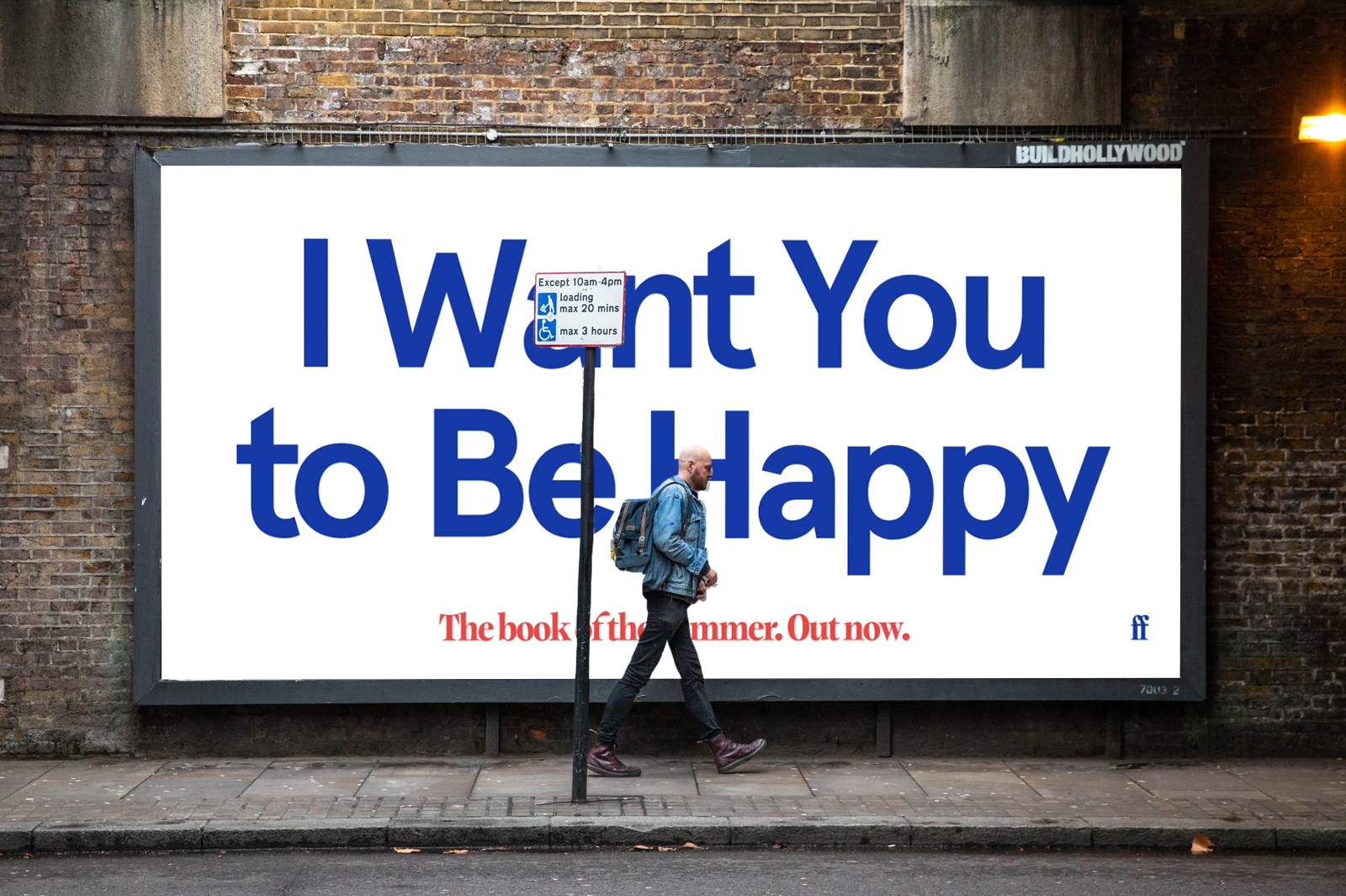
I Want You To Be Happy has done the Internet rounds and stamped the Summer-themed storefronts of book shops everywhere. Merchandise, from t-shirts to totes, have become a recurring motif on TfL journeys from Hoxton to Highbury and Islington via the Mildmay line, then onto Paddington à la the Victoria and Bakerloo – the shores of Portugal, for a girls trip even. Sold exclusively in paperback and packaged in a clean white sleeve, with cobalt-blue buzzwords, such as “Pay in three”, “Blue razz ice”, “Natural wine”, sprawled against the front with the book’s title in stop-sign red overlaid, it glares at you like a warning – so how could you not reach for it on the bookshelf? It’s captured the attention of both the aesthetic Internet warriors and the beating hearts of its aspiring literary critics, making it a summer must-read.
The story follows two perfectly imperfect East Londoners who go for a date in a bar, which then lands in their bedrooms and unfolds further in family homes – but, of course, nothing about the relationship is even moderately easy. Meet Chuck – a 35-year-old senior copywriter and aspiring writer much too fresh out of a long-term engagement – and Joey – a 23-year-old recent graduate and aspiring poet who spends her 8-4ish as a barista in an independent coffee shop, the latter “acting noncommittal in the hopes of gaming his desire.”
As a phrase, I Want You To Be Happy has many meanings. And against an East London backdrop where a 12-year-age-gap relationship plays out, the worst is somewhat to be expected. “You’re also only going to hear it in horrific emotional circumstances. Like you are about to get your heart just stomped on. It’s like an alarm going off when someone says that,” Calder says, almost laughing, as he discusses how the title for the novel came about. “People overthink the purpose of the novel, or readers overthink what they’re supposed to be getting from it. It is cringe to say, but that is also my address to the reader.” So, as pretty as the book may look and sound, the premise of the story is actually far from it, and intentionally so.

The title is where Calder’s admission comes through – his leading characters, in part, representing two opposites of his own psyche. “I had two characters that I could put together really well, and could represent two separate sides of myself – two directions I feel like I’m constantly pulled in,” he explains. “When I was writing the book, I was like three years younger than Chuck is in the book. I am now Chuck’s age. But I was projecting myself towards what the worst case scenario could be, how cynical and burned out I could get. Then, in Joey’s regard, when you’re young and inexperienced, there’s so much hope, and the cynicism hasn’t set in, and there was something so nice about that. I really wanted to honour and animate that on the page.”
So, if Chuck is a warning, Joey is a reminder of that equally terrifying but sincere and earnest phase of your twenties where you willingly build your whole identity around somebody who’s only ever half-available. And suddenly, Barrett’s line – “But she wanted to be there if structure was what he needed” – feels like the potential thesis for everything Calder is trying to say. Not because it tidies things up, but because it doesn’t.
As we talk, it becomes apparent that while Calder is roughly the same age of Chuck, I’m basically Joey’s agemate – and neither side of a situationship is pretty for us both. In fact, the distinction is more interrogating than intoxicating. “Stories about relationships are a really good way to examine the macro through the micro,” he says. “You can really look at what’s going on in the way people communicate, in the way people work, in the way people live. But by examining that through the very narrow slot of a relationship two people share is something to organise the information around, it gives you a plot in that way.”
And whatever hot takes you have about I Want You To Be Happy, Calder wants you to lose them. “That’s one of the cool things about the novel is that you can approach something from multiple different angles, and it’s not regarded as a failure if you don’t land on one specific take…almost,” he says. “I think we’re quite saturated with people’s takes. If anything, the novel is quite a nice place to feel a bit of relief from that.”
One line that sticks is nestled towards the bottom of page 99. It’s Joey in conversation with her mostly-absent, new boyfriend-preoccupied best friend Laurel, who rather matter-of-factly says: “Well, who’s sure. Being sure’s a luxury. Only rich people can afford to be sure. The rest of us just have to throw ourselves into people’s lives and find out the hard way if we belong there or not.” And it’s these gripes that push the ‘plot’, whichever it may be, over the book’s pages and into coffee shop discourse. These are the kinds of words from Calder’s debut that could simply be read as fun points of relatability, but instead become minute observations, and consequently commentary, on the niggles that impact most relationships: class differences and wealth divides, emotional maturity and attachment styles, perhaps in Gen-Z terms, Type A and Type B, and ultimately, survival.
Warning: Spoilers ahead.
Even with Chuck and Joey as the book’s centrepieces – either’s storyline beckoning you to side with them – if there’s anyone Calder thinks you should really feel sad for, it’s Sarah, Chuck’s ex-fiancé. “She definitely has the hardest, most unjust experience throughout it,” he shares of the character with the least page space yet most profound influence. Whether or not she and Chuck get back together, that’s not really the pressing question that remains unanswered – “It’s pretty clear that they’re giving something an attempt, or at least trying to sit down and see if they can interact with each other,” Calder says. What really comes into focus is, when life leaves you at a crossroads, are you willing to rest in the discomfort or return to what you’ve always known? For Chuck, that answer is perpetually unclear – which is both annoying and annoyingly relatable.
“He’s kind of presented with a couple of moments where he gets these opportunities to change and could actually find another way to live his life, and I would say we see him quite categorically not fully turn those down, but he chickens out a little bit and goes for a half measure,” Calder says. “He’s trying to preserve his own comfort, and his problem throughout the whole thing is that he lives a miserable life, but it’s also one that is very comfortable to him.”
However mundane that resolve may be, this is where the whole novel materialises. This is where Calder’s truth belongs less to him, and speaks more like a universal truth, or experience. Revelation hits and you realise that life and living isn’t born from comfort. So, even when Chuck reunites with Sarah, a heartbroken Joey watching their love unravel – or start again – through a pub window, the rage-mixed-heartache gives way to only a momentary sadness. The cliche ‘rainbows don’t exist without rain’ ethos.
“Ultimately, it’s not the ending that perhaps we would want in some ways. But then I’ve heard from a lot of readers that you get two thirds of the way through and you don’t know what you want for them because it’s clearly not the right idea for them to end up together,” he says, alluding slightly to the conversations surrounding the novel’s ending. “Equally, there’s still things for them to learn from each other. So, walking that narrow path was always what I knew I wanted to do.”
And in terms of knowing what you wanted to do, the minute I turned page 47, I was assured that if I ever got the opportunity to speak with Calder, there was one question that needed answering: Which independent bookshop was it whose branded tote bag they both own – and was it Daunt Books? “That’s really funny, you being very direct where others are a little more vague,” he laughs, skirting around his options, before settling on one I got to choose whether I was okay with or not. “Foyles, The London Review, I wouldn’t put too fine a point [on it]…Daunt Books is probably the most iconic one…But shout out to all the bookshops in London. We love them all.” That’s a take I can get behind.


