British photographer Derek Ridgers chronicles the ghost of past lovers in his new book, Hello, I Love You, and tells Wonderland all about it.
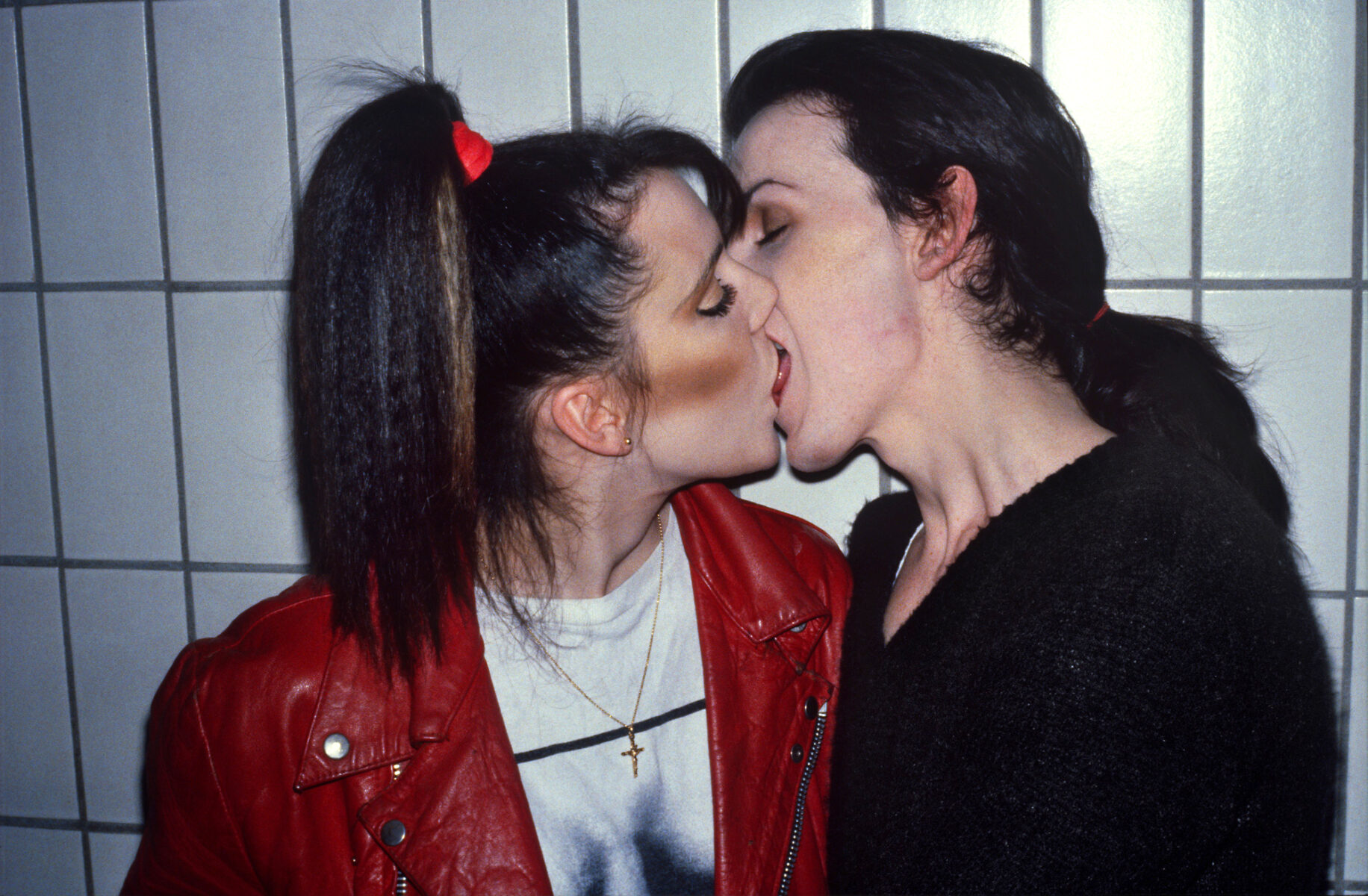
Snogging, smooching, kissing. Locking lips. Making out vertically and horizontally. Embracing one another. Pecking or necking. And, of course, canoodling. Whatever you want to call it, Derek Ridgers has captured it and plastered it across the pages of his new photography book, Hello, I Love You.
A long-time admirer and documenter of Britain’s underground subcultures, Ridgers has carved out his name by photographing the types to sport sky-high mohawks and head-to-toe leather ensembles. From skinheads to metalheads, punks and hippies, Soho’s esteemed nightlife hotspots like The Blitz Club became Ridgers’ hunting ground, armed with a camera and camouflaged in a look he describes as akin to a “geography teacher.” And wherever there’s a party, there’s bound to be people getting off with each other.
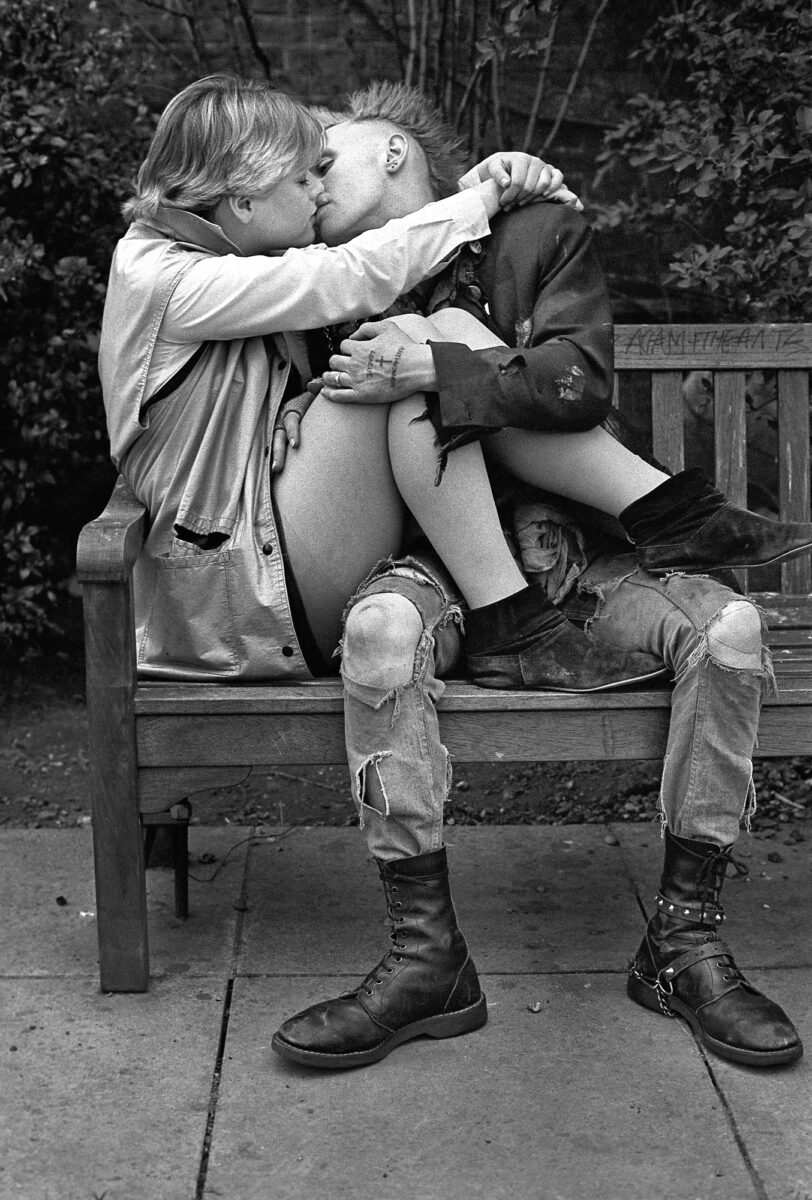
You’ll find couples shamelessly lying on club floors or on a bench by Hammersmith station, arms and tongues interlocked, sprawled across the 100 or so pages of Hello, I Love You. With images taken from between the ‘70s and ‘90s, you’ll find ghosts of past lovers and revel in a trip down memory lane of London’s clubbing heyday. Certain salacious things, though, never seem to change.
Hey! How’s your day been?
Hello, I haven’t had time to really think about that. It’s a dark question. I’ll have to come back to that later.
We’ll circle back to that one.
Let’s.
So talk to me about your new book, Hello, I Love You. How did the idea come about? How long have you been working on it for?
Well, the first image – let me think – is from ‘78, so that’s quite a long time. I did have a show called “The Kiss” back in 1982, and some of the images in the book were in that show, at The Photographers’ Gallery. It did quite well, insofar as it toured around for a bit. I would have really liked to have done a book then, but I didn’t get a publisher. I’m not even sure if I spoke to any publishers about it. Anyway, it was on the back burner for 40 years.

A couple of years ago, it actually would have been almost exactly 40 years afterwards, I had a small show, [featuring] some of these images at Yves Saint Laurent [Rive Droite spaces] in Paris and Beverly Hills. That was called “The Lovers.” It was quite a small show that didn’t do particularly well because it was right at the very peak of lockdown, so people weren’t out and about. But they did a small zine that was really quite nice, quite smart. Also, they did some outfits with some of the photos on. That went quite well. So I thought I should really consider doing something more with them. So earlier this year, I did three 48-page photo zines, and they sold out through IDEA Books. So IDEA suggested we do a book.
What was that image selection process like then? As you were going back into your own personal archives.
The selection wasn’t really that difficult, to be honest. I’m not completely sure how many photographs are in this book – maybe 100 or so. I’d have to check that, really. But it really wasn’t that difficult because you see the number of photographs I’ve taken of kissing couples over the last 45-odd years, it’s not really that many. I didn’t have a huge number. If there are 100 photographs of people kissing, cuddling, and canoodling in this book, I’d say [on] the outside I’ve probably got another 50.
They basically selected themselves
Pretty much, yes, they did. What I would do is I would always photograph these scenarios when I saw them. I mean, none of them are set up. I didn’t ask people to kiss. Sometimes, when I would approach people – I don’t know what it is about me and my camera – but I might see a couple on the street, I’d ask them if I could photograph them, and they’d immediately kiss for the photograph. And this was in an era long before the iPhone, when I suppose people wanted to perform sometimes for a person with a camera in a way that maybe they probably wouldn’t do now, I don’t think. If they wanted that type of photograph, they could do it themselves now or get one of their friends to do it.
Whilst capturing two people in this intimate act, did you ever get some sort of reaction from them, or did they just keep going on as if you weren’t even there?
What happened was, if I saw a couple kissing and the composition looked right, and if I felt like speaking to them at all would interrupt the moment (and that would be most of the time really, let’s be honest), I would take a photograph and then ask them, so that it wouldn’t interrupt their what they were doing well. As it so happened, I never ever got any refusals, either before or afterwards. Nobody ever minded. You know, I’m sure they had better things to think about than me and my camera.
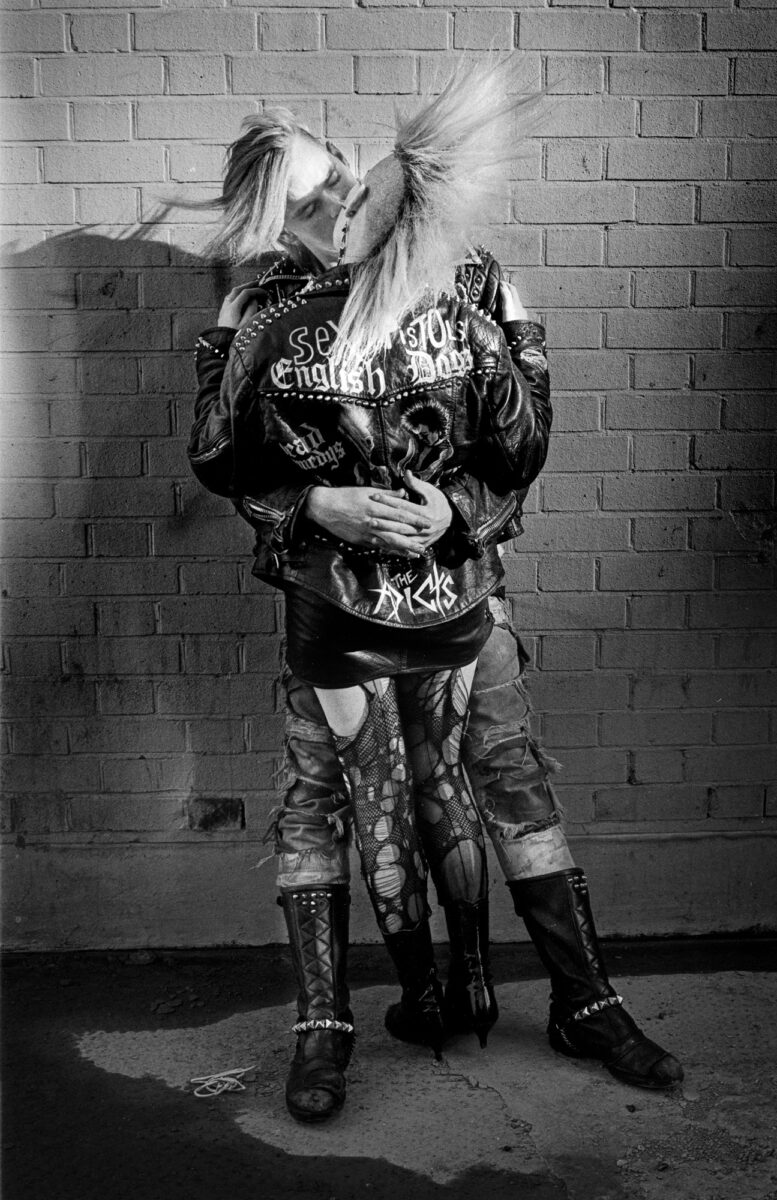
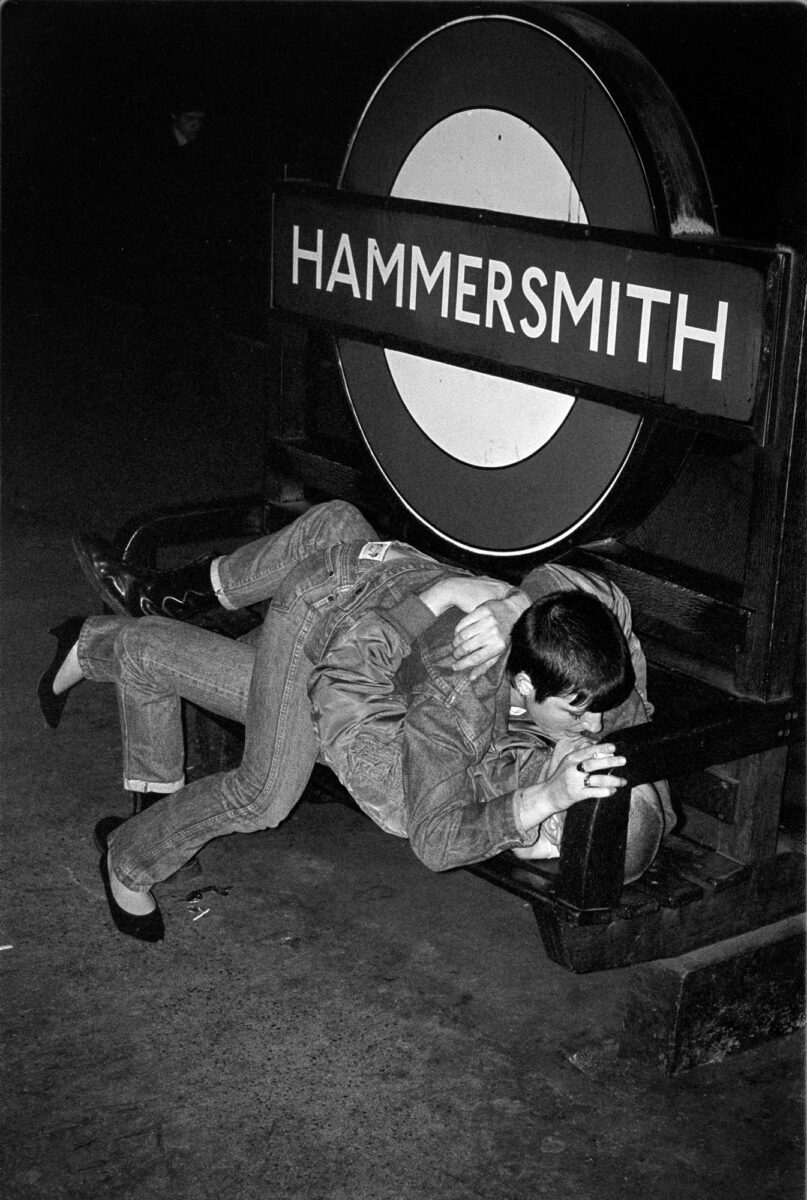
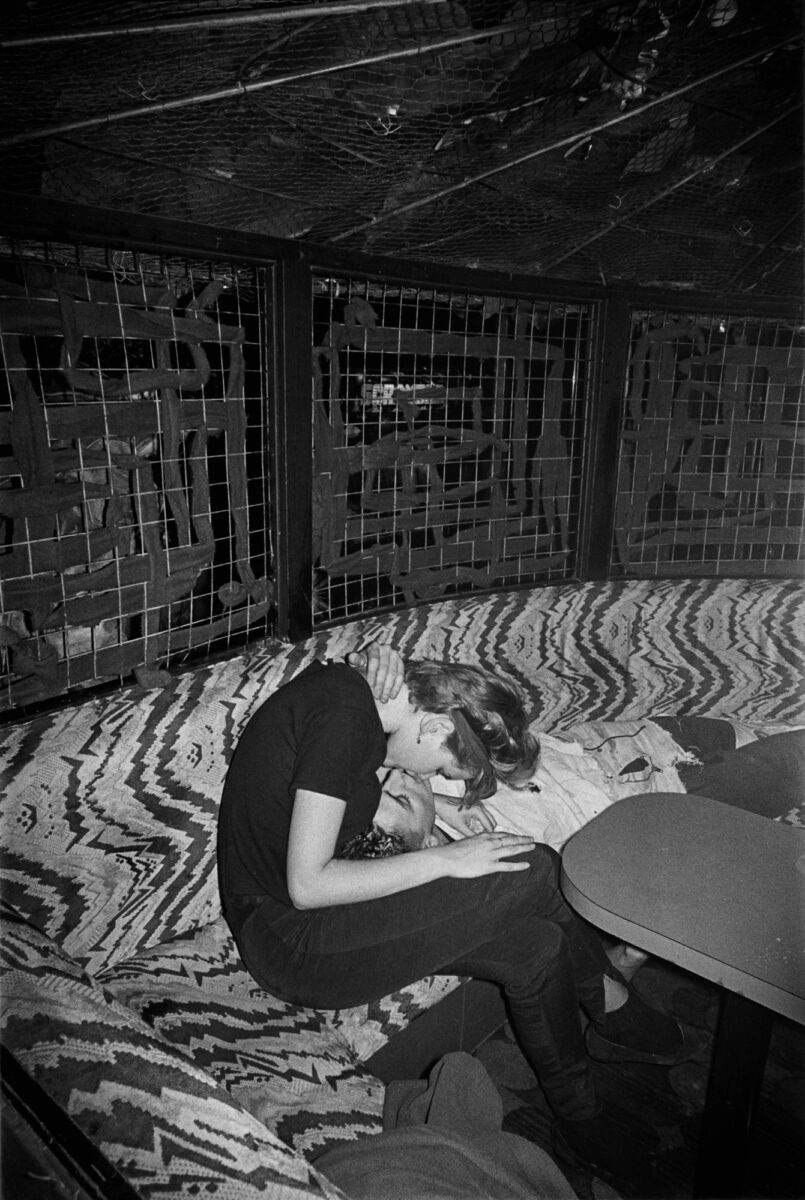
Seeing two people embrace themselves as passionately as they do in your images, it’s quite, maybe not shocking, but striking to look at. Whereas nowadays, I think with the iPhone, there’s a bit of surveillance anxiety within my generation.
[Back then] people were fine. They never seemed to mind. Sometimes, when I would photograph people, I would mostly be interested in taking portraits, documentary-style. portraits of people. And sometimes I would say to people, “Do you mind if I take your photograph?” 90% of the time in those days, they would say “okay.” A few people said no, for whatever reason, and a tiny percentage ignored me completely, just walked past and didn’t respond, but that was a real, really small number, and, yeah, no, I never, certainly never got any refusals with couples.
What were the sorts of reactions you received once these couples actually saw their images, printed and presented?
Almost all of them have been positive. I can’t say every single one of them, because there’s one skinhead whom I photographed with his girlfriend. He messaged me on Facebook asking me why I keep showing this photograph. He didn’t say “don’t do it.” But I got the impression he didn’t particularly like it. Unless someone asked me specifically not to use a photograph, I’ll use it if I think I should. But this bloke didn’t do it. I mean, these people are probably grandparents now. [Some of them] could even be great-grandparents.
Maybe it was a former relationship that went sour he didn’t want to be reminded of.
Yes, certainly people have been in the photographs that might not still be in that relationship. In fact, this is the thing. I think it’s quite a nice thing about when you’re young. You might not know that person you’re kissing. You might never see them again. [It] might just be a very short thing. In a way, I think that’s quite nice, really.
There’s a beauty in capturing that very ephemeral moment, that you might never think of again, or it just won’t ever happen again.
It was so not what I was about myself, personally, but I can appreciate it when I see it [within] other people.
Looking back at your images, they’re very much based around Soho, and the surrounding areas, where nightlife was really booming back in the ‘90s. Obviously this has changed massively. We’re sort of living in this nightlife crisis where you hear of one club after the other shutting down, which is quite tragic. What memories do you hold near and dear to your heart from those clubbing days?
Nowadays, I think you get, maybe not those little basement clubs, but there are pop-up type clubs, aren’t there? Or warehouse parties. I’m not sure what they’re called now. When I started, there weren’t so many warehouse parties because there were a lot of available places. People could make money from getting people in, making money from the door, or making money over a bar. It was relatively lucrative. The rest of the time, these places would probably be empty. If it were a club that was open on a Monday or Tuesday, there wouldn’t have been anybody if it wasn’t for the club promoters starting up clubs like Blitz or before that, Billy’s [Club].
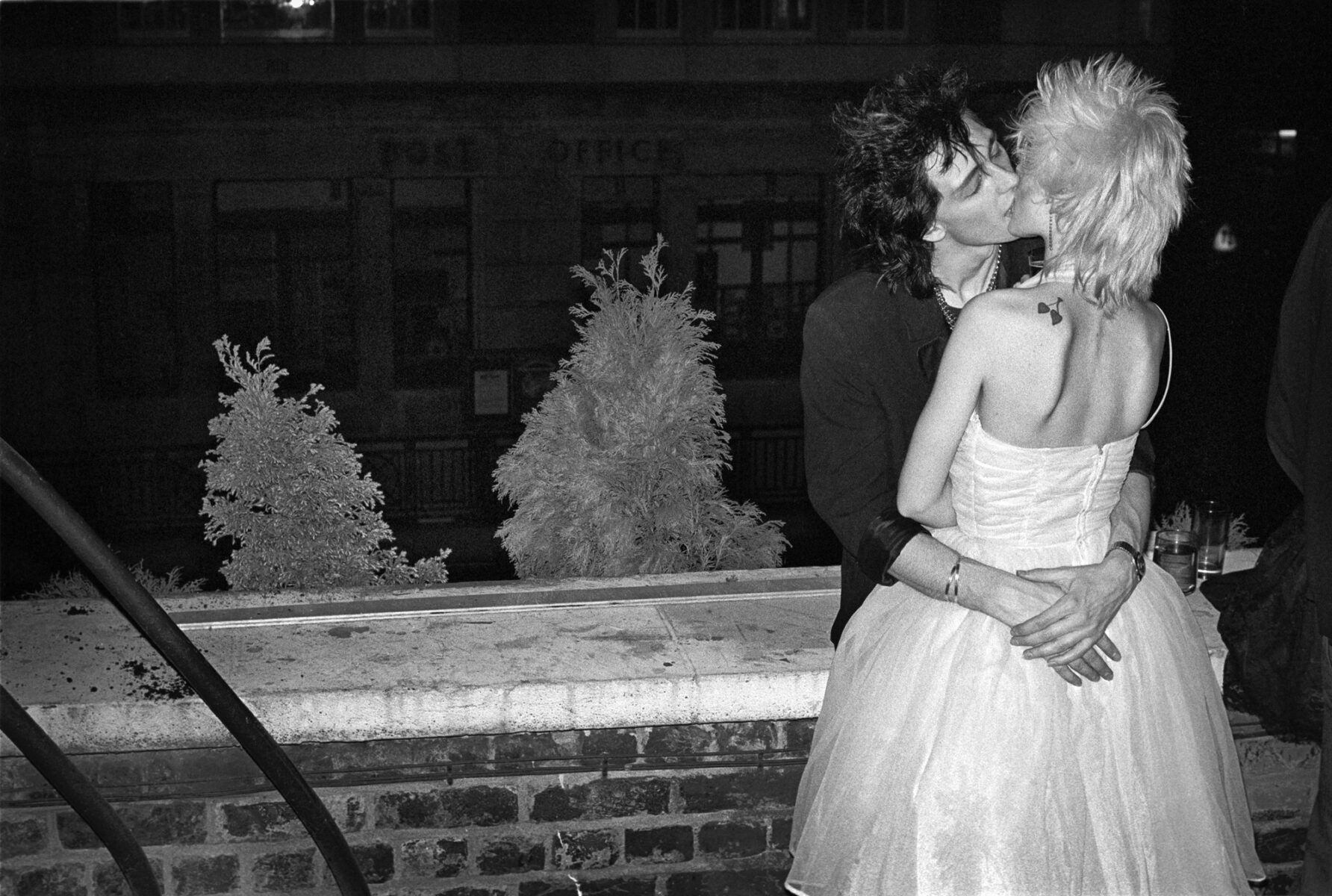
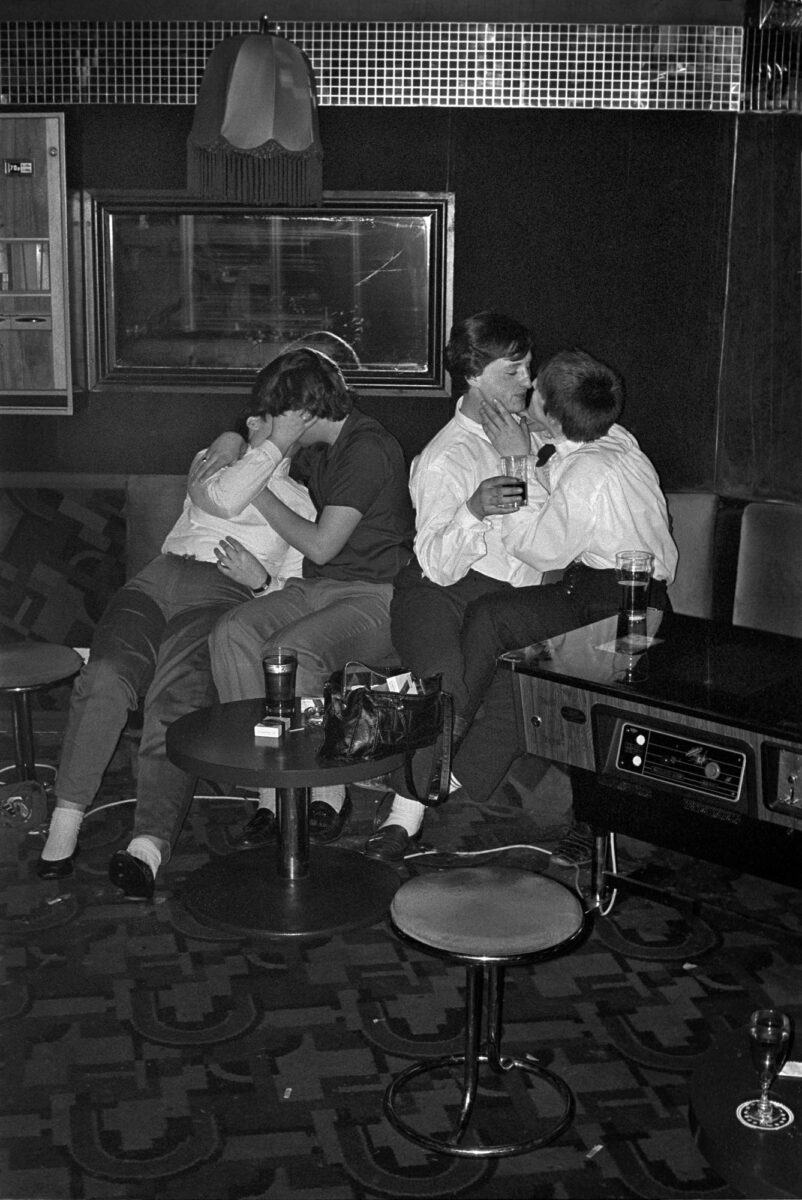
Camden Palace was the best, really, because it was big. There were lots of corridors and plain walls where I could photograph people without getting lots of other people’s heads in the background. It was also the easiest place to take photographs in. There were a lot of people there, so there would inevitably be hundreds of good photographs. Also, there were a lot of tourists who used to go in there. This is the funny thing: very often, they dress up how they thought they should look, and get some of it wrong. But from a photographer’s point of view, even when they get it wrong, it can still be really photogenic, sometimes more photogenic than stuff that was thought about for ages.
Did you ever dress up for those club nights?
I suppose my look throughout the decades has been that of a redundant geography teacher – corduroy trousers or Levi’s, open neck shirt, cardigan, that sort of thing. I stuck out like a sore thumb in most of the places I went to. People just forget about me.
But I suppose that’s what you want as a photographer trying to capture those really natural scenes.
Yes, really. I mean, you can’t be in a dark nightclub with a camera with a flash and not get noticed. But even then, people forgot about me. My work isn’t reportage. It’s not really fly-on-the-wall, particularly. The photographs in this book are probably as close as I get to reportage.
Throughout your career, you have captured a lot of subcultures like the punks, the metal heads, the ravers. We see that as well in this book. Those are some subcultures which have notoriously been sort of maybe painted violent, displaying anti-social behaviour by mainstream media. This book, I Love You, is such a tender topic. It’s such an embrace of love, really. Did you have this sort of incentive to challenge those narratives through your images?
Yeah. There are a couple of photographs of some quite violent people in there that I managed to catch at their tender moments. There’s one of the guys, [he’s] no longer around, but I think he was the originator of the Chelsea Headhunters, the hooligan group. But he was nice enough to me whenever I met him. But then I wasn’t an opposing football fan.
Hello, I Love You by Derek Ridgers is now out via IDEA Books.
Words by Juliette Eleuterio


