Professional diver and photographer Alexis Rosenfeld sits down with Wonderland to discuss Issey Miyake’s new fragrances, and his role in their creation.
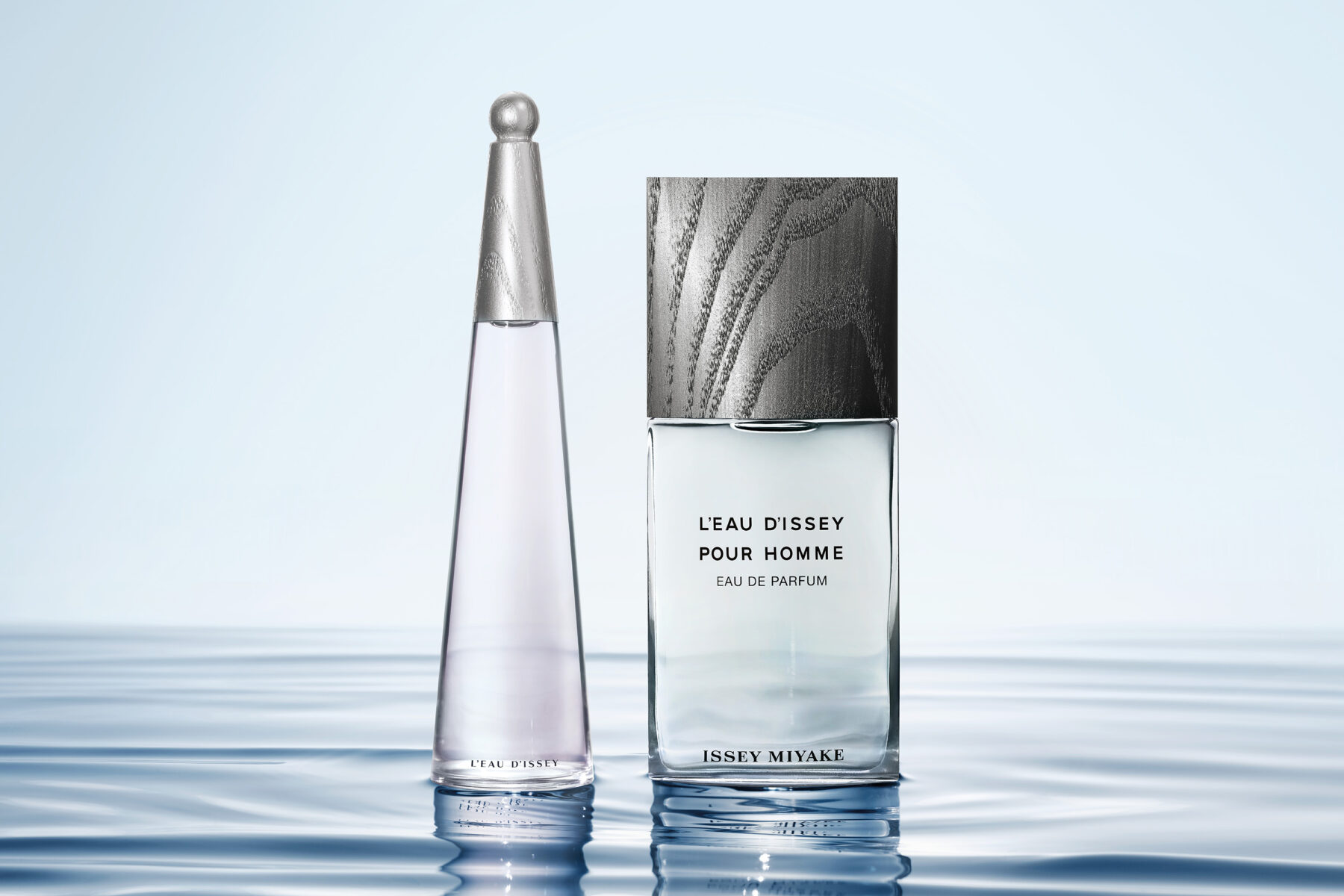
Bouncing onto and against the oscillating rhythm of each crevice in the frothy turquoise hues within the ocean, fresh saltwater and suncream converge in the aroma, as the warmth of the sun wraps itself around your body like a warm hug. Still clad in water droplets from the sea, grains of sand seep into nooks that will still fester come evening time, but still, tranquility remains persistent, and effervescent. Simply put, the beauty of the ocean was the starting point for Issey Miyake’s approach to fragrances, and just like its ability to whip up familiar feelings of comfort, Miyake has crafted its L’eau D’Issey around this dreamy landscape for over three decades.
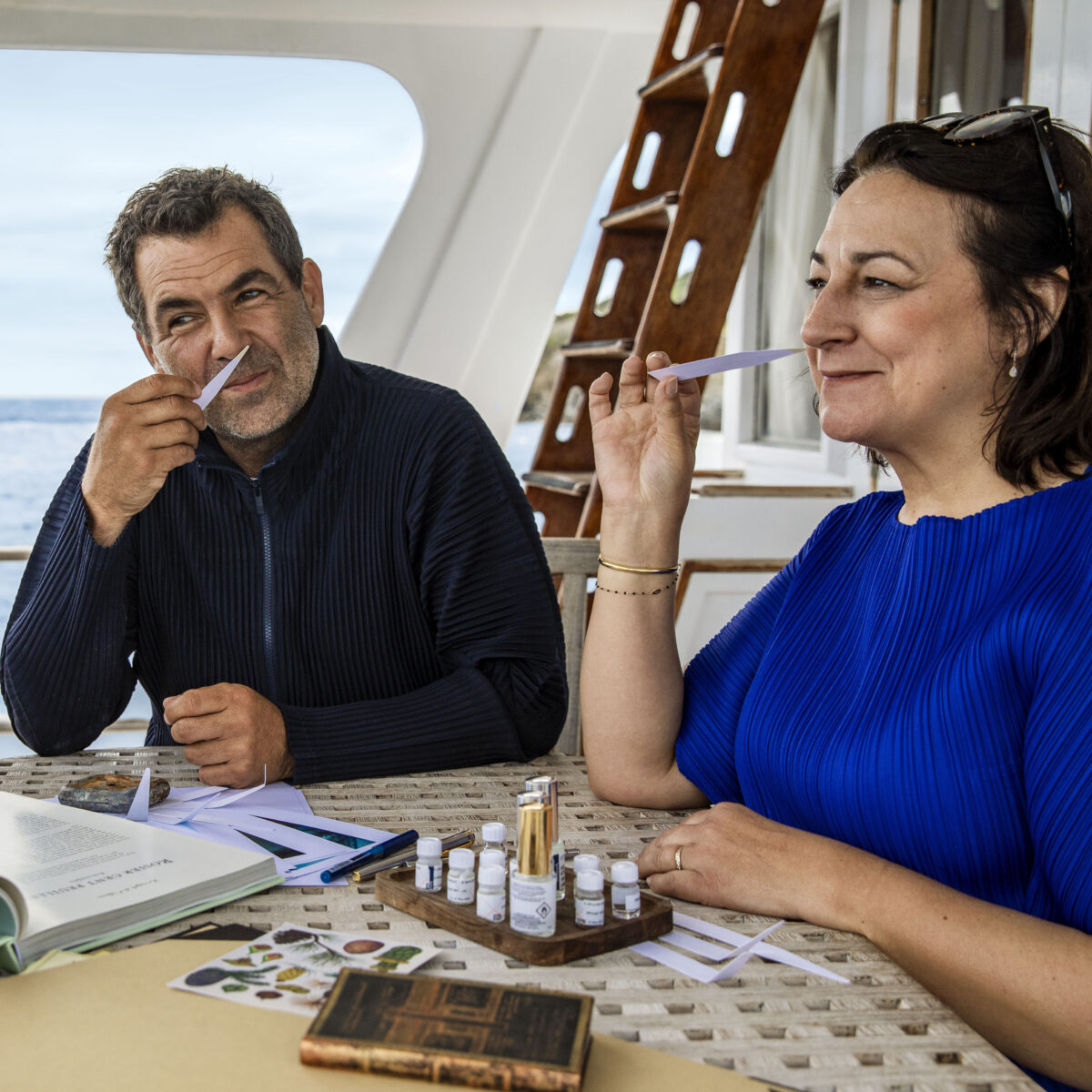
Now, the Japanese-founded fashion house – which places the natural world at the height of its design approach – is introducing two new fragrances to the L’eau D’Issey world: L’eau D’Issey Parfum Intense and L’eau D’Issey Pour Homme Eau de Parfum. Crafted from the noses of Amandine Clerc-Marie and Sophie Labbé, the two perfumers dove headfirst into the creative process, quite literally, as they worked in tandem with professional diver Alexis Rosenfeld. “And yet, underwater, there is no smell”, the diver explained, as the three got up close and personal with the oceanic world, exploring how a fragrance could invigorate the senses in the same way.
Eau D’Issey Eau de Parfum is driven by an accord of Posidonia, also known as Neptune grass. Posidonia – an underwater plant which can create meadows at 40 metres deep – is complemented through a story narrated by aquatic shrubbery and floral notes. Its partner-in-crime, L’eau D’Issey Pour Homme Eau de Parfum, riffs on the woody smells of Sichuan pepper, balsam fir, and cedarwood, as a bitter twang of lemon drizzles through the fragrance.
As with any Issey Miyake release, its efforts to stay sustainable where possible never go amiss. Both fragrance bottles are crafted with 20% recycled glass, and are 100% refillable. Nonetheless, the perfume goes further than mere scent, honouring Alexis Rosenfeld’s ongoing collaboration with UNESCO, at the forefront of its 1Ocean campaign. Together, with the UN-founded agency, the diver and photographer sheds light on the beauty of the ocean, aiming to raise awareness on the ever-growing need to protect it.
Coming up for air, Rosenfeld caught up with Wonderland to discuss his involvement in the fragrance’s creation, and his work on the 1Ocean project.
You are a photographer, explorer and diver, as well as the creator of the 1Ocean mission. Why did you decide to devote your life to discovering and preserving the oceans?
For me, the ocean is much more than just an ecosystem: it’s an inexhaustible source of inspiration, beauty and dreams. Ever since I started diving, every underwater encounter, every moment spent underwater, has made me realise not just how fragile the ocean is, but also how essential it is to the balance of our planet. This deep connection naturally led me to devote part of my life to the underwater world.
Could you tell us about your 1Ocean project set up with UNESCO? What is its mission? Where does its name come from?
The name 1Ocean is both simple and symbolic. It reminds us that despite our borders and our different uses of the seas, there is one ocean that links us all, one global ecosystem. The 1Ocean mission therefore embodies this idea of unity and solidarity towards this common good.
Why is this partnership with Issey Miyake Parfums so important to you?
The partnership with Issey Miyake Parfums is crucial for several reasons. First and foremost, it brings together two worlds – that of craftsmanship, and that of the beauty of the oceans – around the same ambition: to raise public awareness of the importance of preserving our marine environment. By associating its image with our project, Issey Miyake Parfums gives unique visibility to our message, reaching a wider and different audience which can, in turn, be inspired to take action for the ocean.
Do you think we underestimate what the ocean has to offer?
Absolutely. We often forget that the ocean is much more than just a backdrop or a resource to be exploited. It provides us with an incalculable number of vital benefits: it generates more than half the oxygen we breathe, regulates the climate and absorbs a large proportion of the carbon dioxide we emit. Yet because it seems vast and inexhaustible, we tend to underestimate it, or even take it for granted. Beyond its ecological role, the ocean is also a source of food, medicine and inspiration for our cultures. All too often we overlook the fact that millions of people depend directly on its health for their livelihood. Unfortunately, the threats it faces – overfishing, pollution, acidification – are still little known to the general public, or downplayed.
Can you tell us more about Posidonia meadows?
Posidonia meadows are often compared to underwater forests, and for good reason: they play a crucial role in the balance of our marine ecosystem. This underwater plant, endemic to the Mediterranean, forms dense meadows that are home to a rich and varied biodiversity. Posidonia meadows serve as a refuge and nursery for many species of fish and invertebrates, helping to preserve marine biodiversity.
These underwater prairies also fulfil a number of essential ecological functions. They produce oxygen, improving water quality, and play a major role in carbon storage, helping to combat climate change. By absorbing and sequestering carbon from the atmosphere, Posidonia makes a significant contribution to reducing greenhouse gases.
Moreover, Posidonia meadows stabilise the seabed and protect coastlines from erosion. By slowing currents and absorbing wave energy, they act as a natural barrier protecting beaches and coastlines. Unfortunately, these meadows are now under threat from human activity: the anchors of boats, pollution and global warming. Protecting Posidonia means preserving a pillar of the Mediterranean ecosystem, on which our climate, biodiversity and coasts are directly dependent.
You took the perfumers of the new Eaux d’Issey on an exploration. What did you want them to discover above all else?
During this exploration, I wanted to show the perfumers that when you dive, your sensory universe changes completely. Underwater, there is no smell. You find yourself in almost absolute silence, immersed in an environment in which every element becomes a source of visual inspiration, but without the usual guide of scents. So what you experience underwater is virgin territory for the imagination: every vision, every movement becomes an open door to creation.
When you’re a marine explorer, how can you describe the smell of the ocean?
When you’re a marine explorer, describing the smell of the ocean is a fascinating exercise, because it’s elusive, ever-changing and yet incredibly evocative. At the surface, the ocean exhales a scent that combines the freshness of seaweed, salt and that characteristic hint of iodine, a mineral, almost metallic aroma that evokes immensity. There’s something invigorating about it, as if each breath carried a parcel of the sea’s raw energy.
Do you have 3 tips to share so that everyone, at their own level, can help preserve the beauty of the ocean?
Get involved and raise awareness around you: preserving the ocean also involves education and raising awareness. Taking part in local beach clean-up initiatives, supporting organisations dedicated to marine conservation, or even simply sharing information about the importance of the oceans can inspire others to take action.
Favour responsible consumption: our consumption choices, particularly when it comes to fish and seafood, have a direct impact on marine ecosystems. Opting for products from sustainable fisheries, avoiding endangered species and finding out about the origin of products all help to support practices that respect the oceans. What’s more, choosing eco-responsible and local products reduces our overall carbon footprint.
Loving the ocean is the key to protecting it. When we are touched by its beauty, its power and its fragility, the desire to preserve it becomes natural. This love is what drives us to act, to take concrete action and to inspire others. As the saying goes, “you protect what you love”, and this emotional connection is undoubtedly one of the most powerful forces in preserving this unique environment.
Words – Freya Goodchild-Bridge


