With season two of Wednesday on the way, Joy Sunday asked Mickey 17‘s Naomi Ackie to do what publicists usually advise against—talk about the industry out loud. Together, they get into resilience, responsibility, and the richness of finding Black community in Hollywood.

Naomi Ackie and Joy Sunday have never met. Sure, they’ve both had their messy, boozy summers at the Edinburgh Fringe, and they both stan Michaela Coel—obviously. But when Joy asked the Mickey 17 star to interview her for Wonderland, the connection didn’t scream obvious. For Joy, that was exactly the point. This wasn’t just a friendly back-and-forth—it was a link-up between kindred spirits.
“Black actresses get so few chances to build real community—there just aren’t many of us working at this level,” Joy says, calm and clear-eyed. At 28, thanks to a global breakout in Wednesday, Tim Burton’s offbeat teen mystery that turned cult overnight, she’s earned her seat at Hollywood’s most exclusive table—and she’s seated.
After early roles and a stint in Netflix’s Dear White People, Joy landed at the gothic gates of Nevermore Academy in 2022, playing Bianca Barclay—a siren with bite and the breakout foil to Jenna Ortega’s deadpan Wednesday Addams. The show, now the third most-watched in Netflix history (behind only Stranger Things and Squid Game), has turned into a magnet for names like Lady Gaga, Joanna Lumley, and Billie Piper, all set to appear in season two, dropping August 6.
With the new season likely to solidify her status as one of Hollywood’s ones to watch, you’d expect her to be sunning herself somewhere far from the eerie Irish sets. But Joy’s not logging off. “I’m stepping in and saying, ‘You know what? I’m an artist of credibility. I have just as much to say. So regardless of whether or not you think I’m a token, I’m gonna cash it in,’” she shares, a defiant grin across her face.
Naomi Ackie isn’t new to this. With a BAFTA for her turn in the bleakly brilliant The End of the F*ing World and a lead role in Bong Joon Ho’s genre-blurring Mickey 17, she’s already moved through the indie trenches and into big-budget orbit. She knows what it means to show up, prove it, and still have to prove it again.So when Joy Sunday asked Naomi to interview her ahead of Wednesday’s second season, it wasn’t just about press—it was about perspective. What followed was less Q&A, more catharsis. A conversation between two Black women who know the game, know the pressure, and know how rare it is to talk about it out loud—the good, the bad and the empowering.
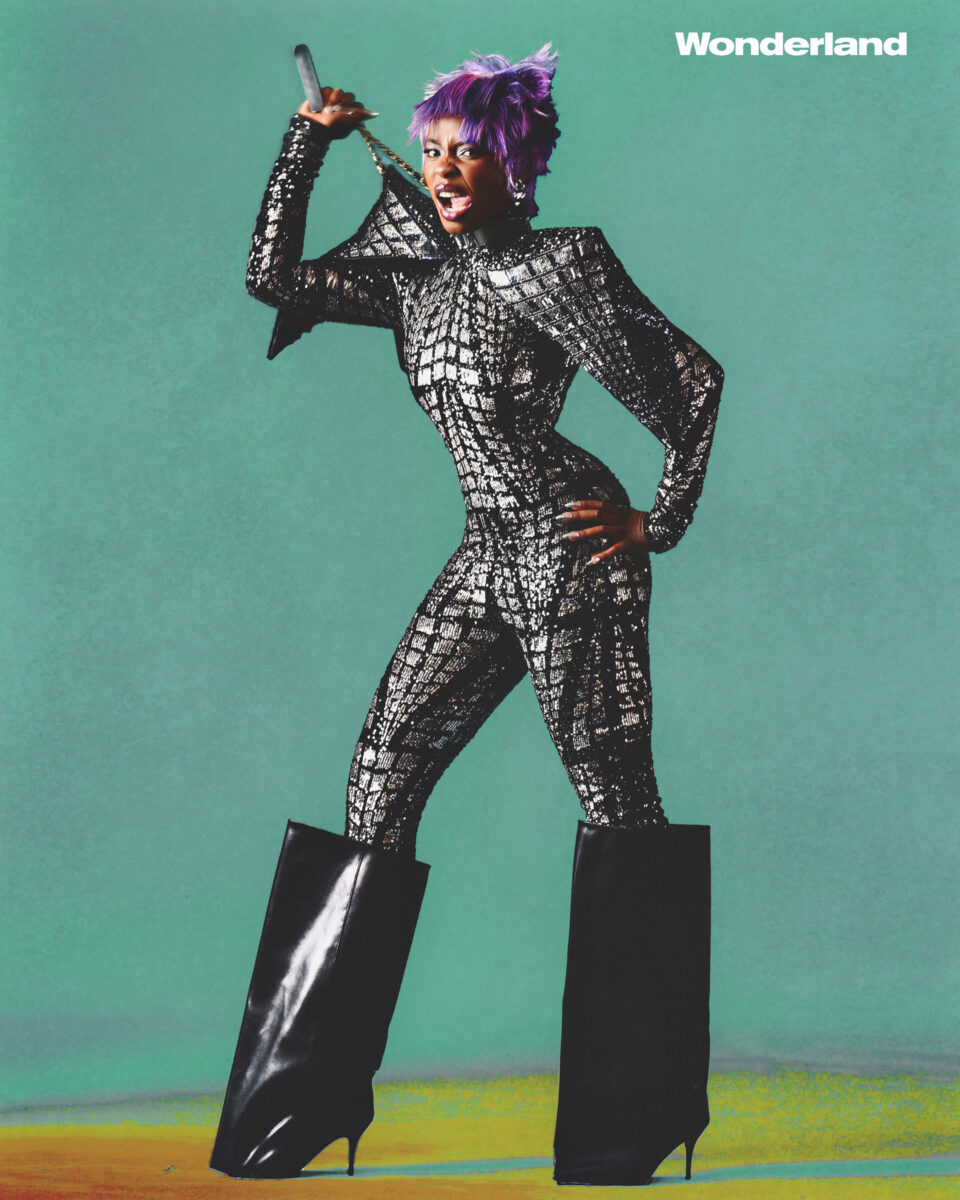
Naomi Ackie: Let’s start with that idea of community. How have you found community within the Black diaspora in this industry?
Joy Sunday: I’m always looking for Black people everywhere I go. I’ve always felt very connected to that diaspora. There are not many Black actors who have worked in high visibility projects, such as us. We’re so far and few between; we’re literally across water. When there’s an opportunity to chat with someone [it’s great].
NA: I’ve noticed that every time I have a project with another Black woman, there is so much joy in that space. Okay, so I saw the first season of Wednesday. I think it’s fan-fucking-tastic. What was your experience like in the first season as opposed to the second?
JS: Going into the second season was so much more nerve-wracking. Mind you, with season one I was stepping into my first role as a series regular with Tim Burton directing us. You would’ve thought I’d be shaking, and I was for the test. But when I got to set I was so comfortable because I was achieving my aspiration. As far as I was concerned, I belonged there.
NA: Amen!
JS: For season two, I was shaking in my boots because I had to re-channel my character [Bianca] after three years and still keep all of the same nuances about her that people loved. That being said, I think I experienced so much more emotional growth as a human being in season two. I think that’s a testament to facing your fears and moving through hardship.
NA: There is your journey as an actor and as a human being on a set, but the outcome of the project, without sounding anti-establishment, is kind of irrelevant. I’ve actually learned so much during filming for some of the projects I’ve done that haven’t really hit off.
JS: We don’t have role models or people that we can speak to and ask, ‘What do I do in this moment?’ That’s something that a lot of people don’t recognise about Black talent in this space and at this level. We’re figuring it out as we go.
NA: How has your experience been as a dark-skinned Black woman in your career? How do you feel?
JS: My first instinct is to say I feel pride.
NA: Amen.
JS: I feel empowered, responsible and energised. They should have never given me a gig.
NA: [Laughs].
JS: Now that I’m here, I’m asking, ‘Where am I going next?’ I feel this duty to clear the way for others. It’s not as if there haven’t been people before me. They’ve cleared the way for me as well, but I want to break open the dam.
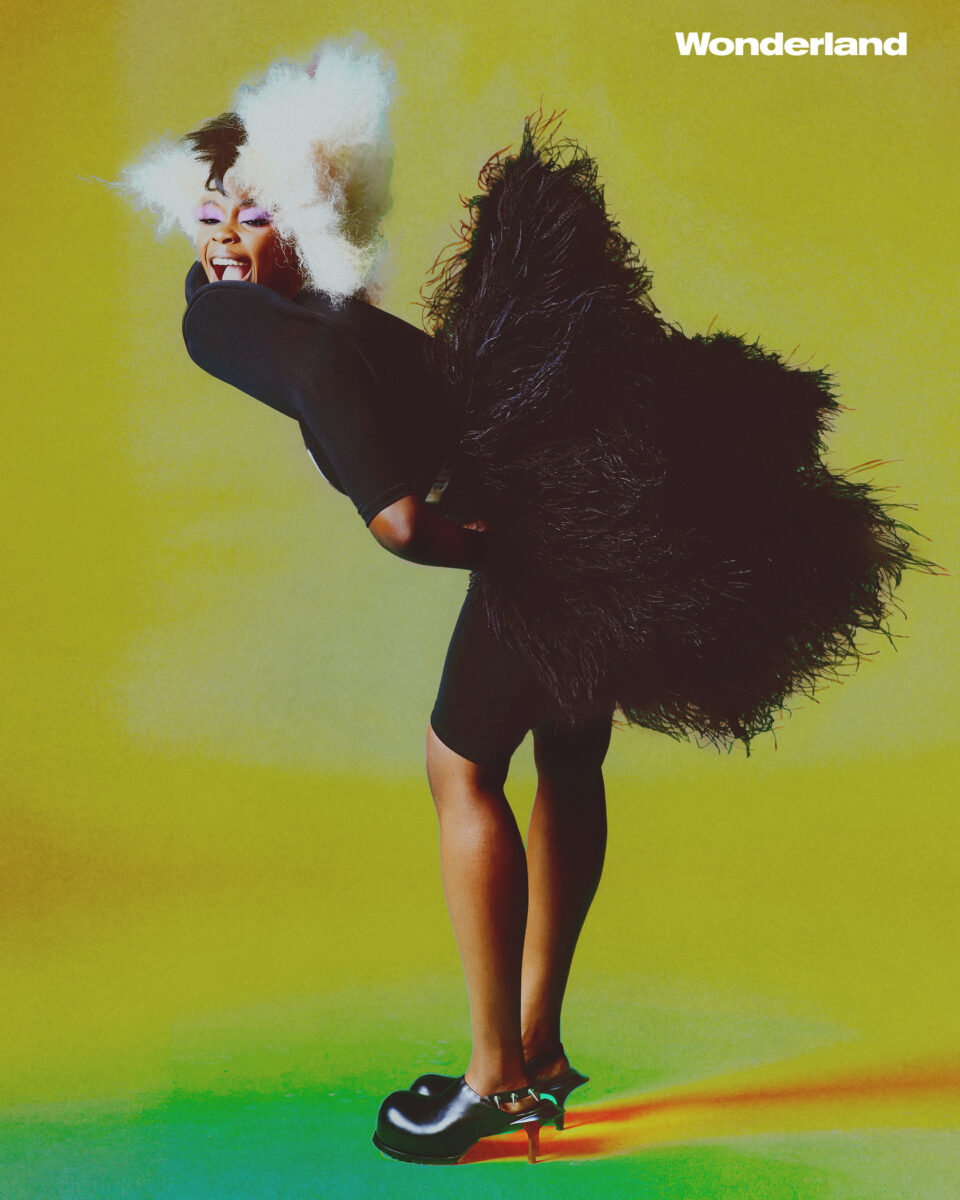
NA: You’re so positive about [the position you’re in]. How do you refuel yourself in moments when you get tired?
JS: Thankfully life has trained me. I’ve experienced [discrimination] in micro ways moving through Hollywood—I’m almost impervious to it. In my adolescence those moments would make me feel smaller and doubtful. I’ve come to recognise that they should only energise me. They should make me go, ‘Okay, you are taking up space in a way that makes somebody feel like they need to learn. Maybe what you’re doing is working.’
NA: Babe, what you’re doing is working. What I am starting to enjoy is being in spaces that I know I wouldn’t previously have been welcomed into, especially around people who make it apparent that you don’t belong, and making them as uncomfortable as possible by being the chillest version of myself. I guess there’s this balance between feeling lucky to be in that space but also acknowledging the fact that you’ve worked extremely hard to get there.
JS: Do you ever feel a modicum of survivor’s guilt? I know I can carry that.
NA: Yeah.
JS: How do you navigate that, especially as a Black woman?
NA: I think it used to manifest in me. [You ask yourself], ‘Am I in the space as a token or am I in the space as someone of worth who actually has artistic credibility?’ That sometimes feels heavy to bear.
JS: That resonates with me. All artists feel a responsibility to their community, but it shouldn’t be a burden.
NA: Preach. I don’t want to project the question, ‘Where do you feel responsibility?’ onto Black women. At the end of the day, you’re an artist outside of being Black and a woman. I see other people walking around the world able just to be their neutral selves without adding these identity qualifiers. I want to do that too.
JS: I want to touch on something that you mentioned earlier about being tokenised. I think that’s also been a change I’ve noticed between season one and season two. I would say filming season one, I didn’t necessarily feel like a token. But perhaps in the reception of the show, I began to feel tokenised. I think I approached my publicity and image in a different way because what I had done had been diminished. It was like, ‘Okay, I guess it doesn’t matter that much.’ But this time around, we’re not playing that game.
NA: I wish I had a mind like yours at 28, damn! I’m genuinely in awe of the space that you’re in; it’s taken me a long time to get there. Okay, we’re going to switch gears. What is Tim Burton like as a director? Is he the coolest man alive?
JS: He’s so dang funny and cheeky. It’s such an honour getting to work with a legend like him on Wednesday. The thing about Tim Burton is, he’s a director who doesn’t do a lot of takes. He hires the right person to execute his vision and everybody comes in ready to play. His sets are really liberating and you get to dwell on the fantasy because everybody is there, ready to go.
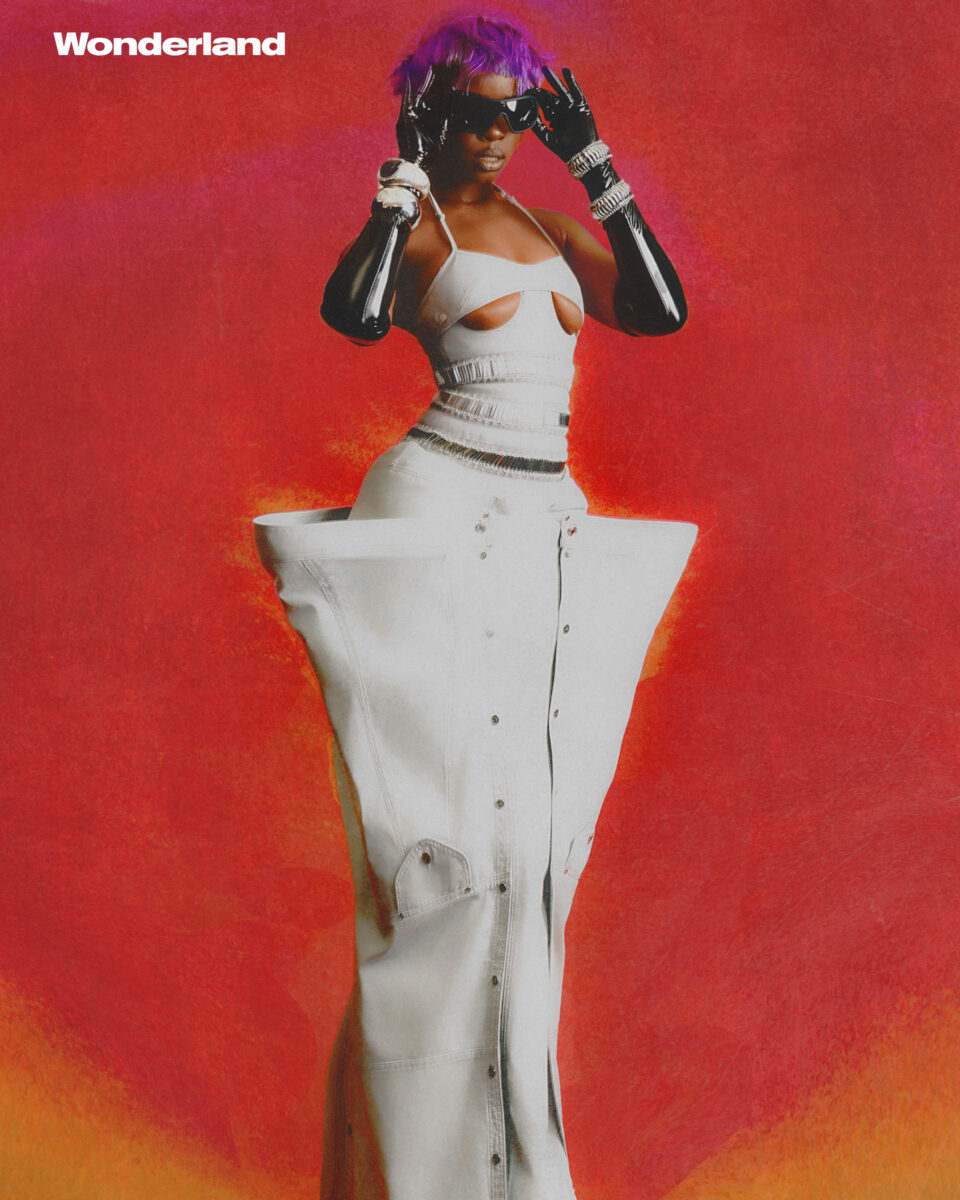
NA: Is there a difference between how you approached who your character was in season two?
JS: I think Bianca has so much more at stake going into season two because there’s no way around what she’s got to face. She’s going to have to figure out the situation with her mom and figure out how to navigate being a normal student. It was tough because there’s this bravado and vulnerability she had in season one but now she’s spending season two always looking over her shoulder. I’m interested to see what I did and how I pulled it off. But I’ll say I really dug into her backstory, creating things about her that even the writers don’t know about. I wanted it to come across as if she’s progressing and learning. I think she had a lot more emotional intelligence going into season two.
NA: Which voices in storytelling are currently inspiring you and which stories are you excited to tell next?
JS: What comes to mind is Michaela Coel.
NA: I love that woman.
JS: I’ve never met her, but I’m obsessed with her. There are so many things about the experience that she captures. Her writing [is incredible]. I’m so proud of her and I hope that people just throw cash at her and let her make anything she wants.
NA: And give her some damn awards. That woman is prolific.
JS: She is one actor that I would be salivating at the chance to work with. I’m really happy that Daniel Day-Lewis is back, even if he is just returning for his son’s project. Nikyatu Jusu—I love her. She was the director of Nanny.
NA: Oh god, I love that film.
JS: She was my film teacher in high school.
NA: No way.
JS: She really was the model for me, and she’s why I am where I am today. I also hope people continue to throw cash at her. I think she’s writing a sequel for The Fly.
NA: No, fucking way.
JS: Nanny premiered in theatres the same day that Wednesday season one premiered. That was a crazy full circle moment. As for the stories I’m telling next? I’m working on a couple of projects that I’m really excited about. I’m going be stepping into a directorial role again for the first time in pretty much a decade and I’m producing a documentary. I’m honoured to be using my platform to bring the themes of our time to the spotlight. Again, I thank you so much for doing this interview.
NA: Oh, it’s a pleasure.
JS: [I am so happy] I’ve had this conversation with you.
NA: I hope we cross paths at some point.
JS: Yes, absolutely. Definitely this year.
NA: Surely, please, somebody! It’s been wonderful talking to you. I hope I did this okay.
JS: I think you did beautifully. I love what this interview has been. I don’t ever wanna be shy about talking about Blackness.
NA: It’s a wonderful thing.
Photography by Ace Amir
Styling by Ayumi Perry
Interview by Naomi Ackie
Words by Erica Rana
Hair by Miss Kam using Davines
Make-up by Kauv Onazh at Opus Beauty
Nails by Julie Kandalec at Star Touch Agency
Digi Tarishi Gupta
Videography by Mylo Butler