With jazz growing its audience emphatically, Wonderland profile the women putting diversity, community and representation at its epicentre.

Jazz continues to thrive in the UK—refreshingly so for a genre rooted in community and authenticity. But whilst certain facets of its rise feel like a breath of fresh air in the increasingly tumultuous wider industry, there’s certainly room for growth and augmentation. In research conducted by Women In Jazz, an organisation centred around the celebration and spotlighting of women in music, 55.8% of women feel poorly or very poorly represented. And so in steps the campaign, The Year of Women In Jazz, a year-long emphasis on the incredible artists leading the charge.
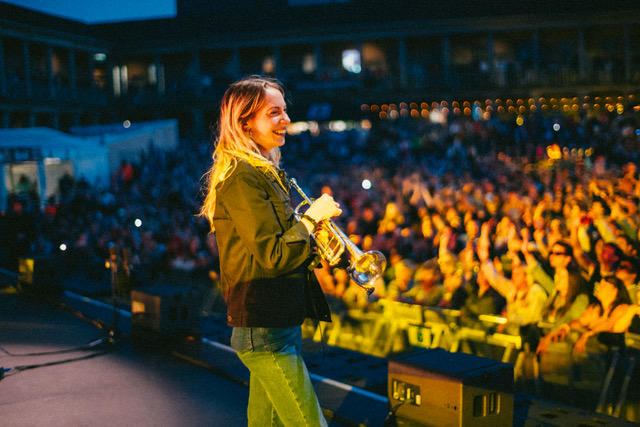
Spearheaded by founders Louise Paley and Nina Fine (pictured above), the 12-month programme sprawls across newly released music, live shows, informative talks and mentorships, and aims to shine a light on on the thriving female community in jazz. At its core, a single has been shared — and will be continued to be shared — once a month, the latest of which being “At Home”, a cut from trumpeter Lily Carassik, a stunning effort of skill and nuance.
To further commemorate the initiative Women In Jazz and the incredible talent at the heart of it, Wonderland catch up with some of the artists involved in an exclusive series of profiles.
Listen to latest release “At Home”…
Read the interviews…
Rebecca Vasmant

Hi Rebecca! Who are you, in a nutshell?
I’m just a girl, who loves Jazz, records and being with the people I love. I have a huge passion for collecting records and discovering new music. Everything I do, from DJing, to the band, to getting musicians together to record, my label, everything all comes from my love for music. I just absolutely love, love music on such a deep level and am so grateful to be able to do this as my career.
Where does your involvement with Women In Jazz stem from? You were the first major signing for Women In Jazz, how does that feel?
I first met Louise and Nina and the Women In Jazz crew quite some years ago now. I did a takeover on their instagram page in their early days when I was running my Jazz series at Sub Club, and it went from there! I feel very lucky and honoured to be the first signing for them and have so much respect and love for what they are doing. They really are paving the way for a more gender equal Jazz scene in the UK, so this could not be a more perfect partnership!
You are poised to share your second album soon. What was the process of creation? What does the LP mean to you?
Yes indeed. I am so excited and almost can’t believe we are releasing my second album, it all feels like an amazing dream! My process is something along the lines of seeing music as a soundscape and a bed of emotions. I put together my tracks in accordance to how I feel, what emotions I want to put into the track and what it’s about. I would usually put together the base of the track with MIDI parts, arrangement and chords, keys etc, then get together with the vocalist on the track and write the lyrics together in a brainstorm session. We then record lots and lots of takes of lead and backings. I then go away and arrange how I feel sounds right, then from there I would replace the midi drums with real drums, keys samples from my Jazz records with real keys and so on. It’s a bit of a journey where it feels so exciting to create something from an idea in my head, onto paper and into a real song. It really is a beautiful process and I honestly enjoy that part of it so much.
For you, what is the core essence of jazz?
Plain and simple: emotion. How I feel, or what emotion and message I put back into music makes it Jazz for me. I was always fascinated and still am, by the concept of a deep meaning in a song with no words and just coming from the way musicians play their instruments. It’s all a journey of mind and emotion for me, Jazz.
Talk us through your work as part of the Women In Jazz programme. What do you hope it’ll achieve?
Women In Jazz really is a special and important programme, doing truly great and absolutely necessary things for gender equality in Jazz. As a woman in Jazz myself, I have faced barriers and difficulties in my own career. By working with Women In Jazz I hope to inspire and pave the way for young women coming through, to see what we are doing and feel inspired into having the confidence to get into the music industry and feel that they have opportunities to create and play.
Talk us through your other endeavours – what else is coming from you this year?
This year so many exciting things are happening. I am going to be touring the album with my band in some amazing festival and club shows over the summer, as well as working on my third album (eeeek!), DJing all over and being in my happy place. I’m also working on a very exciting release on my own record label , Rebecca’s Records, which is from an insanely talented young woman in Jazz in Scotland. Lots of exciting things and I honestly cannot wait!
Lily Carassik
Hi Lily! Who are you, in a nutshell?
I’m Lily, and I’m from Lancaster, UK. My mum was a French teacher (now retired) and my dad was a composer. I play the trumpet and have been lucky to have had a career in music for the past 15 years!
Talk us through your origins as a musician – how and why did you find a path as a trumpet player and composer?
My dad was a composer who wrote pieces of music for local community projects, organisations and charities and taught me and my sister that music was a human right, that it was to be enjoyed by everyone, and it was for everyone and that really good music often has a purpose. So for me it starts there. Whatever genre, music that I really enjoy includes at least one accessible quality – either a captivating rhythm, melody or story, or all three. Where I grew up there was a vivid music scene – with folk nights and jazz gigs at every pub, so when a friend of mine who played sax started going to local events and getting stuck in, I tagged along and started to find my footing playing in bands of every and any genre. I still make music for a living because I’m still in love with the culture of making music. I love to practice the trumpet, working things out with a band, having those gigs that feel like it was all worth-while. I love the unpredictability of the job and the travel that often comes with it! I’m still in the infancy of my composing career and I still take regular lessons on the trumpet (I always have) so it’s very much a life-long learning curve. My dad taught me that you have to earn your place in a band and I think that’s a code I enjoy trying to live by. Saying that, I also try to keep a foot steady in the world outside of music to stay sane. It’s easy to get confused by what you love to do and who you are.
You teach Jazz Trumpet at Goldsmiths University. Do you see the new generation finding love and passion for the genre and the instrument?
I do! There is so much in the way of great mainstream inspiration for this new generation of musicians, I feel like they have a lot to draw from. More and more bands with mass appeal include brass instruments and elements from different genres in their music so there’s a lot out there for younger players to take inspiration from.
For you, what is the core essence of jazz?
I believe that the defining quality of jazz is a musical conversation happening in real time. (It’s something I was forced to come up with when a classical musician friend of mine tried to argue that jazz was only swung or syncopated music…). There’s a lot of great popular music that includes instrumental solos, but jazz is when everyone in the band is listening, and you feel like the whole thing can transform and evolve at any moment. It doesn’t need to be a private conversation either – it can be between an instrumentalist and the audience. But jazz is the living, breathing quality of music, and that is what makes it so unique, and such a skilled discipline.
Talk us through your work as part of the Women In Jazz programme. What do you hope it’ll achieve?
It’s been great to collaborate and learn from the team at Women In Jazz – they are so aware of the scene, what needs improving and are so active in promoting positive change.
Talk us through your other endeavours – what else is coming from you this year?
In between gigs across the UK and abroad, I am writing a lot with my friend Stefan Melovski and we plan to release music in the near future! And I’m running the London marathon. So wish me luck!
COLECTIVA
Hi COLECTIVA! Who are you, in a nutshell?
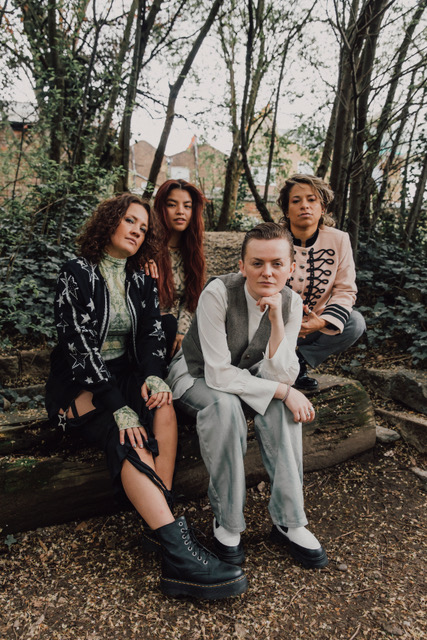
We are a female collective based in London that plays afro-latin jazz.
How did you form as a group? What is your collective mission?
COLECTIVA was originally founded by Viva Msimang and pianist / percussionist Lilli Elina, as a response to the lack of spaces where female-identifying musicians could truly collaborate on equal footing. From the beginning, the vision was clear: to build a collective free from traditional hierarchies and the constraints of the Male Gaze – a space rooted in creativity, mutual respect, and radical freedom. Since forming in 2018, COLECTIVA has evolved through a number of line-ups, each one bringing fresh energy and perspective. Along the way, we’ve had the honour of working with some of London’s most talented female musicians, each contributing to the rich, ever-expanding sound and spirit of the group.
Our collective mission is to challenge and disrupt patriarchal narratives through powerful, genre-bending music rooted in Afro-Latin rhythm and jazz. We exist to carve space for underrepresented voices – particularly women and non-binary artists – in scenes where they’ve historically been sidelined. COLECTIVA isn’t just a band; we’re a movement of musicians, creators, and collaborators who use sound as a tool for resistance, connection, and celebration. Whether we’re playing to a packed-out room at the Jazz Cafe or performing live on BBC Two at Glastonbury, we bring rebel energy and radical joy to every note.
In your sound, you explore the parallels and differences between Afro-Latin and contemporary jazz sonics – why is that the pocket you fit into? What do you find compelling about the blend?
For us, the meeting point between Afro-Latin rhythms and contemporary jazz isn’t just a stylistic choice – it’s where our identities, influences, and politics naturally collide. Afro-Latin music brings a deep-rooted sense of community, resistance, and ancestral rhythm, while jazz offers space for improvisation, experimentation, and pushing boundaries. That intersection feels like home – it gives us the freedom to honour tradition while also questioning it, to groove and to challenge, to connect and disrupt. We’re not interested in fitting neatly into one genre or the other – we exist in the in-between. That’s where the magic happens.
What compels us most about the blend of Afro-Latin and contemporary jazz is the constant dialogue between structure and freedom, tradition and innovation. Afro-Latin music is deeply rooted in rhythm, ritual, and community – it holds history in every beat. Jazz, on the other hand, gives us space to break the rules, to explore dissonance, abstraction, and improvisation. When these worlds meet, something electric happens. The groove holds you, the horn lines provoke you, and the interplay between instruments becomes a conversation that transcends borders and genres. It’s music that makes you feel and think at the same time – and that’s exactly where we want to be.
For you, what is the core essence of jazz?
For us, the core essence of jazz is freedom. It’s the freedom to express yourself fully, to break and reshape the rules, to listen deeply and respond in real time. Jazz is rooted in resistance and resilience – it was born from struggle and turned into beauty, defiance, and innovation. It’s also about conversation – between musicians, between cultures, between past and future. Jazz doesn’t stand still. It evolves, it absorbs, it pushes. And in that spirit, we see it as the perfect vehicle to explore identity, challenge systems, and build something new – together.
Talk us through your work as part of the Women In Jazz programme. What do you hope it’ll achieve?
Being part of the Women In Jazz programme has been an incredibly empowering experience. It’s a space that amplifies voices that have long been underrepresented in jazz and beyond – women, non-binary, and gender-expansive artists who are reshaping what the genre looks and sounds like today. Through this work, we’re not just performing – we’re building community, sharing knowledge, and creating visibility. We hope our presence and our sound can open the door for future generations, inspiring them to create music freely, with purpose, and without limitation. It’s about exploration, breaking patterns, and showing that there’s power in carving your own path – even when it goes against the grain.
Talk us through your other endeavours – what else is coming from you this year?
This year is an exciting one for us. We’re diving deeper into our sound and preparing to share a lot more of it. We’re currently working towards the release of our debut EP, which will bring together everything we’ve been exploring sonically and politically over the last few years. Expect bold rhythms, unexpected turns, and plenty of that signature COLECTIVA energy. Alongside the EP, we’ve got new music and visuals in the pipeline, as well as more live performances and collaborations that push the boundaries of what we can do as a collective. This is a year of growth, of building on what we’ve started, and sharing more of our story with the world.
Emma Johnson

Hi Emma! Who are you, in a nutshell?
Thanks for having me! I’m a saxophonist and composer based in Leeds. I’ve spent a lot of my career so far performing and recording for different bands, as well as writing for my own group Emma Johnson’s Gravy Boat. More recently, I’ve been delving into writing with different people and composing music for commissions and just trying to focus on the good bits – connection, collaboration and emotion.
London’s jazz scene has been flourishing across the last few years, would you say that’s reflected in the north of England?
I can’t speak for the whole of the North, but I definitely think the scene where I am in Leeds is great and the connections between different cities are flourishing. There’s a lot of great collaboration between Leeds, Manchester and Newcastle for example, and I’m sure loads more links that I don’t know about yet! I do think a large number of musicians see London as the end goal or where they have to be for things to happen, that things will progress at a slower pace in cities like Leeds, because people treat their time here as temporary so don’t set things up or get involved as much community wise. One thing that came as a result of the pandemic was that location wasn’t a barrier and people started to look around more, which seems to have gone back the other way a little – I’d love to encourage that more. Someone put it brilliantly in a conversation I had the other day and said a UK tour without looking outside London would just be one date! I also think there are a lot of ace DJ’s doing wonders for promoting the UK jazz scene as a whole like Deb Grant, Tina Edwards and loads more – and great acts are popping up from all over so it’s all positive progress.
You and your band the Gravy Boat are renowned for your live shows. What is your favourite thing about performing?
My favourite thing about performing is the interaction and getting to play with my ace band. They’re equal parts lovely people and brilliant musicians, and what they bring to the music and how they develop songs even after we’ve played them for years never fails to amaze me. My second favourite thing is getting to forge a connection with audiences, especially ones that ‘don’t like jazz’. Our music is very melodic and the shows include little stories about the songs and give people things to latch onto if they want. It’s not easy listening by any stretch, but I love it when people find something in the music or stumble across us and have a great time.
For you, what is the core essence of jazz?
Connection and interaction. I’m not always very self confident in my playing but it’s not really about me, it’s about adding whatever the song needs is the best answer to that.
Talk us through your work as part of the Women In Jazz programme. What do you hope it’ll achieve?
I’m really chuffed to be part of this year of releases and for my music to stand alongside songs by artists I really love and admire. I think what Women In Jazz have been doing for a long time is consistently and genuinely promoting great music and trying to help artists reach a larger audience and gain a bigger platform. I do a lot of workshops with young people to try and provide visibility and a clear signpost to the possibility of having a job as a musician (something I didn’t know was possible as a young musician). The work Women in Jazz are doing is another pathway to achieving that and I hope it’ll mean that more women getting into music will see jazz and performing in general as something that is absolutely for them.
Talk us through your other endeavours – what else is coming from you this year?
I’m mostly writing music at the moment. I spent quite a large portion of last year converting a garage into a studio with my Dad, so I’ve been learning how to record different instruments in there and getting stuck into writing. I’ve released a couple of albums with Gravy Boat, and I’m sure there’ll be more. But I’m also excited to explore other influences of folk, singer songwriters and cinematic scores and work on some other music. I’m not totally sure where it will end up just yet – that’s the most exciting bit. I’ve got some ideas for live sessions and collaborations in the pipeline as well. I’ll definitely be sharing the process over on Instagram @emmajohnsonmusic if you want to follow along!
Alina Bzhezhinska
Hi Alina! Who are you, in a nutshell?
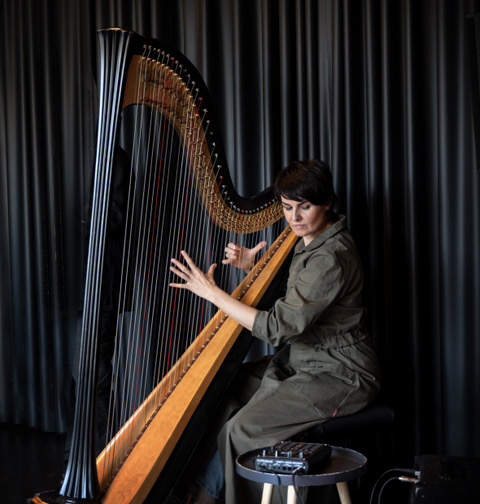
I’m Alina Bzhezhinska, a jazz harpist, composer, and founder of the HipHarpCollective. I was born in Lviv, Ukraine. I trained as a classical musician but as a teenager, I already played in a rock band and was making my own mix tapes on cassettes. Over time, I found my voice in jazz – inspired by artists like Alice Coltrane and Dorothy Ashby. My music blends spiritual jazz, electronics, and improvisation. I’m on a mission to put the harp in highlights of contemporary music and especially Jazz.
I’ve performed across Europe, collaborated with many prominent artists and released several albums: Inspiration, Reflections, and Altera Vita, and recently received the Parliamentary Jazz Award for Best Ensemble with my group. I also performed on recordings with Shabaka, Ganavya and Kamaal.
The harp is a beautiful instrumental, but is often considered anachronistic. How have you and your contemporaries reframed the instrument into a modern framework?
For me, the harp has always felt like a very modern instrument – it reflects innovation, progress, and the human capacity to turn dreams into reality. Its history goes back over 5,000 years, starting as a simple bow with one string. It evolved with us – from King David playing it while singing psalms to Marie Antoinette, entertaining herself in luxurious palaces.You hear its voice in so many styles – from baroque and classical to folk, contemporary, and of course, jazz. Thanks to incredible artists like Alice Coltrane, Dorothy Ashby, David Snell and Harpo Marx, the harp has found its way into improvisation, electronic music, pop, and rock. These days, many harpists are really pushing the instrument beyond tradition, exploring its full creative potential. While it’s still not as common as the saxophone or piano, I feel the harp is making a bold statement – and it’s beautiful to see it featured more at jazz festivals, in clubs, and on recordings. When I first moved to London ten years ago with a dream of leading my own band with harp at the centre, it was tough. I struggled to get gigs at first – it took a lot of perseverance and imagination to stay on track. But I had nothing to lose. I kept going. Being a jazz harpist isn’t always easy, but it’s incredibly rewarding. And now, more and more artists are curious about the harp and want to bring it into their work, which is so exciting to see.
You’ve collaborated with musician mavens like Brian Jackson, Chaka Khan and Shabaka Hutchings. To you, what makes a good collaborator?
For me, it starts with professionalism. You have to be prepared – solid technique, good listening skills, and an open mind. I think it’s important to keep learning, stay curious, and always pay attention to detail. But beyond the skills, I think a great collaborator brings generosity and a willingness to share ideas. That’s why my duo album with Tony Kofi Altera Vita was called “a masterpiece “ by Downbeat magazine. This work was pure proof of trust, when you feel you are creating something bigger than yourself.
For you, what is the core essence of jazz?
For me, jazz is freedom. When I improvise, I feel like I’m flying. It’s the space where I can truly express myself – my feelings, thoughts, even memories. It took time to find my own voice on the harp, but that journey was essential. I needed to discover my personal language to connect with others through music. And when I see that spark of connection in someone’s eyes during a performance, I know we’ve touched something real – something true. That’s the magic of jazz for me.
Talk us through your work as part of the Women In Jazz programme. What do you hope it’ll achieve?
I don’t think I’m doing anything extraordinary – I just want to share my experiences, make new connections, and stay inspired. If I can encourage even one woman to explore her own path in the arts, that’s something really meaningful to me. The tune I composed for Women in Jazz was a very personal piece – about love, joy, pain, and acceptance. I also got to collaborate with two amazing musicians: Elliot Galvin on synth and Menelik Claffey on bass. They added their own magic to the track, and it became something really special.
Talk us through your other endeavours – what else is coming from you this year?
This year is full of contrasts – a mix of exciting collaborations and deeply personal projects. I recently worked with Colleen ‘Cosmo’ Murphy on a remix, and I also wrote a piece for a dance film in collaboration with Max Reinhardt. I’m about to release my first harp and electronic LP with Ibiza-based producer Tulshi (on Tru Thoughts), which has been a really fresh and creative experience. I’m also working on a new live show with my band, HipHarpCollective, and the legendary Brian Jackson, which I’m so excited about. But the most meaningful work for me right now is joining the Ukrainian Art Forces – a group of musicians performing in hospitals and rehab centres in Ukraine. It’s emotional, powerful work. Playing for people who’ve suffered so much – soldiers, patients, doctors – reminds me of why I became a musician. Music has the power to heal and connect, even in the darkest moments.


