We Out Here rounds off another year with memories and moments etched into the heart, mind and soul. Writer Bethany Wright eulogises.

Though the hot weather may prevail for a few more weeks, the darkening evenings are an unwelcome signal that summer has been and… gone; tokens of festivals past are littered around my home. Dry grass lingers in the bottom of my handbags; my weathered ballet pumps that loyally two-stepped through Four Tet’s surprise set are discarded, battered by the front door, and the slow pace my brain is churning at is a reminder of how fleeting dawns were spent.
Exhibiting at the Whitechapel Gallery, Gabriel Chaile’s Archaeology of Memory explores how objects can connect cultures, people and histories – Chaile has collected souvenirs from Whitechapel, combining them with scavenged ceramics from across the world. This exhibit incarnates the human urge to collect, which design historian Beverly Gordon calls making “concrete that which is ephemeral”. Yet, despite festivals costing nearly as much as a trip to Marrakech or Marseille, we are likely to return with less than we came with.
As the weeks fly by since We Out Here (WOH), the Dorset-based festival programmed by Gilles Peterson, what remains other than tarnished objects?
Fields that hold space for such joy have, as McKenzie Ward writes, “revolutionary potential, for what the form of life could be after the abolition of commodity, the spectacle, the whole oppressive totality.” Aligning with McKenzie’s observation, DJ and presenter Angel Mel mediated a panel called “Revive the Dancefloor” in WOH’s Talk Tent, discussing how dance culture can be protected against commercialism, development, and technology, as well as how it can be a form of resistance.
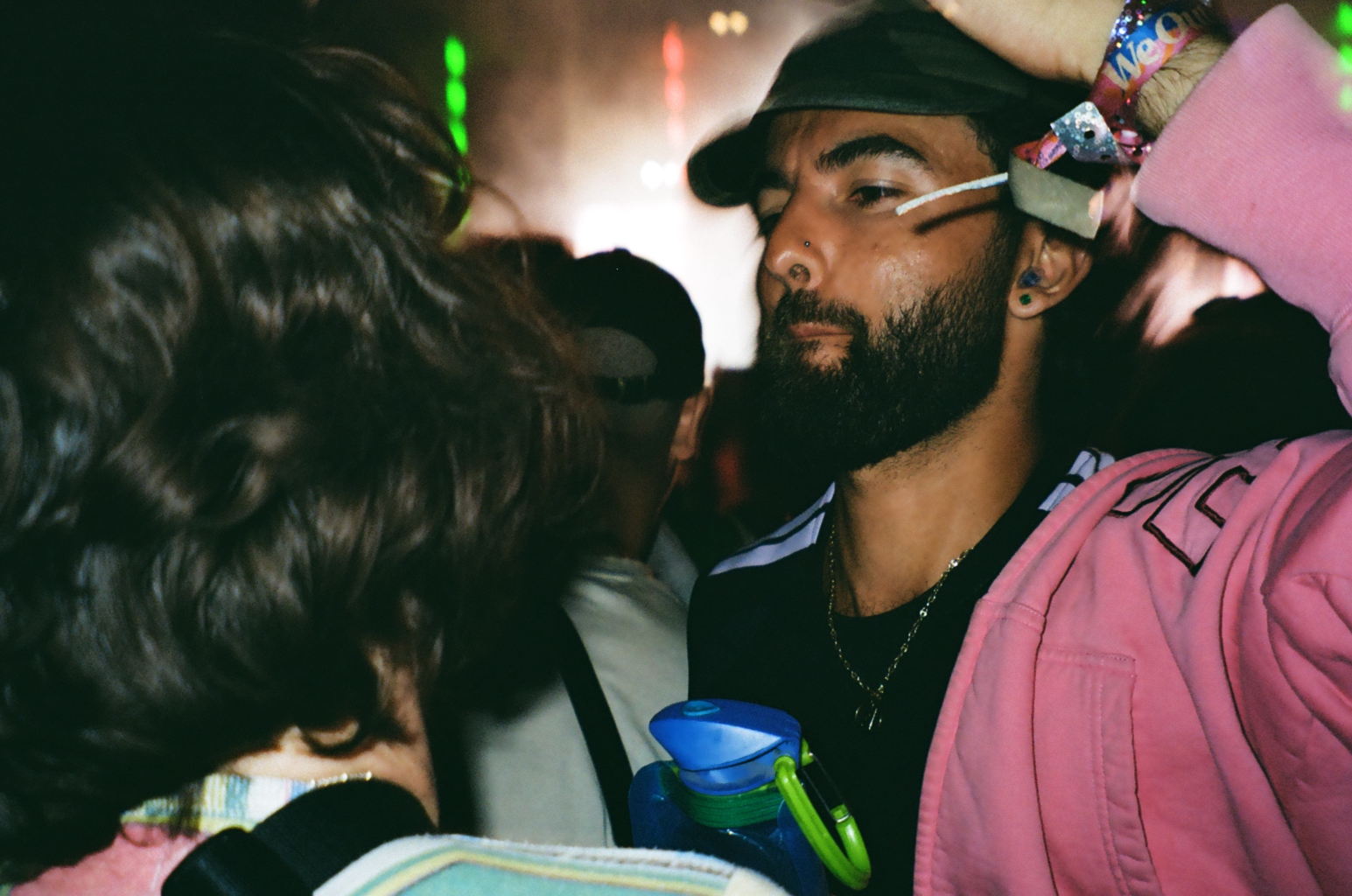
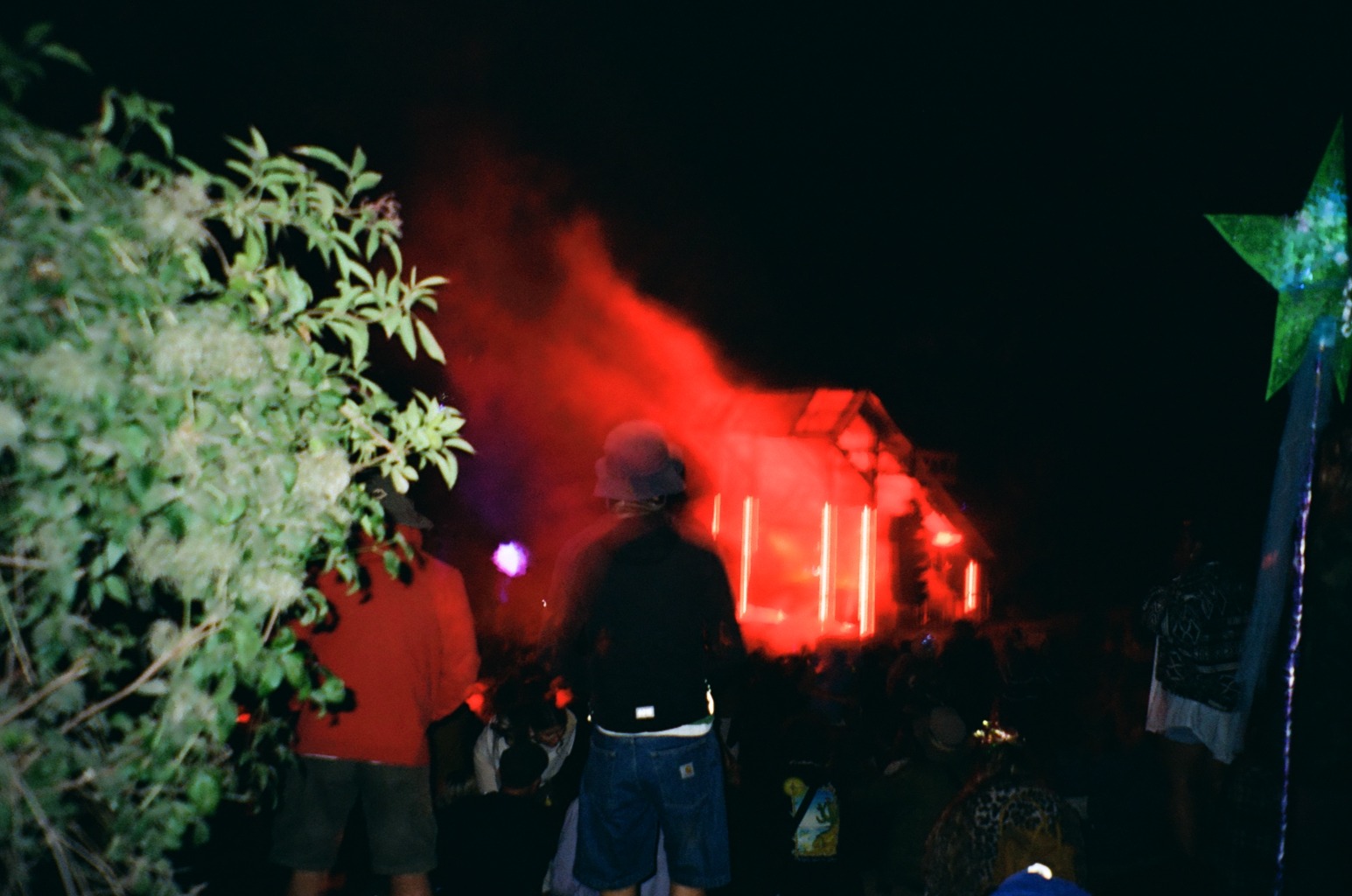
One gentleman listening on a bean bag straightened his hand in the air, “No one here dances.” Partial agreement rippled around the tent in muted nods and sighs. In a viral essay, “everyone wants to be a DJ, no-one wants to dance”, writer Dani Offline has attributed this counter-phenomenon to engaging with music becoming a “value-making” exercise, a route to find better references for one’s music, rather than joining for the “loving pleasure” of the art itself. Others have diagnosed that lack of movement as stemming from a fear of perception created by social media and selfie culture.
Offering a solution, Errol Anderson, a member of the panel and co-founder of Touching Bass, stated, “We need a dance-first mentality” when constructing dance floors – namely, where the DJ is lowered to ground level. This simple adjustment restores the dance floor to its original state, before the “Boiler-roomification” of dance culture, which transformed the DJ into the performer.
Reflecting these spatial concepts was Touching Bass’ and Mr Scruff’s tent at WOH, appropriately named “Love Dancin”. Inside, the floor was wooden. Waxed to the point of slippiness where your feet could glide around, giving the impression of slick footwork (though many were left wanting in that department). Poignantly, the DJ couldn’t be seen above the rest and, in the absence of somewhere to look, people didn’t look at all; they just danced with one another, for themselves.
This discussion of “dancer’s first” returned to the disgruntled man: “we must teach children to dance again.” In an increasingly digital world, studies have recorded a rapid decline in children’s communication and emotional regulation abilities.
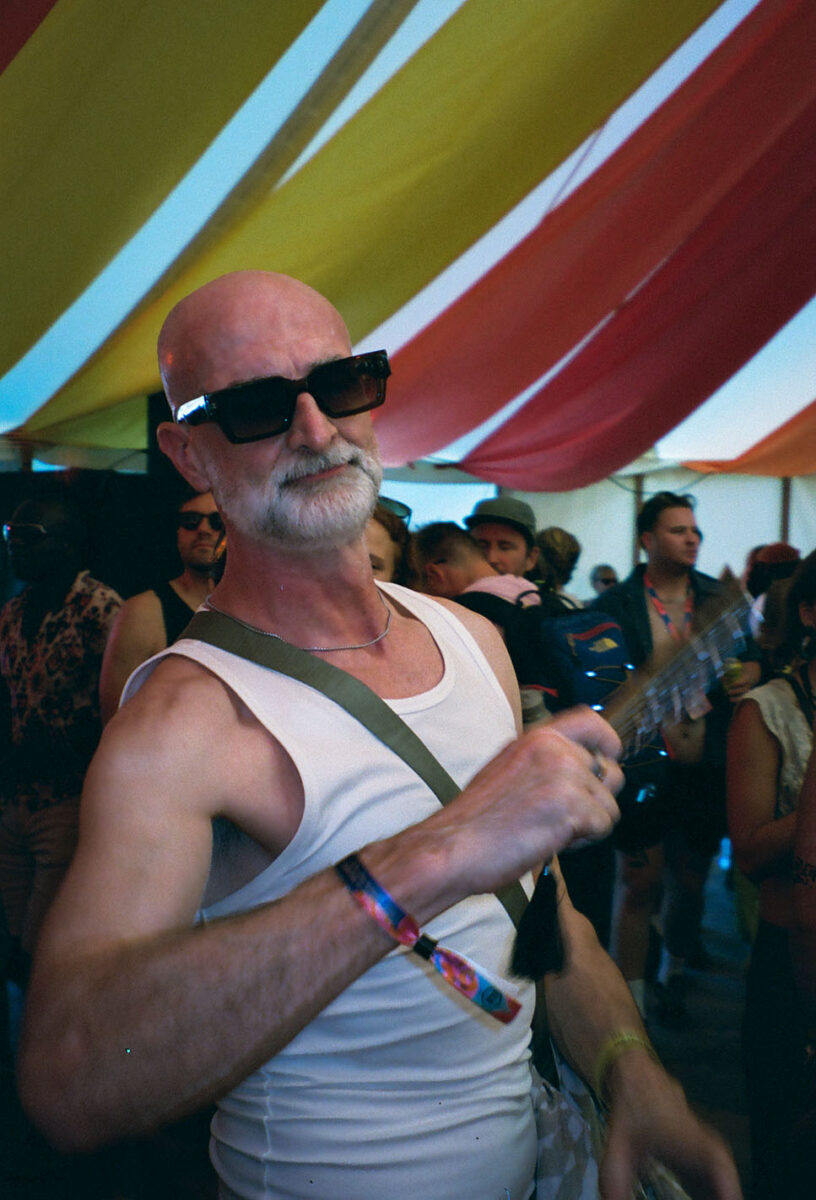
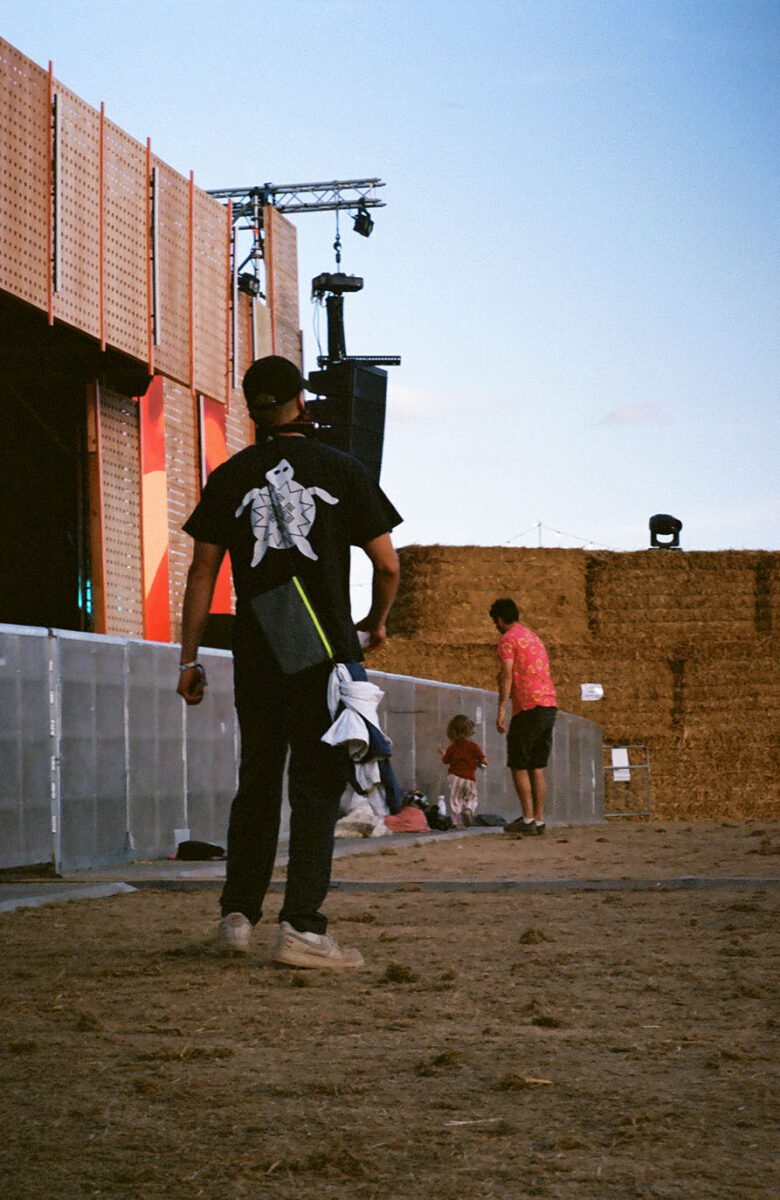
Admittedly, before WOH, I was sceptical of family-friendly festivals, but during Sweetpea’s DnB set, a three-year-old ran around the dance floor. Moving beyond linguistics, one Turkish study found that children who participate in creative dancing can express their thoughts and feelings much more effectively than those who don’t. Watching the adults around her sway, hop, and pound the dusty earth, she began copying their movements. Blonde curls flying around her ear defenders, she jumped gleefully to the bass.
However, WOH wasn’t a complete tech-free utopia. Once a day, like some freakoid creature from another planet, a truck would whizz around the grounds announcing “free wifi”. From the shade of an oak tree, I watched as people peeled themselves up from the grass, shifting from the periphery of tents where they had been swaying, to find their mobile phones buried deep in their bags. One group of friends hustled their mate to the floor as he ran towards it. “I just want to check TikTok”, he squealed, “No, Olly, don’t! You don’t need to doomscroll right now.”
Pictures are really the only surviving festival memorabilia. Often, crowds become Mexican waves of mobiles – will we ever look at these videos? Who knows? Back in 2012, the University of Michigan found that people are twice as likely to use their phone when a companion has used theirs. Researchers called it the “mimicry response”, likening it to the empathetic response of yawning when someone else has yawned. Assimilating with Norman Zinberg’s theory of “ritual and social sanctions”, where drug addiction is treated through ritualising the substance (aka. taking it once a year, at Christmas for example), the Wi-Fi bot does the same, creating a controlled environment where people can use their phones briefly and safely.
Yet the desire for the analogue is tangible. Bought up by the Tomorrow’s Warriors programme, nu-jazz musician MADELINE and her band “do everything completely live, rather than limiting ourselves creatively to respond to anything that has been pre-recorded.” Through her music, MADELINE hopes to “return the audience to the international act of listening, of hearing a record, going home and connecting to it. Right now, music is so accessible that it has been devalued.”
Equally embracing more traditional techniques, DJ Greg Wilson performed on Sunday night at the RollerRink. As I hustled my way to the front, I was readily approached by two women on the right-hand side of the stage. “Do you know what that is?” One asked me as I crouched to take a picture. Looking up, I shook my head. “Greg uses the Revox B77 reel-to-reel tape machine to record his sets, and then samples them back into new music, live. Isn’t that amazing?” Watching the old-school projector-like device whirl, I thought, “Wow, yes it was.” Just as I was leaving, one of the women grabbed me. “Stay curious!” she beamed.

These interactions are what most of us take home – as Pico Iyer said, “We travel not to move but to be moved”. On Sunday afternoon, you couldn’t speak to anyone without mentioning jazz musician and poet Joshua Idehen’s set on the main stage. Over pulled pork and chips, I got to talking with one man who had been attending WOH with his university mates since it began. Directly quoting Joshua, he said, “I like preachers, but I am no preacher!” Wiping BBQ sauce from the creases of his lips, he continued, “Me and my mates have been raving for 20 years. Some of us have kids, spouses, our dream jobs, and some of us don’t have any of those things.” Joshua asked the audience to turn to a stranger and hug them. On stage, he opened up about his own mental health, speaking out to an equally anxious crowd in front of him. “You really don’t know how much you need shit like that until it happens. I don’t think I will ever forget it. There wasn’t a dry tear in the house.”
As I joined the queue out of WOH to a chorus of beeping horns and nudging cars, I thought about how fleeting these nirvanas are, where we speak to strangers. Dance freely. Shout, sing, lose our voices, don’t shower, share our drinks, try one another’s food. Those who convene in muddy fields, McKenzie Ward reckons, share a “specific set of needs and are a particular range of people for whom the rave itself is the need.” Entering WOH, I wasn’t aware how much I needed to talk to strangers, dance, and metaphysically think about these things. Though these findings have not been memorialised into trinkets, magnets or postcards – “Fear not”, as Errol Anderson said, “the body remembers.”
Words & Photography – Bethany Wright


