From dressing Harry Styles on his Together, Together tour to building one of London’s most exciting emerging menswear labels, Alison Keogh and Kate Dewar are proving that thoughtful design and a sense of fun can go hand in hand.
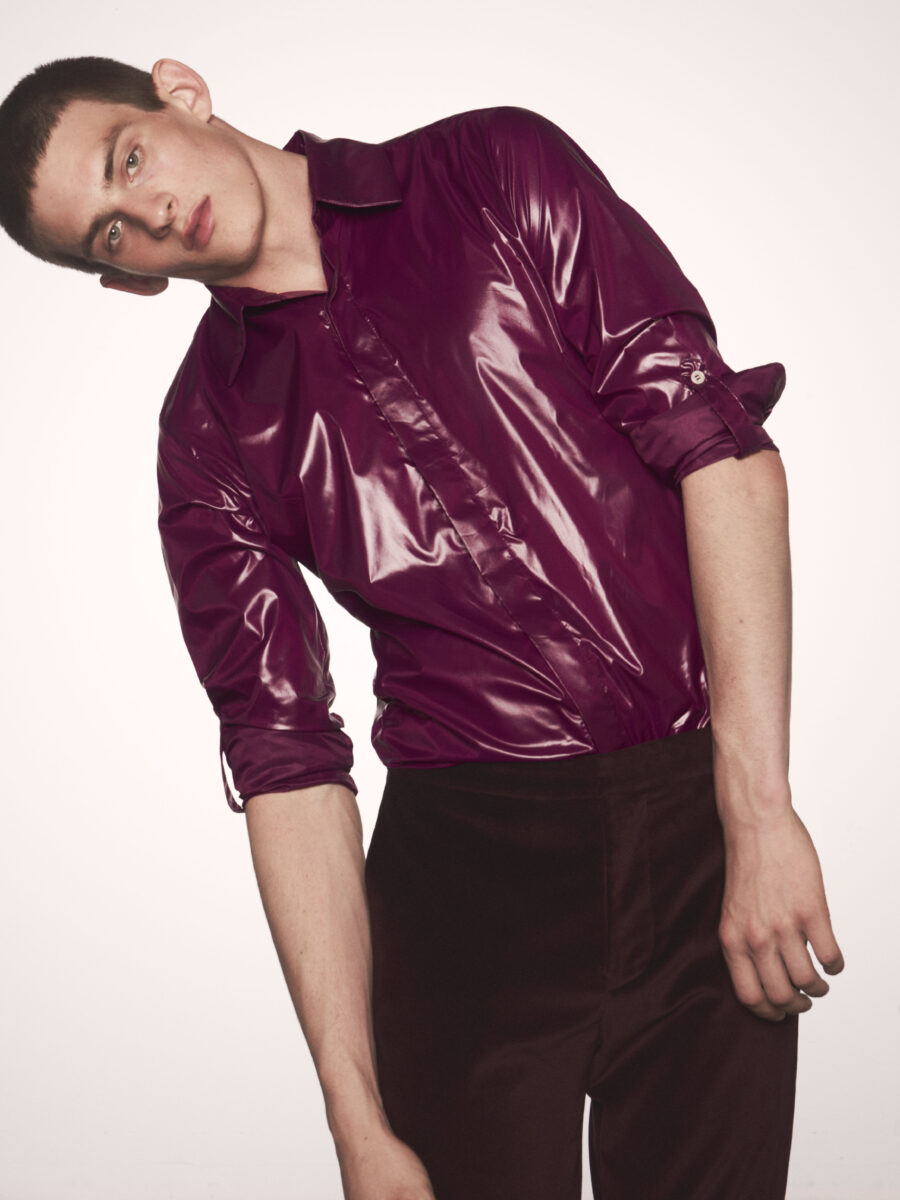
When New Zealander Alison Keogh and Scotland’s Kate Dewar graduated from the MA Fashion course at Central Saint Martins last year, they became one of the few design duos to complete the programme together, following in the footsteps of Emma Chopova and Laura Lowena, and Laura and Deanna Fanning, who design the womenswear collections at Kiko Kostadinov. Their graduate collection immediately stood apart. Developed using AI as part of the design process, it paired slightly awkward tailoring with glossy, latex-like textures and a saturated colour palette, offering an alternative to the sea of mostly muted menswear dominating the conversation.
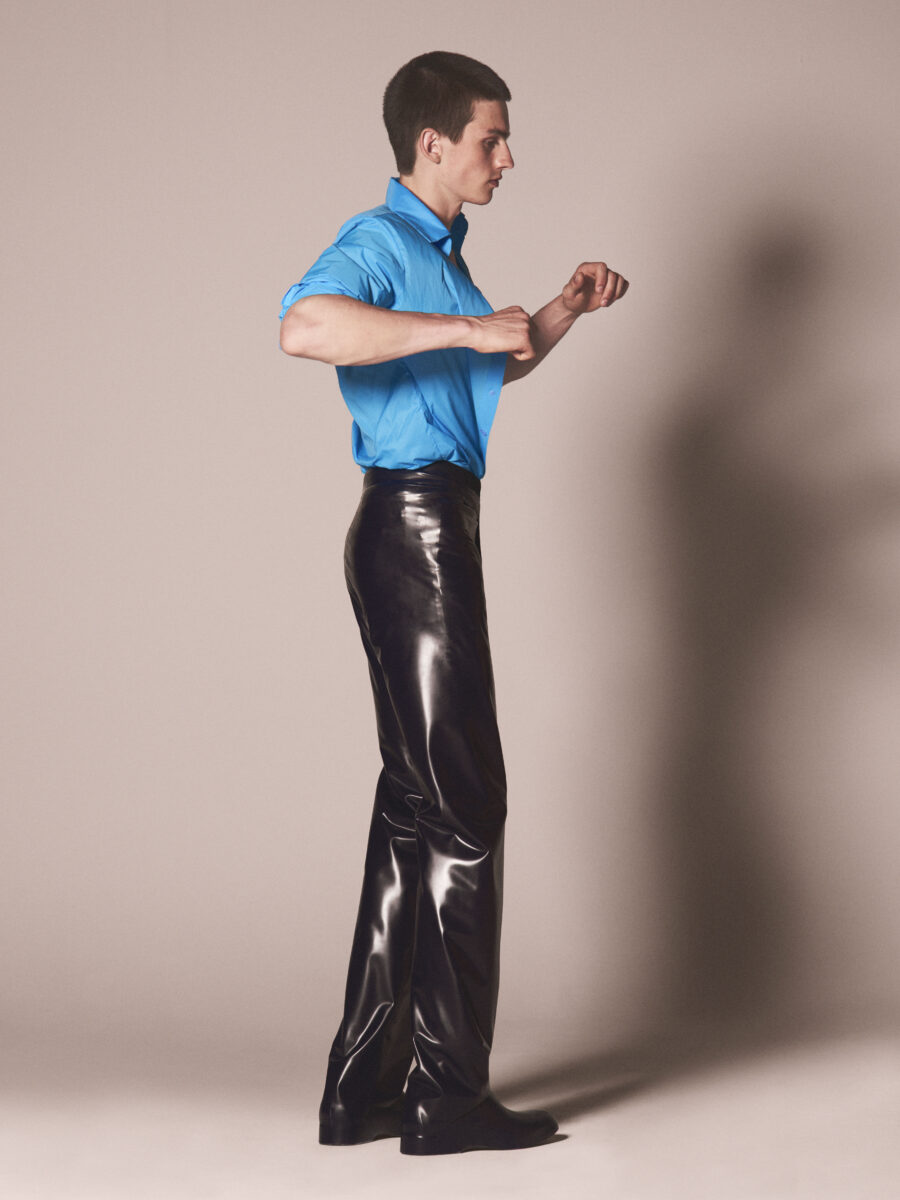
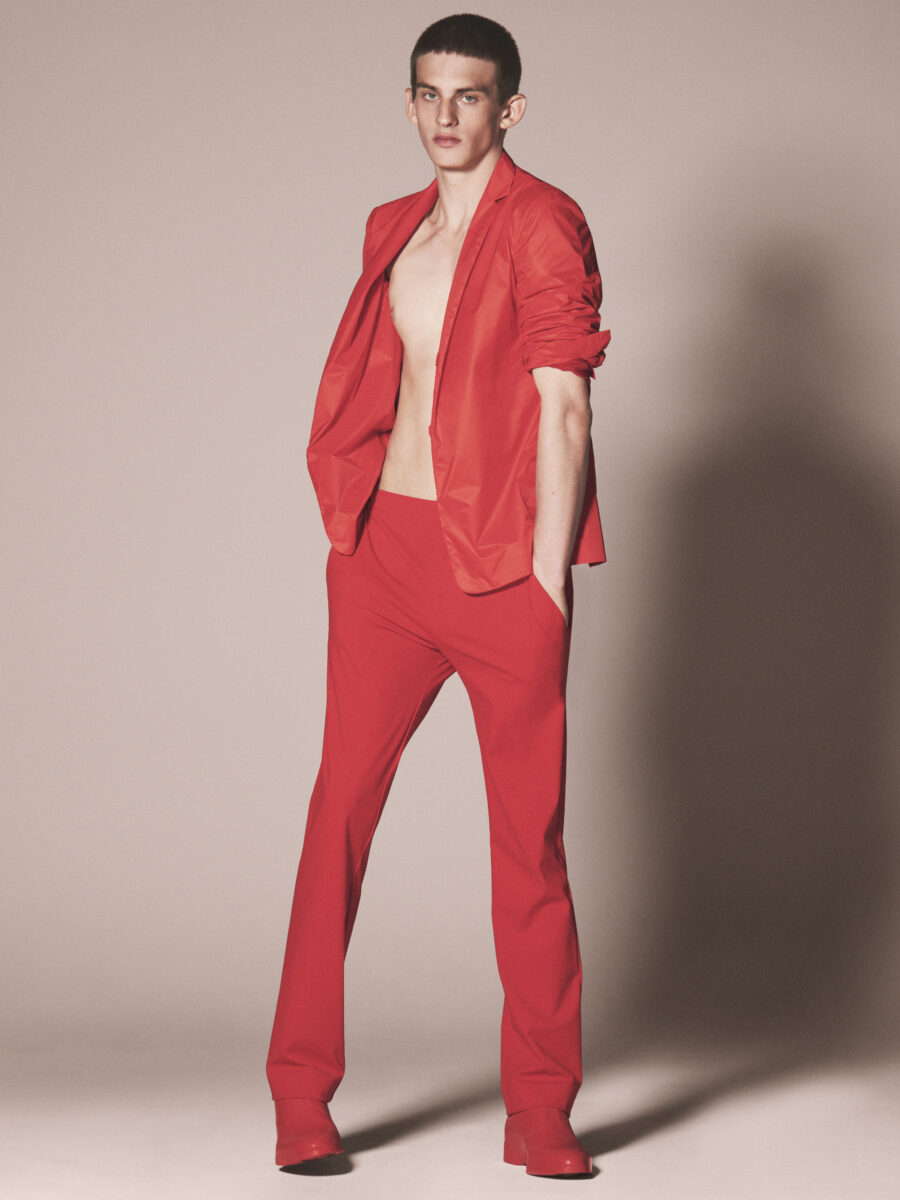
Their second collection, “Somewhere Else“, doesn’t abandon that visual language, it sharpens it. Tailoring is cleaner, proportions are more relaxed and the wardrobe has expanded with purpose, introducing a blazer for the first time while placing greater emphasis on shirting. It’s an exercise in refinement, a thread that runs through every decision they make. For all that careful consideration, though, Keogh and Dewar’s approach to style can still be summed up in three words: “fun, fun, fun.”
“The first thing that we did after the MA set the tone for us as a brand,” says Dewar, speaking from their Dalston studio. “So we were kinda like, ‘okay, what’s important? What do we want to add?’ We didn’t want to change too much, kind of just throw loads of new stuff in because we wanted to do it carefully and make it very considerate.”
Keogh Dewar is interested in building a wardrobe slowly. Every new piece has to justify its place. In “Somewhere Else”, a blazer was introduced because it felt like the natural next step in the world they had already created. The same thinking informed the shirts, which have become a central focus this season, while their signature polo has evolved into something closer to an accessory through layered collars that add flashes of colour without overwhelming the look.
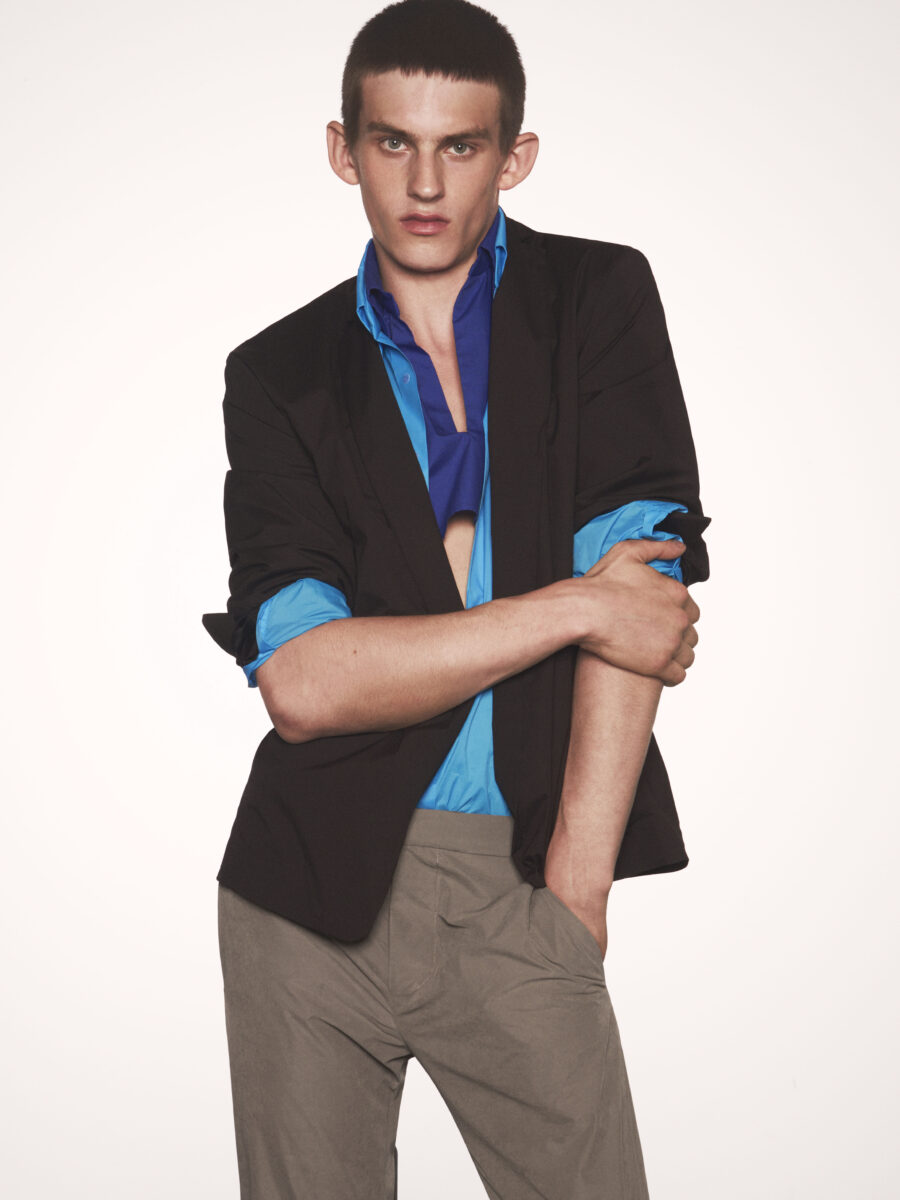
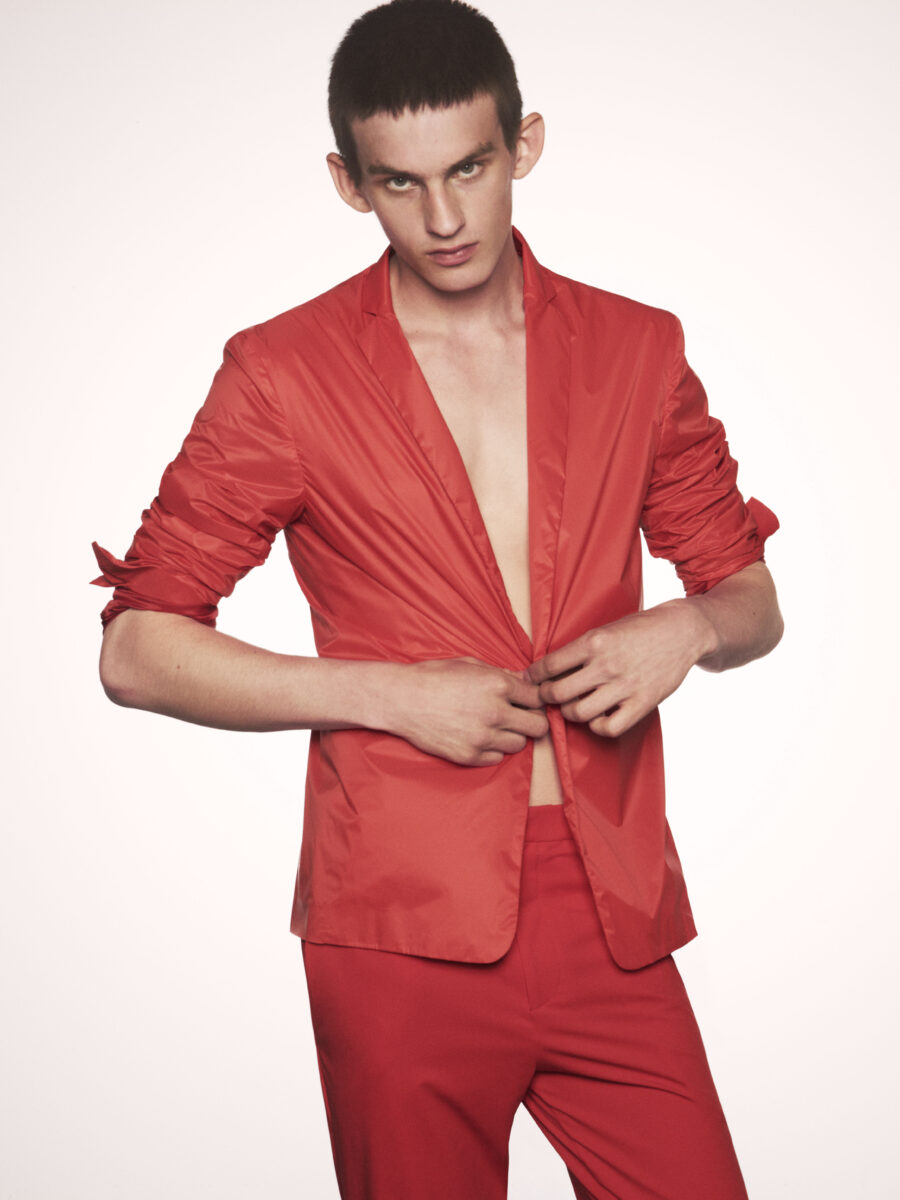
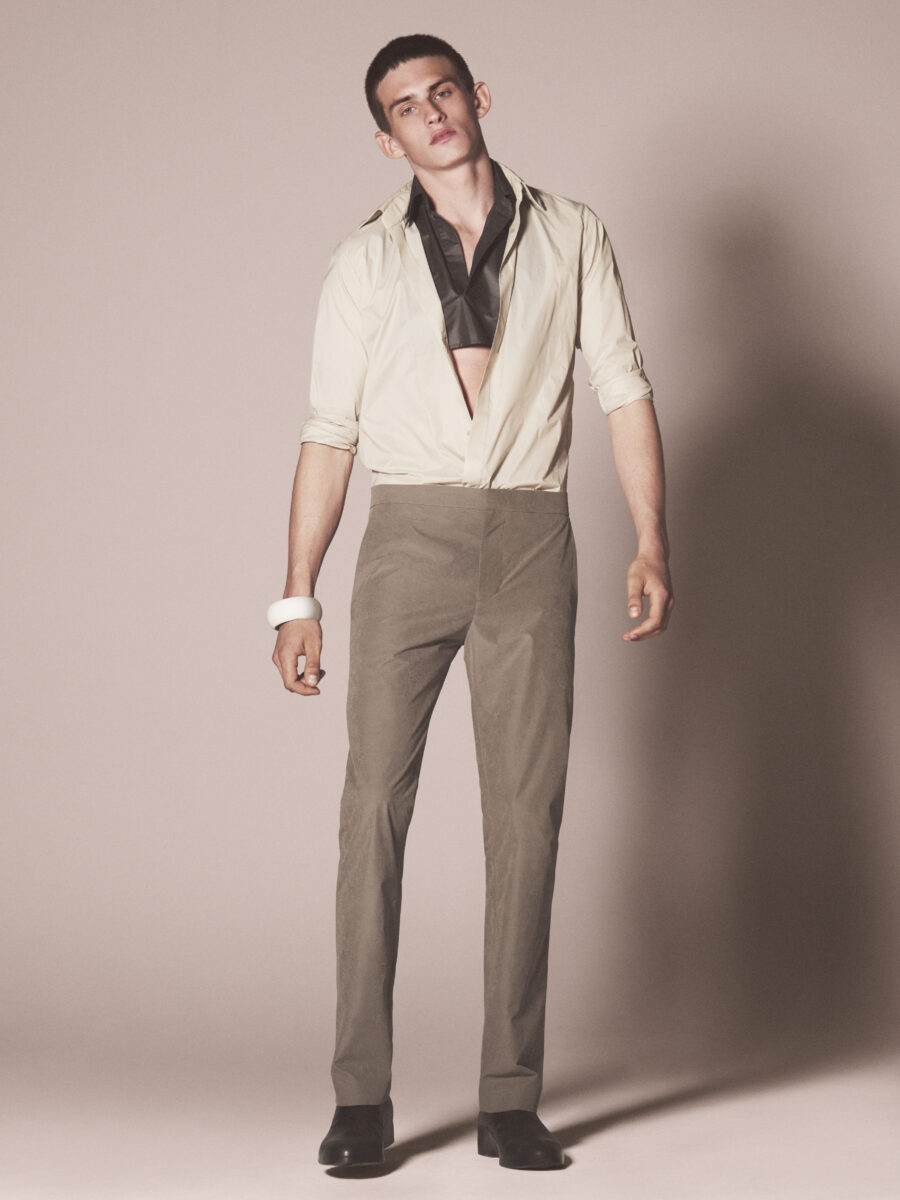
Materiality is equally deliberate, and where the collection began. The latex and ultra-shiny textiles that defined the MA collection have been replaced by more wearable, but still unconventional, fabrics sourced largely through London dead stock suppliers. “We found really special fabrics but in colours that create an impact,” says Keogh, before adding matter-of-factly, “but we obviously want to sell this.”
The duo are already imagining a point where they can invest in developing textiles of their own. “I would hope that we get to the point where we can actually develop fabrics or work in a way to create a sustainable fabric, which obviously these big houses are capable of doing, maybe a sustainable fabric that looks like nylon but isn’t.”
Colour, however, remains non-negotiable. “I think it’s very confident to just do colour. If we can do it and do it well, it can just be the most amazing thing.” At a time when contemporary menswear continues to lean towards beige, charcoal and navy, Keogh Dewar has become synonymous with a palette containing acid yellows, vibrant reds and glossy pinks as a way of bringing emotion back into everyday dressing. “I think colour has been washed out of general wear,” says Keogh. “Everything’s so neutral. Colour is so joyful.” The global male population could certainly do with a bit more Keogh Dewar.
Despite the bold palette and materials, the clothes are never intended to exist only as complete looks on a lookbook or runway. The collection is built around individual garments that can be absorbed into someone’s existing wardrobe. As Keogh puts it, “They’re special pieces and we’re not really assuming that someone’s gonna wear a nylon shirt day in, day out. But it’s a special thing that you can wear on certain occasions and that can really easily slot into someone’s more casual wardrobe.” The collection certainly makes a convincing case for more men in nylon shirts and latex-coated trousers on the streets of London.
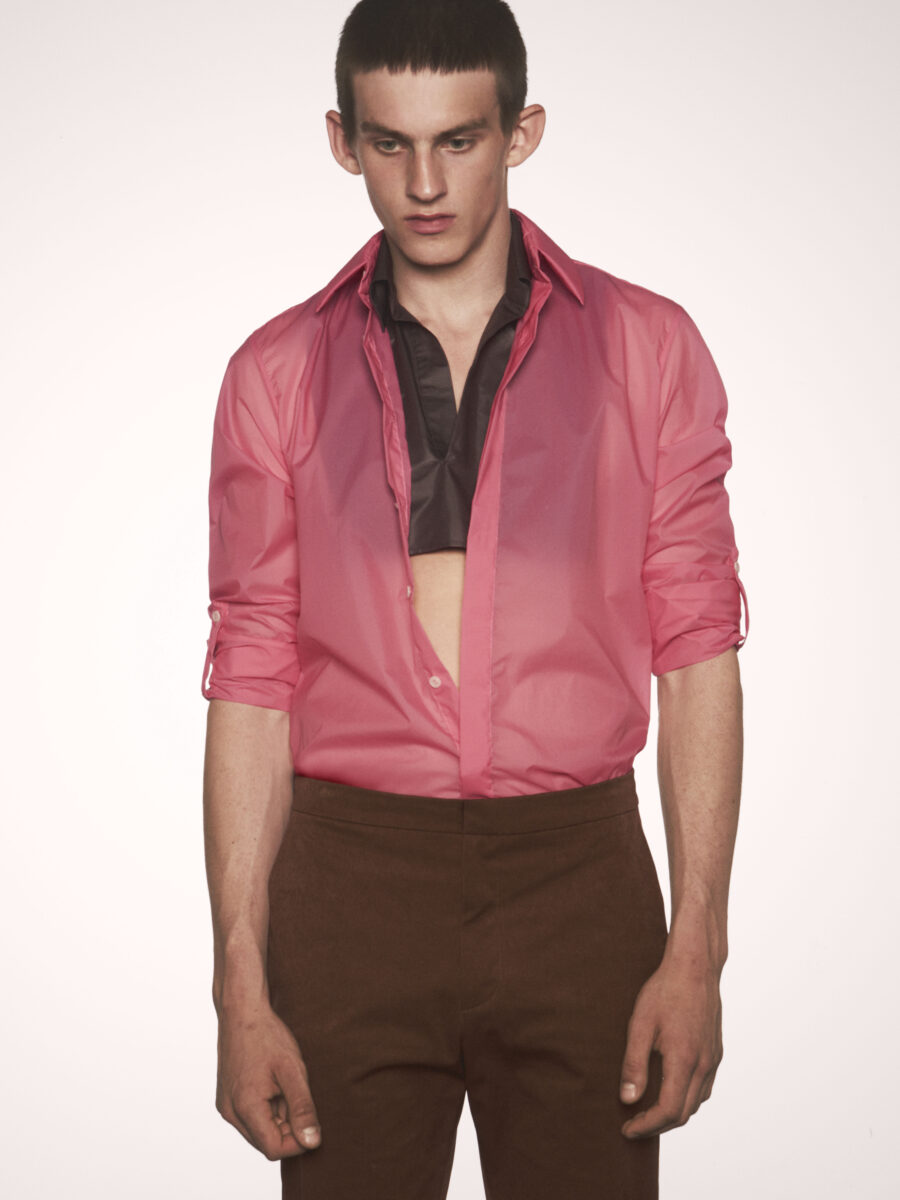
That philosophy was reinforced during fittings when the model instinctively began styling the shirts with his own clothes. “He was just wearing the shirts with his own stuff. He was saying, ‘I would wear any of this’ and we really like that.” For Keogh Dewar, that’s the real benchmark. “It is important for it to be real, that it integrates.”
The collection never feels weighed down by references or overly justified. Ask Keogh and Dewar where “Somewhere Else” began and they don’t point to a single painting, film or archive. Instead, they talk about fabric, people-watching and the friends around them. “We just observe a lot, what the people around us, our friends, wear,” says Dewar.
Those same people have become the Keogh Dewar wearer. In their collection notes, the duo describe someone who moves easily between work, nightlife and creativity, dressing with confidence. Keogh imagines “someone who is a bit carefree, fun, likes to go out,” adding they are probably “a graphic designer, or architect, like someone who’s into culture in some way.”
That confidence hasn’t gone unnoticed. Shortly after their MA collection was shown, mega-stylist Harry Lambert got in touch after seeing their clothes online, beginning a conversation that quickly developed into an ongoing collaboration. Lambert first commissioned custom looks for Harry Styles’ “American Girls” music video before returning for bespoke pieces for the singer’s current Together, Together tour.
“Thank God Harry Styles resurfaced,” Dewar laughs. “It keeps the brand going, literally is keeping it going.” Behind the joke is the reality of what opportunities like that mean for an emerging label. Dressing one of the world’s biggest pop stars is, of course, a milestone. It’s also the sort of commission that pays for the next collection.
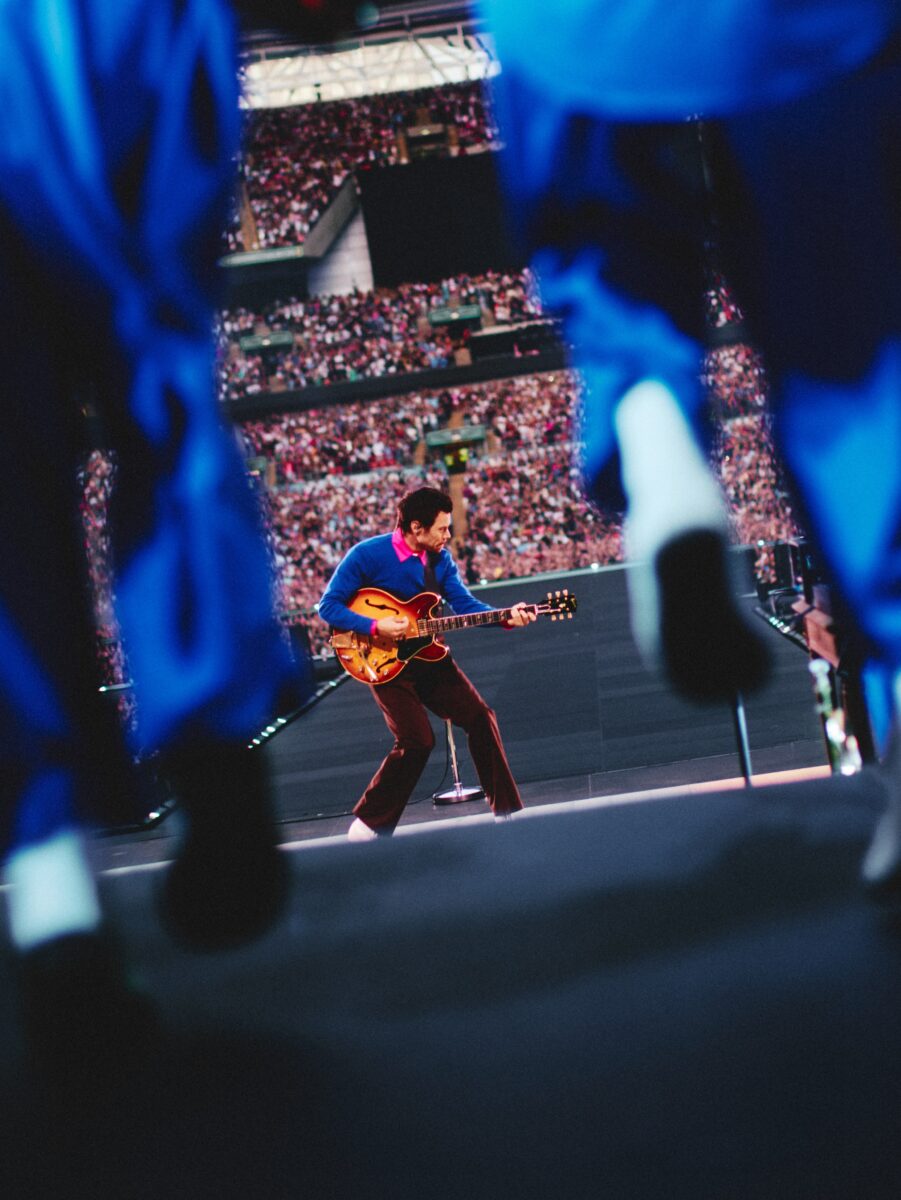
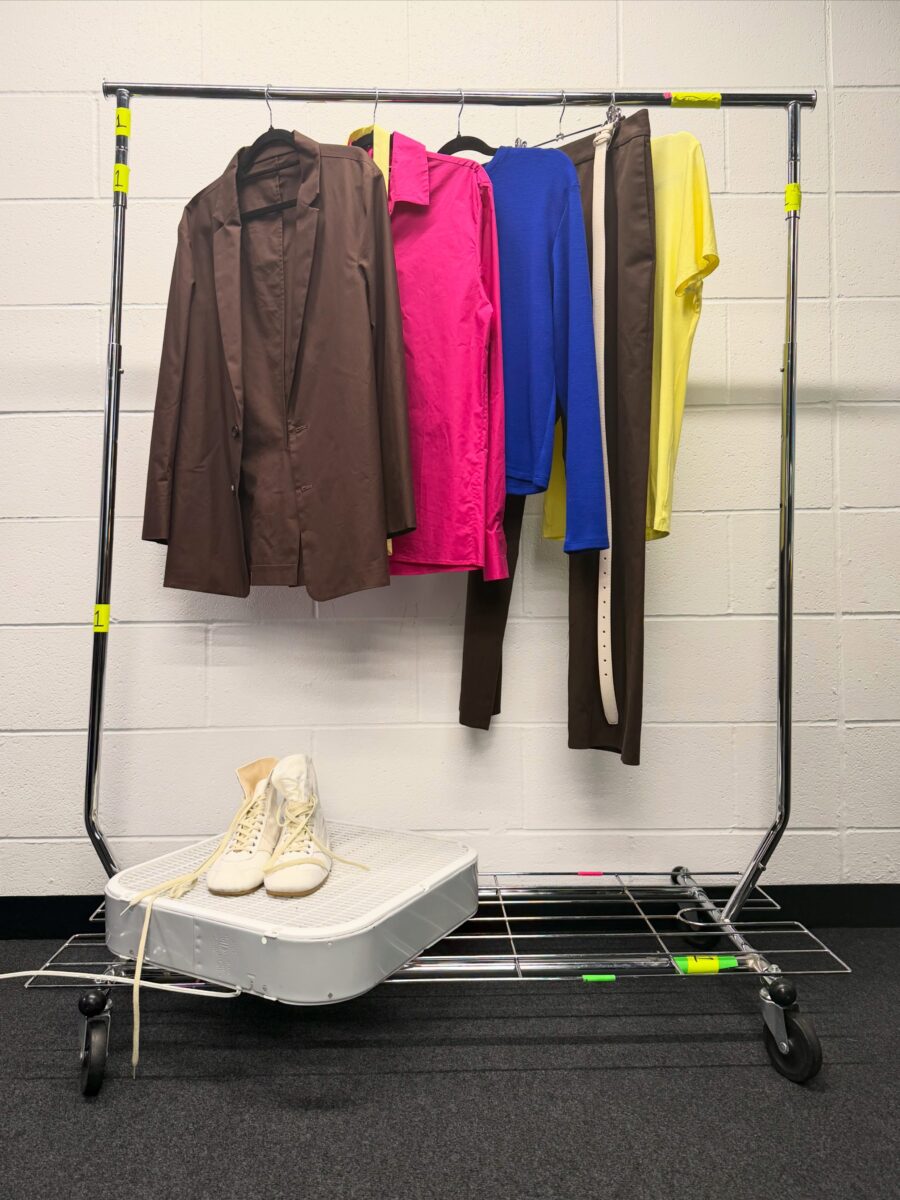
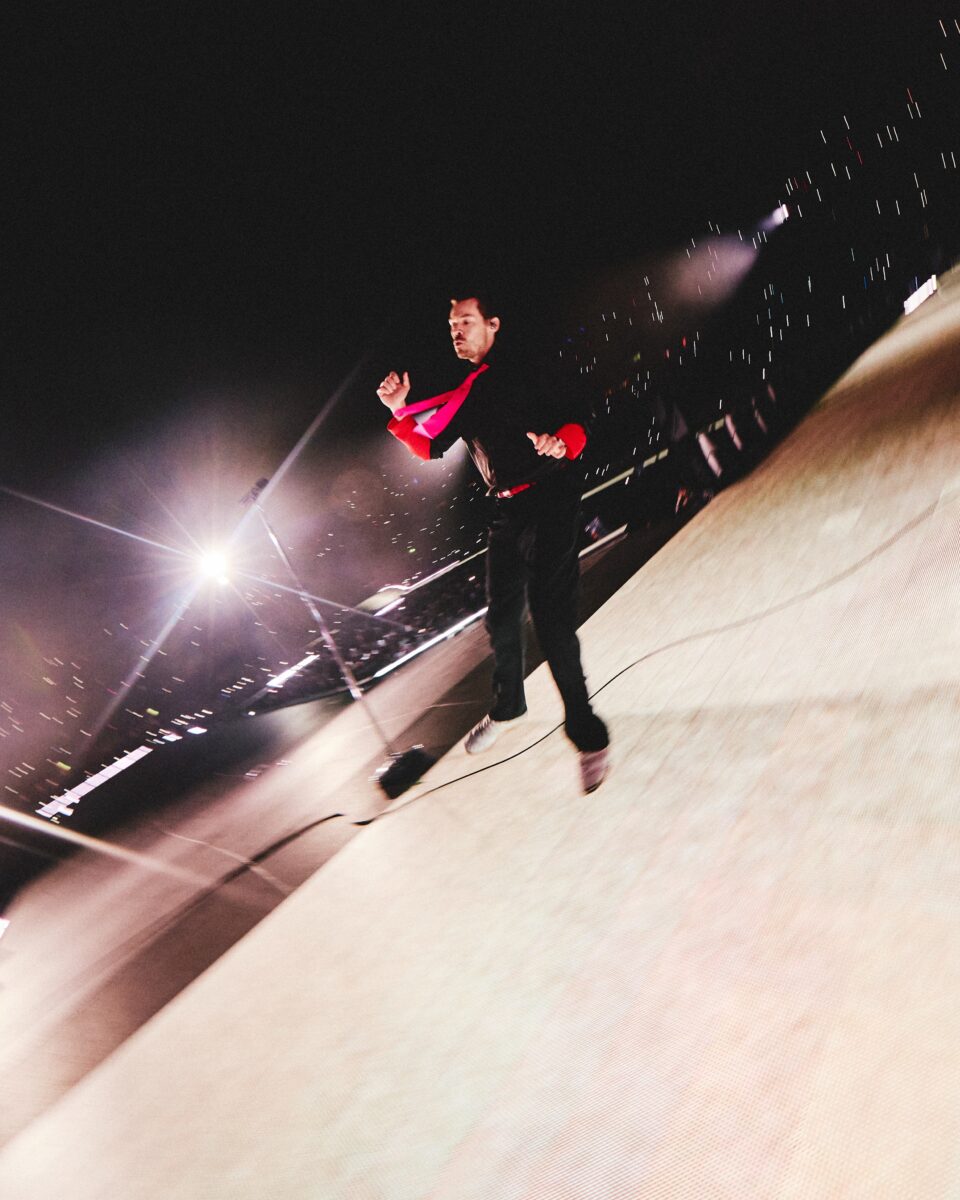
“It’s just allowed us the chance to actually make a new collection. Without that we wouldn’t have had that opportunity. And to be honest, it was a really great thing for us to go through, and actually prove the point that we can do it and do it well, to a really high standard, which was really great.”
Perhaps more surprising than dressing Harry Styles is the fact Alison Keogh and Kate Dewar are still asked why they’re designing menswear at all. It’s a question that has followed the pair since their MA at CSM, despite the industry rarely asking the same of male designers working in womenswear.
“One of our friends was talking about this, and he said he would mention us to people and they always ask, ‘Who is he?’ People always assume Keogh Dewar is a man,” says Keogh. “And I honestly find it so interesting. I love it because there’s so many men doing womenswear, and it’s never questioned.”
While male designers making womenswear are rarely asked to justify themselves, Keogh and Dewar found the opposite was true. “Whereas it was always, always, always a question to us: ‘Why are you doing it?'” For them, though, the answer is simple. “It’s just the type of clothing that we like, and the kind of stuff we want to make suits menswear because I think there’s more scope to do something different.”
Throughout our conversation in their Dalston studio, almost every answer begins with a glance at the other, checking they’re on the same page before one picks up where the other leaves off. It seems to be how the brand operates too. As Dewar puts it, “The confidence I have in Alison is where I get the confidence from to be able to do this. I wouldn’t have found that in myself. Also, working together is just actually fun. I think fashion should be fun and not so serious.”
With a pre-order model on the way, closer relationships with customers and the continued use of deadstock fabrics all forming part of a slower, more considered way of growing, Keogh Dewar isn’t in a rush. Fashion rarely rewards restraint, but the duo are quietly moving in the opposite direction. And if more men end up swapping beige for pink nylon along the way, even better.
Words by Moira González


