From lifelong friends to Frankenstein-ing a mash-up of their favourite sounds and becoming one of alternative music’s most unique duos, Phantogram owns what they’ve mastered, and you’ll know it as soon as you hear it.
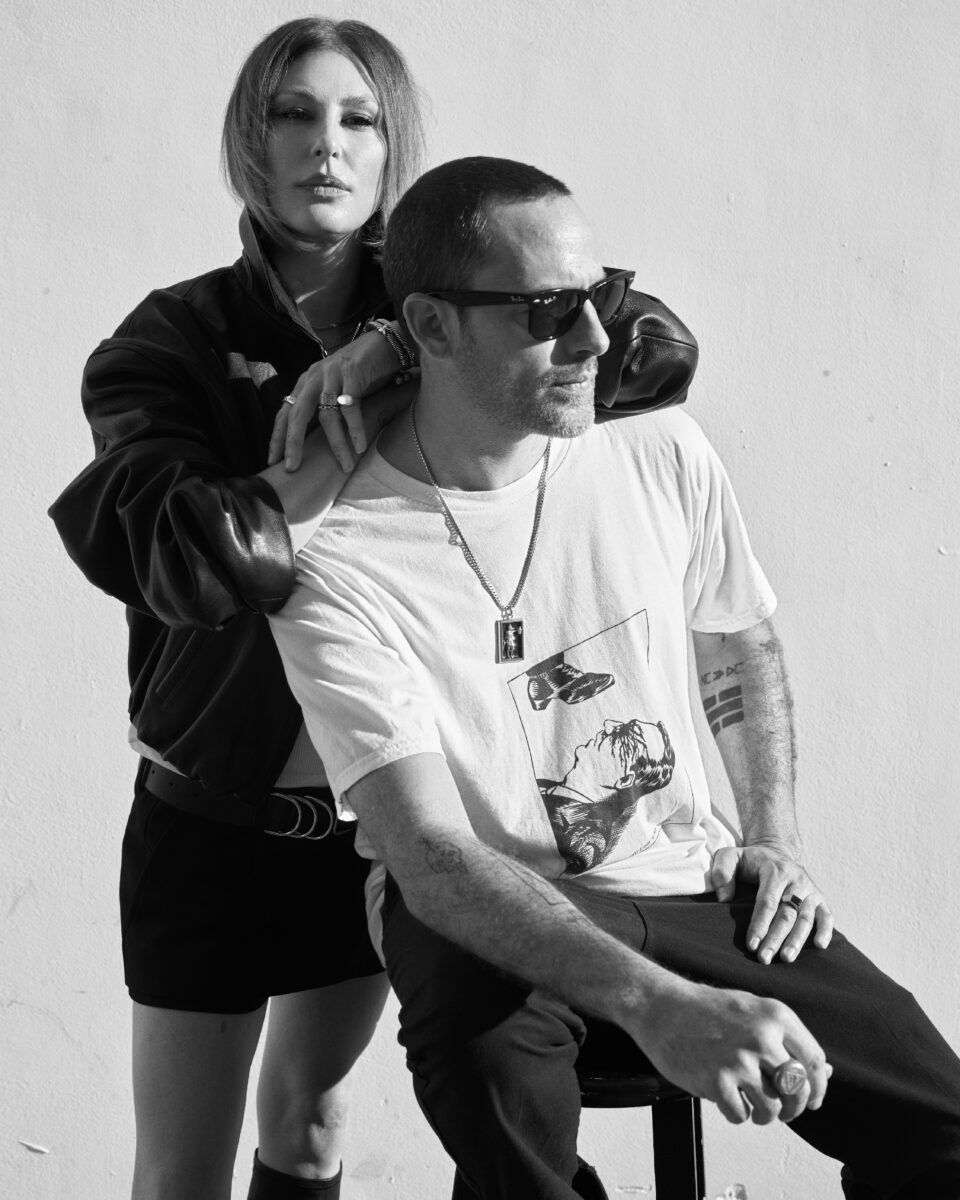
Christmas Eve, 2007: Sarah Barthel and Josh Carter, friends since pre-school in upstate New York, reconnect while home for the holidays and decide to start making music together. Drawing inspiration from artists as varied as J Dilla and Sonic Youth, the pair developed a sound that blends electronic music, hip-hop, shoe gaze and psychedelia into something entirely their own. Nearly two decades later, Phantogram remains one of alternative music’s most distinctive acts. What began as a creative partnership between lifelong friends has led to five studio albums, over a billion streams, and collaborations ranging from forming Big Grams with Outkast’s Big Boi to working alongside artists like Deftones, Future Islands, Tom Morello and Miley Cyrus. Today, their catalogue continues to resonate with new audiences, their music remaining as difficult to place in time as it is to categorise, but as instantly recognisable as ever.
What’s your earliest memory of music having an effect on you?
Josh Carter: I remember sitting in the back of my dad’s car driving through upstate New York while it rained outside. He was playing “Mind Games” by John Lennon, and I was watching the rain beads merge together on the window while the trees blurred past. It’s probably the first time I remember feeling emotionally transported by music. Also, that psychedelic pinball-counting song from Sesame Street. Super funky tune. That definitely imprinted on my brain somewhere early.
Sarah Barthel: I was four or five, and my grandpa died. We were driving home from the funeral in my parents’ wood-panelled station wagon. I had turned the backseat into my own little bedroom. “Right Here Waiting” by Richard Marx was playing. I remember connecting the loss of someone important in my tiny little life to the lyrics and the sound.It was the first time music spoke back to me.
What does it mean to you to be original?
JC: To me, originality is being completely authentic to yourself and the art you make, regardless of trends, expectations, or what’s considered popular. I’m interested in creating music that comes from my heart and soul, and music I’d genuinely want to hear myself. The best art, in my opinion, comes from experimentation, pushing past normative boundaries, and discovering who you are at your core instead of trying to fit into what already exists.
SB: A-fucking-men to Josh’s answer. Fearless. Vulnerable. Reinventing yourself withoutlosing yourself.
When did you last get in trouble?
JC: I’m pretty much always in trouble…
What’s turning you on creatively right now?
JC: Lately, I’ve been getting more into visual art and teaching myself Final Cut Pro. I also write songs and make beats pretty much every day. Right now, I’m most inspired by creating without overthinking or judging myself.
SB: David Byrne live in concert.
What’s been your greatest act of artistic rebellion?
JC: Being anti-scene.
SB: Following curiosity instead of genre.
Photography Mario Sorrenti
Chief Creative Officer & Styling Alastair McKimm
Hair Bob Recine
Make-up Diane Kendal
Set Design Philipp Haemmerle
Executive Producer Dana Brockman
Producer Max Bonbrest
Casting Alexandra Antonova for Samuel Ellis Scheinman
Lighting Technician Lars Beaulieu
1st Photo Assistant Kotaro Kawashima
Photo Assistants Paolo Afante, Kurt Mangum
Digital Tech Charles Meyer
Fashion Assistants Taylor Wood, Kassidy Taylor
Hair Assistant Jeelan Aleem
Make-up Assistants Eduardo Jiminez, Breanna Harmon
Set Assistants Oscar Haemmerle, Xavier Mozejewski
Production Assistant Din Morris


