The ever-transmuting artist and producer steps forward into her next creative epoch with a combination of lightness and momentum that can only come from recently winning a Grammy.

The businessperson, supposedly, suffers in the present moment for future gains, while the artist enjoys the present in exchange for future suffering. Nothing pressure-tests this assumption quite like the music industry: the deal that striving creatives enter lives far closer to guaranteed short-term pain for nearly guaranteed long-term pain.
And even then, those who transcend the modus operandi seem to find their traversed milestones more valuable as reminders of who they could be tomorrow rather than who they were yesterday. Or, here is the same observation in simpler terms: Gwen Bunn has just won her first Grammy award after years in the industry – and she’s never been more determined to “make it”. Life, it seems, is a game of catching up with others’ perceptions of us for all, a suffering that is pronounced by the occasional Grammy for the sparse and brilliant few.
Since earning the accolade in February 2026 for her songwriting and production contributions to Leon Thomas’s third album, MUTT, which won the award for best R&B record of the year– alongside earlier nominations for her work with Schoolboy Q on “Collard Greens”, ft. Kendrick Lamar – Bunn has recalibrated inward to release her first solo record since 2022, named The Interim, Vol. 1. The project, if anything, proves that she has not let grit agitate itself into angst. Here – the inflexion point between art as exploration and as proof of worth – is where Bunn parts ways with the prophecy of ‘the artist who is good enough for all but themselves’ before it encloses toward conclusion.
The expected narrative’s damning pity of cyclical artistic ambition would be, in her case at least, too totalizing: she has interacted enough with her own talent to view the award and industry recognition as a deserved stimulus for her ambitions rather than a means unto itself.
With a title and thesis ascribed to the liminal space between recognition and full breakthrough, the fluxing and multispectral R&B-pop experiment captures Bunn in reflection about relations with the industry, her personal life, and her inner self. Below, she tells Wonderland about working as both an artist and a producer, moving from Decatur, Georgia to Los Angeles, working with Schoolboy Q, and more.
Listen to the album…
Read the interview here….
You mentioned in a statement that The Interim was inspired by a sort of transitional state you’re in. Honestly, I think the idea of feeling like you’re working with a cleaner slate after real industry recognition is somewhat rare. Can you expound on that and share about the stage of your career you feel you’re currently in?
Yeah. I’ve been doing this for a long time, and I’ve just been slowly building my team over the years. I’m also a free agent. I’m not signed to any major labels. I had a deal with Island around the pandemic era, which was amazing. It was an incredible experience. It’s not like I’m against majors at all – that was just its time.
I also have a publishing deal with a boutique company that works with songwriters, producers, and artists. They’re more on the pop side of things, which has been really cool and exciting for me because it’s allowed me to get into a different musical realm. It has inspired me to become an even better writer, musician, and artist, so I think that definitely contributed to this project and the process.
It’s all just been super transitional. Life naturally shapeshifts, and you kind of have to adapt to what’s happening. That’s what this period has been for me.
You’ve been through a good number of career pivots, then. Now that you’ve tasted both success and the struggle that comes before it, which era do you look back on most fondly, and why?
Probably in the very beginning, when I first came to L.A. It is just a super nostalgic feeling, and the time period was so special and unique. There was so much going on – like, Donald Glover is picking me up from my brother’s house, and we’re going to In-and-Out, stuff like that. It was my first time in Los Angeles – or just California in general, really. I think that was the biggest key for me. That, and just being around a different era of people. Some of those people aren’t even alive now, you know what I mean? That era, God bless them, but it was so special. It was a moment in time for sure.
Or, when I got the first placement with Kendrick Lamar and Schoolboy Q: I think that was the most exciting. We were in Laguna Beach creating it, in this crazy house on the beach. I think when it’s effortless, and you’re not thinking about it, that’s when the process is the most fun, to be honest.
How long did it take for you to become acclimated after being picked up on the project with Schoolboy Q and Kendrick; like, when did working with superstars sort of become ‘the new normal?’
I think when it was time to start pushing the music and the story a little bit more was when it really started to set in. It’s still weird now, but I think you just have to use it to your advantage. Like, at this point, we don’t have time.
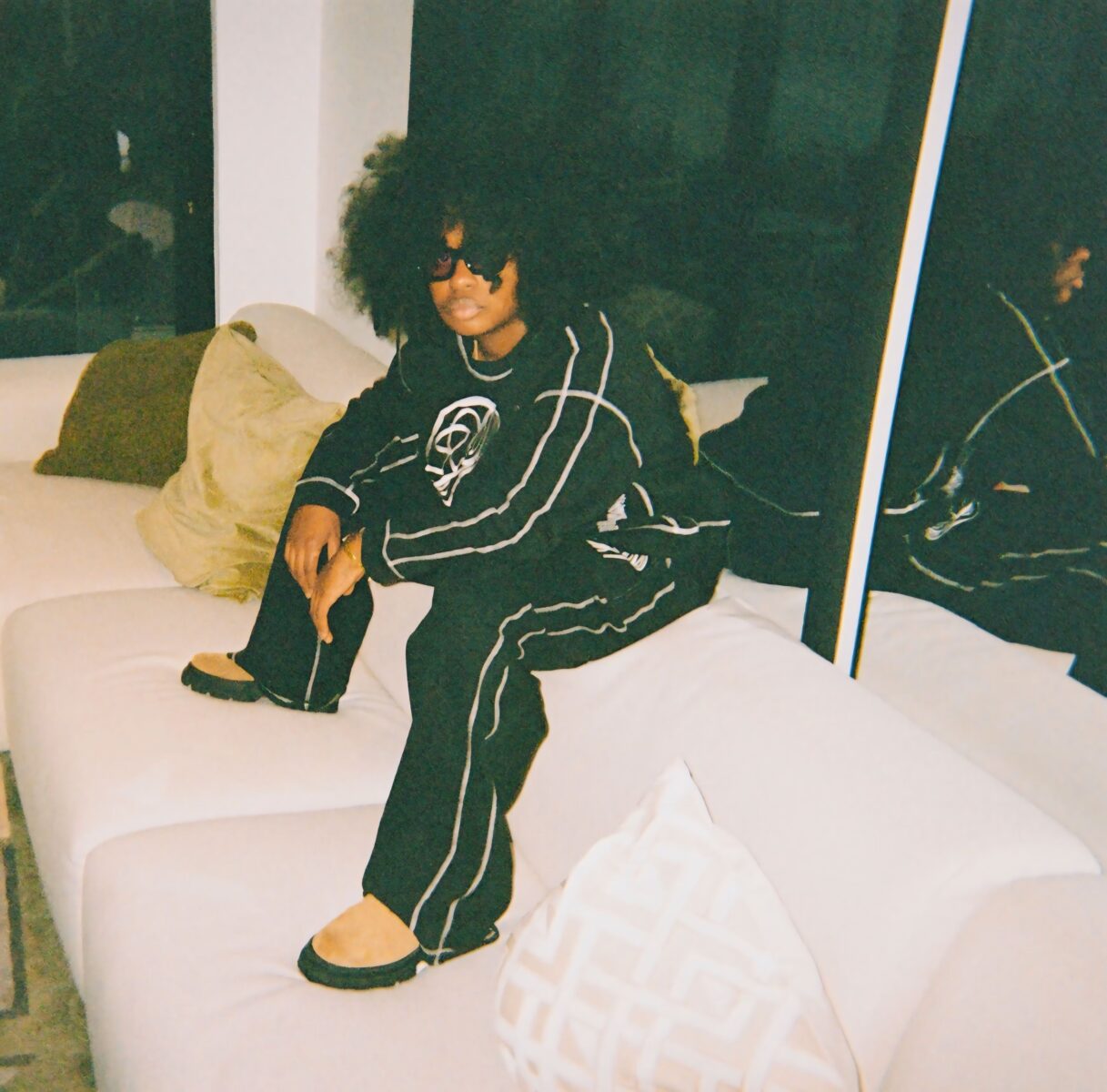
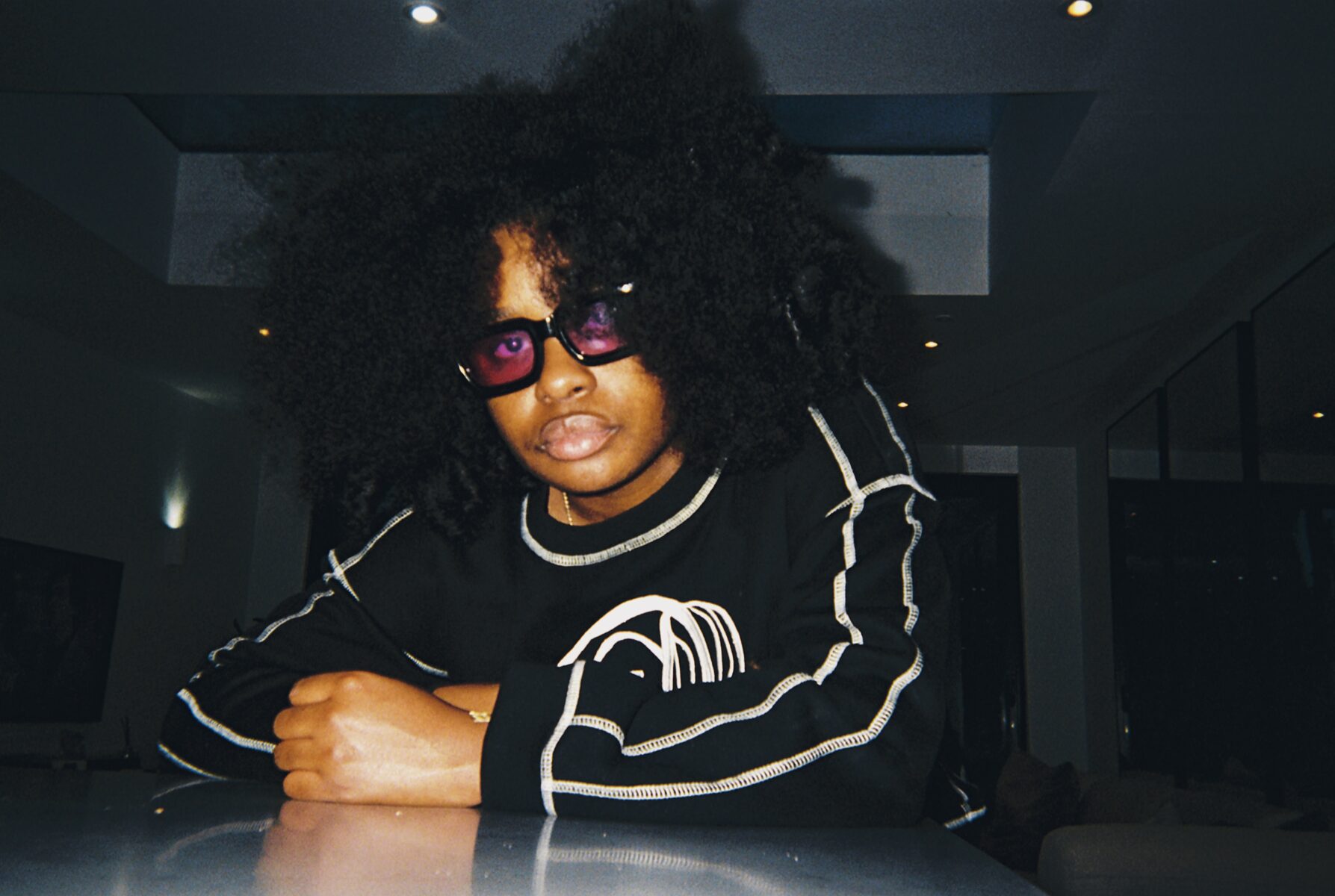
The shift from working as a producer to a fully autonomous writer always interests me. After long periods of shaping other projects, do you struggle to click back into the headspace of a writer?
Oh, no, it’s easy for me. Everything is a layup. It’s never been a problem to figure out where to draw inspiration from or what I want to do, because I’m just so creative.
I get bored easily, so I have to switch up; that’s what excites me about writing for other people sometimes. It’s not that I’m just going to search for people to write for all the time. I don’t necessarily have to do that. The artist stuff has been going so well for me over the years, so it’s just a natural passion that I have sometimes. I think it’s good to shake it up.
Interesting. Do you find the same level of creative fulfilment from producing as you do from creating your own music?
I definitely get creative fulfillment from it because there’s nothing like making something – producing a record or producing a beat – and then hearing somebody else’s perspective on it when it’s something I would never even come up with. I think it’s so beautiful and inspiring; I love it.
What is the most useful skill you learned as a producer that most directly informs your individual creative process?
I don’t know if there’s anything. I think the biggest learning thing for me is not so much about working with an artist and learning from them – it’s just about working in general, even if the music doesn’t go to anybody or if I don’t use it.
I think it’s also about understanding that sometimes less is more, because you can keep adding all day long – but when does it end? You could be in creative mode forever and work on a project. There are people who work on albums for years. Like, dude, it was over two years ago – wrap this up, you know what I mean?
I’m guessing that fully moving over to L.A. forced you to quickly sharpen as a creative?
I definitely feel like L.A. has forced me to sharpen more for sure, which is super exciting because I’m obsessed with getting better anyway. It’s also about quick turnarounds. When working with other people – that is a necessity. We don’t have time to wait around. It’s 6 AM to 6 AM; we’re not playing.
What did you feel like you were uniquely bringing to the table in the L.A. R&B scene when you first moved over from Georgia?
The fact that I’m a one-woman band. I’m able to do a lot of different things and shape-shift in any room. Like, I could come to a room, and if it has three producers, then I’ll sit back and be the artist or the writer. It depends on what’s going on, you know what I mean?
It’s just about being able to bring different things to the table when needed. It’s not often that you find somebody who can kind of go with the flow and do whatever is needed in the room. So that was a super-strength for me.
Your work on The Interim feels structurally unconventional – very much in step with the exploration of larger metaphysical questions through music through an Afrofuturistic lens. Was there a central philosophical idea you were hoping to translate through this record?
It definitely represented that in-between period when you’re with somebody, and you want to take it to the next level. That was always what the message kind of was [on The Interim], but it’s also me in that middle ground before I take it to the next level of my career – I’m in that transitional period with my team and building up a whole squad of people who are willing to bring things to the table to help take this to the next level.
[The Interim] represents the period of trying to find the tribe of people who understand. Who’s gonna put the bag up? Right? I’m waiting.
Words – Serenna Zingg


