Already a rising star in France, the actor crosses the Channel with Urchin – Harris Dickinson’s gritty directorial debut – a breakout that makes her impossible for Britain to ignore.
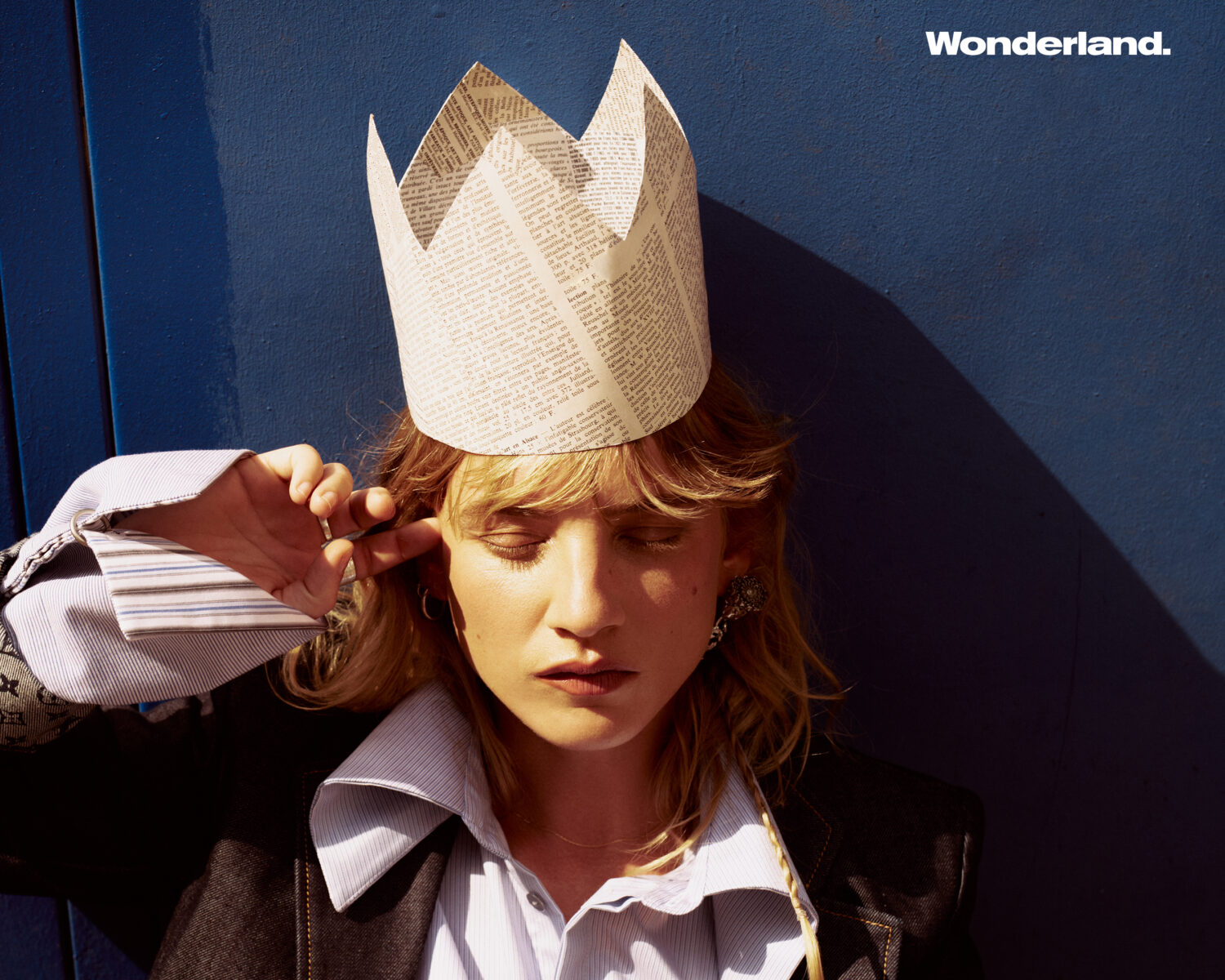
Megan Northam is pausing between drags of a cigarette at a café in Paris. She has just slipped back from a family holiday in Brittany, retreating to the city to learn lines for her next project, Les Misérables – something she felt she had to do alone. Before that, though, comes Urchin.
“Suddenly I was on a mountain, hearing about going to London for this dream,” she laughs, remembering the moment. Halfway through a skiing holiday, her phone buzzed with a voicemail from her agent: Harris Dickinson wanted to talk through the script for Urchin – his first film as a director, and her ticket straight into Britain’s line of sight.
In the British drama, she plays opposite Frank Dillane’s Mike, a character swallowed by addiction, loneliness and homelessness as he desperately searches for hope in the midst of his self-destructive impulsivity. Andrea arrives as his friend, confidant and love interest, both an anchor and a mirror, someone who understands the fragility of survival and the strength it takes to choose yourself.
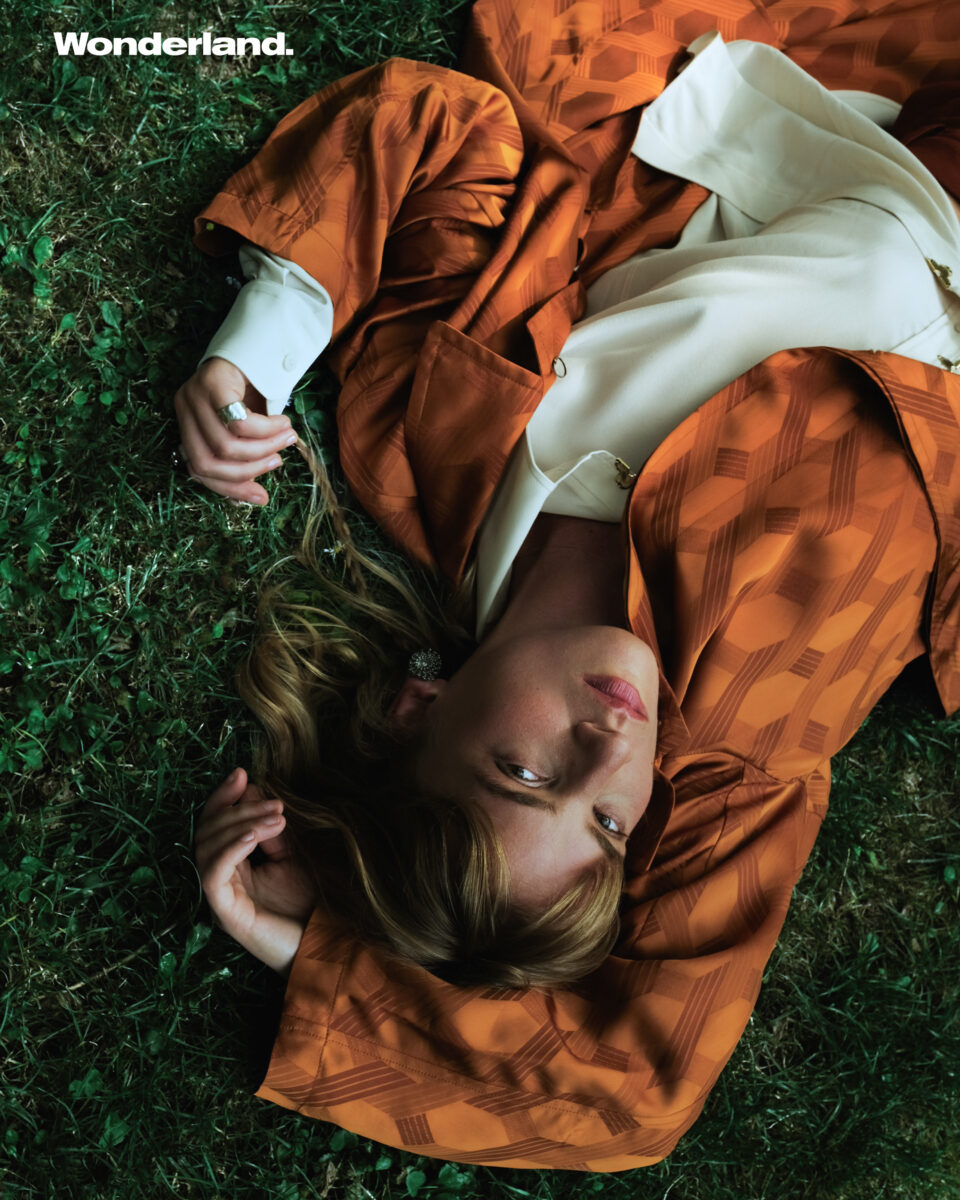
It was after her film Meanwhile on Earth premiered at the 2024 Berlin Film Festival that Harris decided to pursue Megan for the role. “In the festival magazine my face was in a little square,” she laughs. “His producer said, ‘You should look her up.’ Harris checked my Instagram, liked the vibe, then watched some work I did. Voilà.”
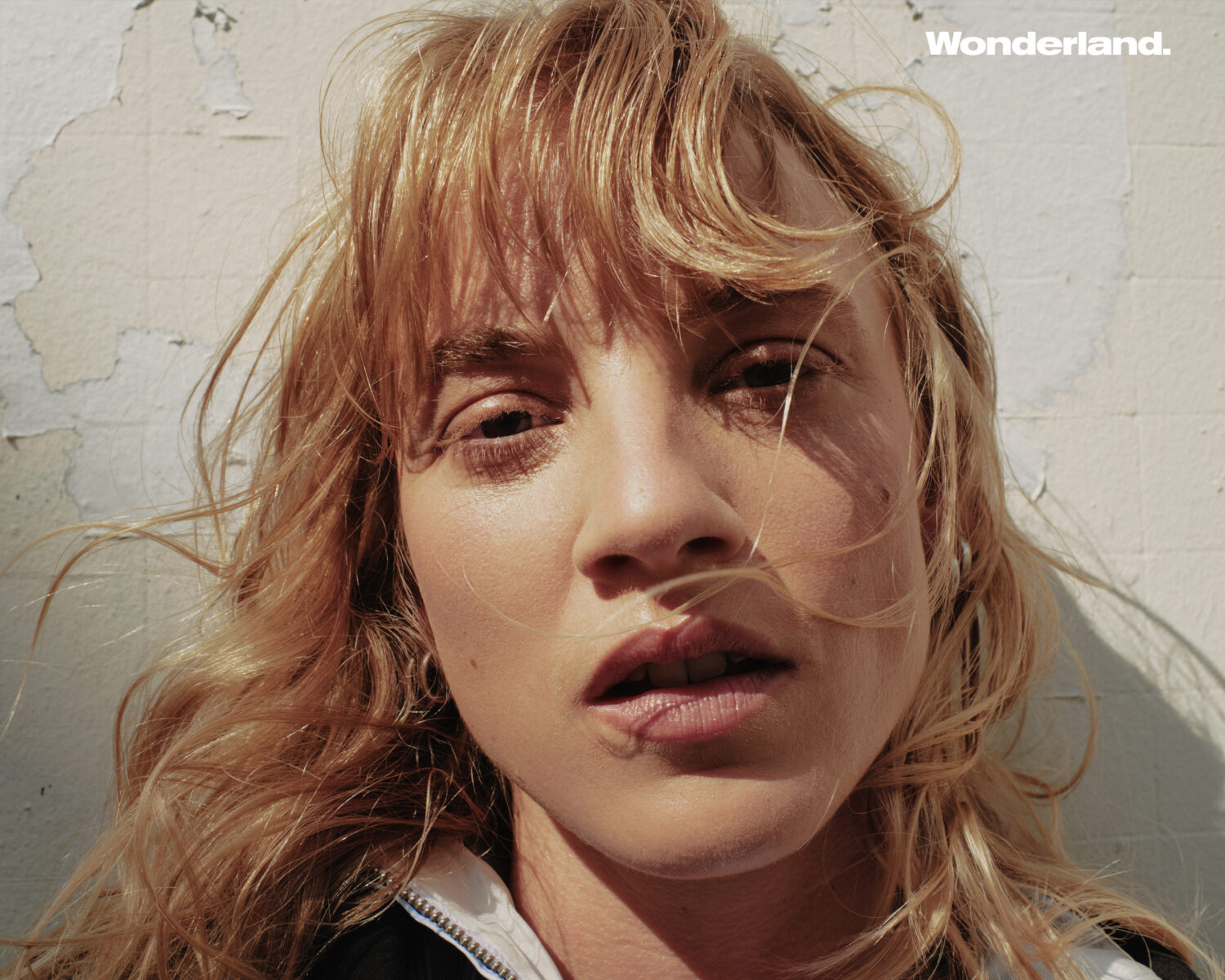
To no-ones surprise – between a curtain of blonde bangs that recall Brigitte Bardot and a string of French indie films that pin her down as one to watch, Megan feels at once like a throwback to French cinema’s golden age and a new voice finding her place in contemporary film. We caught up with Megan to gab about overcoming shyness and enduring Zoom auditions with a bad connection…
Ella Bardsley: How did you get into acting? Was it always the dream?
Megan Northam: I didn’t know what I wanted to do when I was younger. I just knew I wanted to do something artistic. At first, I wanted to be a musician, but that didn’t happen. In Paris I had to work a lot – bars, restaurants, second-hand shops – because it’s so expensive. At the same time I was singing in bars, doing short films with friends and students’ short films as an actress. It started like that, very locally. I never went to a proper drama school. At first, I didn’t have confidence. But when people around me said, “You could be good at this,” it pushed me. Thanks to them, I followed that road.
EB: At what point did you feel you were good at it?
MN: I’m still not there [laughs]. But I won some prizes [the Series Mania Actress Revelation Award (2023) for Greek Salad, the Festival Jean Carmet Award for Most Promising Female Newcomer for Miss Chazelles, and the Adami Award at Clermont-Ferrand. She was also nominated for a César Award for Best Female Revelation (2025) for Rabia] in France. It wasn’t like, “Wow, I have a prize.” It was more like, “Okay, you can continue.” It gave me confidence. And my parents – at first, when they saw me in films, they said, “Yeah, Megan, it’s good, but it’s you.” That was frustrating, because you work so hard, and then they say, “It’s just you.” But recently they’ve said, “Now it’s you as an actress. We don’t see our daughter anymore.” That meant a lot.
EB: Were there films or actors that inspired you growing up?
MN: We didn’t have a TV at home. We had VHS tapes – old films, mostly musicals: Mary Poppins, Chitty Chitty Bang Bang, Oliver!, Annie, Top Hat. That was my film education. At school I felt shy because my friends were watching sexy TV shows and films and I didn’t know them [laughs]. I was a big Jim Carrey fan. The Mask and The Truman Show blew my mind. He’s amazing. Later, I saw his performance in Eternal Sunshine of the Spotless Mind, which was perfect to me.
EB: How did you end up in this very British social-realist project?
MN: Andrea’s part in Urchin wasn’t so far from what I’d already done in France. Most of my films before have been very social, very independent, sometimes very strange. Of course, now I’m about to start Les Misérables, which is a world classic. When I first read the script, it was funny – I was skiing with friends in the mountains, so I had no connection. My agent kept trying to call, and finally I stopped and he said, “I can’t hear you, it’s urgent.” As soon as I heard “urgent” I was like, oh shit, I need to stop right now. So I went down the mountain to call him. He told me: “Harris wants to meet you for a part in his new film.” And I was like, what? He’s a director? I thought he was just an actor [laughs]! I already loved Harris’s work as an actor – he’s very precise, very bright, very clever, and yes, beautiful, obviously. But more than that, he’s a proper actor who really loves his job. I read the script, then I did two Zooms and one casting in London with Frank. And the Zooms – oh my god, they were catastrophic. Really catastrophic. I was in Marseille, living in the south of France, with roommates all around me, telling them “shush” every two minutes. My connection was super bad. Maybe Harris’ was too. So when he was talking, sometimes I was just pretending I heard him. It was a nightmare. And then suddenly, because I was acting on screen with the casting director, Harris said, “Hey Megan, can we just do this scene together?” He could feel that I was shy and I think he understood that very quickly, because he can be shy too. So he said, “Megan, it’s okay, we’re gonna do this thing together.” It’s cute now when I think about it, but in the moment I was like, what the fuck? No one told me I was going to act directly with Harris – on my computer screen! That’s, like, the worst nightmare for an actor, to have to do a scene over a stream.
EB:Where were you when you found out you got the part?
MN: In London, after the audition. I left, said goodbye, and ran to my train. I went to buy jelly babies for my sister, and my agent called to say, “Megan, I think it’s good – you have the part.” I called my mum first – she was with my dad, they put the phone on speaker. My dad is English, my mum is French. Half my family is in England, but I’ve always felt very French. I grew up ashamed that my English wasn’t good enough, my culture not English enough. It’s an identity thing. And being in a British film – I cried when I heard the news. It meant a lot.
EB:So what was the process of filming this like? Did you guys have lots of time to prep? When did you start filming?
MN: I only had six days of shooting, plus one extra night a couple of months later – so basically one week. For me, that already felt big, like, “Wow, it’s crazy.” But it was rough. I arrived in London straight from doing press in France for another film, so I was super tired. In those moments, the best thing is not to think too much. You just say to yourself, “Well, now I’m here. I can’t run away. I just need to fit into the team and enjoy the moment.”
EB:And what about outside of filming – did you all hang out in London?
MN: Because it was only six days, we were straight filming. I really didn’t want to mess anything up, so I was being very serious. Harris and Frank were very concentrated too. Of course they know how to party, and I do too [laughs], but it wasn’t the moment. Sometimes I’d catch up with Frank, just to run lines and talk about our characters, because we didn’t have much rehearsal. For me, the most important thing was that the audience really trusted our relationship. But of course in real life, we were meeting for the first time.
EB: How did you prepare for the role and what notes did Harris give you?
MN: Harris suggested films like Les Amants du Pont-Neuf (The Lovers on the Bridge). They’re about homelessness, but also the poetry and depth of characters. Harris didn’t talk much on set, he’d just say, “You’re doing great, continue.” Sometimes he said, “We’ll improvise.” That terrified me, but it worked because he knows what he wants. He used my stress in the performance. I also related to Andrea. If I hadn’t become an actress, I might have lived her kind of life – traveling in a van with a dog. So I could put my heart into her.
EB:What was the hardest scene?
MN: The dancing scene. Without lines, I felt naked. I love dancing in life – after a drink, I’ll dance all night – but in front of the camera I froze. Harris kept checking in saying, “Are you okay?” That made me panic more [laughs]. I really trusted Harris, and Frank as a partner, so in the end I really got into it I think.
EB: Were you at Cannes Film Festival for the premiere?
MN: Yes. I’d first seen the film privately in Paris with my agent. It was my first time at Cannes, it was intense. The audience laughed so much, in places I found tragic. That surprised me, but it was interesting. Mostly you stay in a bubble with the team, so I’m looking forward to the wide release [on 3rd October in the UK, October 10th in the US] to have some feedback from the audience outside of film festivals and people from the industry.
EB: What do you think the film leaves the audience with?
MN: For me, it’s not moralistic. That’s why I really like it. Harris isn’t trying to say, “This is good,” or “This is bad.” That means people can see it in different ways. For me, what stays is loneliness. It’s okay to be lonely if you choose it – but if you go against everyone around you and close yourself in a sort of prison, that’s when it becomes bad. And it doesn’t have to be about drugs – it can be anything. If you lock yourself away, if you don’t accept people loving you back, that’s a big problem. That’s what I felt when I watched it. It’s not just about being homeless. It’s also about being careful and aware of what’s happening around us. When you choose it, sometimes loneliness is also selfish. I’m not talking about people who don’t have a choice. But Mike chooses to fight with everyone and against everything. So for me, the main thing is learning how to live with each other, especially in big cities. Be aware. When I walk in Paris, I can’t stop and talk to every homeless person, but I can still smile, and say hello. Just start with that. Stop ignoring people.
EB:What’s your dream role?
MN: A musical. Something like La La Land. I love Emma Stone’s choices – her characters are complete, mixing comedy, tragedy, singing, dancing. That’s my work dream.
EB:Dream directors to work with?
MN: Xavier Dolan. Ari Aster. Joachim Trier.
EB:You’re about to start filming Les Misérables. What can you tell me about your role?
MN: I’m playing Cosette, grown up. She’s a girl who fights for freedom, justice, and to be happy after the hell she and her mum went through in the past. It’s such a classical story, that I never read entirely to be honest…The director actually told me, “Megan, please don’t read it, because it’s an adaptation, and you don’t want to lose yourself in the book.” It’s impossible to put into images a book of 2500 pages. It’s a very big cast – so many very famous French actors. And in a way, I like that. It’s a little bit like with Harris and Frank: I like hiding behind those very famous people, because it means I can just be a little less in the light.
EB: I don’t think you’re going to be able to hide for too long, Megan. Your hiding days are over.
MN: [Laughs] Maybe.
Photography by Zoe Joubert
Styling by Corey Winston
Words by Ella Bardsley
Hair by Miwa Moroki at TAG Agency
Make-up by Miwoo Kim at TAG Agency
Set Design by Héloïse Beraud
Photography Assistant Camille Suils Porte
Fashion Assistants Nina Cheb-Terrab, Ophélie-Audrey Odumlami
Videography by Nicolas Pereira