Knowledge is power, Wikipedia is your playing ground, and ARMEDANGELS is your newly-unlocked skin.

In an era where information is spread and consumed at an unprecedented rate, without much prior fact-checking going on, unbiased knowledge seems to be harder to find than a Lime bike during the morning rush hour. That’s why supporting free, accessible, and reliable information sources, such as Wikipedia, is more important than ever.
Teaming up with the Wikimedia foundation, the non-profit behind Wikipedia, the Cologne-based fashion label ARMEDANGELS has released a capsule collaboration, centred around the theme of thinking responsibly. From the design – which includes graphic tees with words such as “Freedom” and “Equality” alongside their definitions plastered on – to the sustainability-sourced materials used, the collaboration doesn’t just encourage a thought process, but an actionable embrace of researched practices.
Ahead of the collaboration’s online release, we chatted with Zack McCune, the Director of Brand at the Wikimedia Foundation, and Martin Höfeler, co-Founder of ARMEDANGELS, on the birth of this link up, the importance of accessible resources and sustainability in fashion.
How did this collaboration come about? What about ARMEDANGELS’ brand identity resonated with you and Wikipedia?
Zack McCune: We were delighted when ARMEDANGELS suggested a Wikipedia-themed capsule collection last year. We admire their joint commitment to creativity and sustainability. Wikipedia’s vision is a world where every single human being has access to the sum of all knowledge. That spirit is at the heart of the collection. Through little phrases and small snippets of Wikipedia content, ARMEDANGELS has made the beloved website into something easy and fun to wear.
But it’s not just the message that matters! We’re incredibly inspired by the sustainable way that ARMEDANGELS manufactures their collections.
How does this collaboration encourage your ethos of accessible knowledge?
ZM: The vision of Wikipedia and other Wikimedia projects is a world in which everyone, everywhere has access to reliable, trustworthy knowledge. That’s what millions of readers find on Wikipedia every day. We host a website that is free to access for all. It’s the internet’s public library.
ARMEDANGELS’ collection showcases this free knowledge mission. It reinterprets Wikipedia content through fashion, a favourite canvas for creatively transforming ideas into reality. A portion from the sales of the collection will also be donated to support our non-profit. This is a collection that celebrates and supports the growth of knowledge around the world.
A major touchpoint for this campaign is encouraging people to “think responsibly.” Can you expand on that? What does that mean to you?
ZM: The campaign celebrates the importance of knowledge in society. The more we know, the better we can meet the challenges of an ever-changing world. ARMEDANGELS bring a commitment to environmental responsibility to everything they make. At the Wikimedia Foundation, we strive to provide knowledge to all so that people can learn in more than 300 languages.
Martin Höfeler: To ‘think responsibly’ means asking questions. Where does this come from? Who made it? At what cost? In our world of fast fashion and fast content, slowing down to think critically is radical. This collection is an invitation to do exactly that.
In an industry, such as fashion, where knowledge is constantly being gatekept, how important is a platform like Wikipedia in democratising the access to knowledge?
MH: Knowledge is power — but only if it’s accessible. In an industry like fashion, where terms like ‘sustainability’ are often used without transparency, Wikipedia offers something rare: open, fact-checked, and public knowledge. That’s why we partnered with them. Because we believe that when people understand what’s at stake — how clothes are made, who makes them, and at what cost — they are empowered to act.
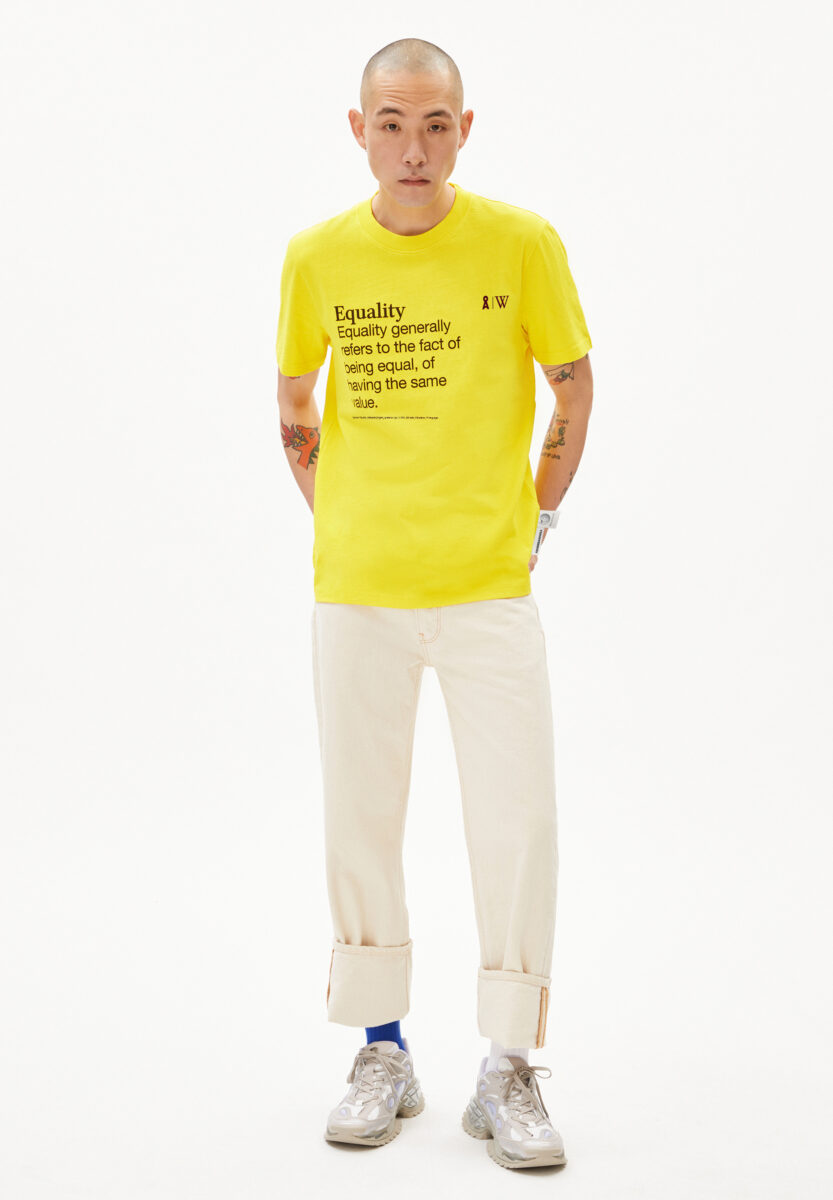
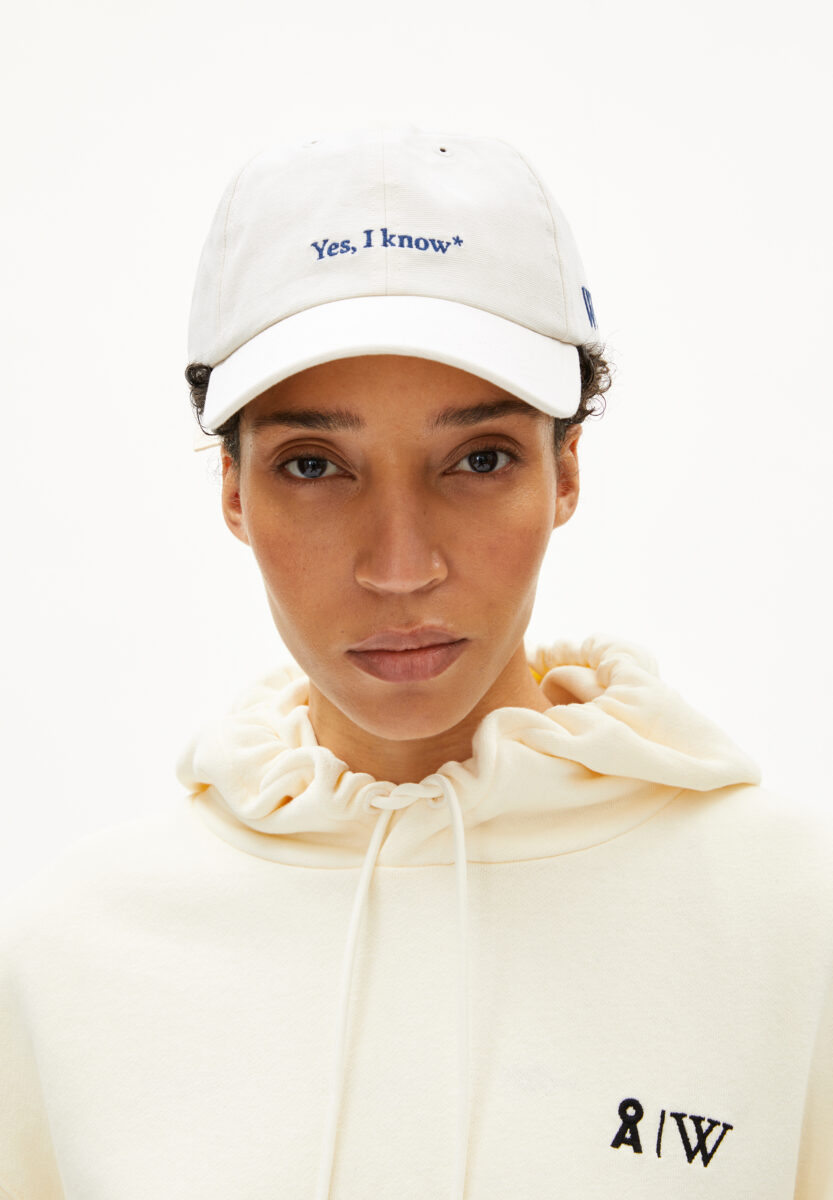
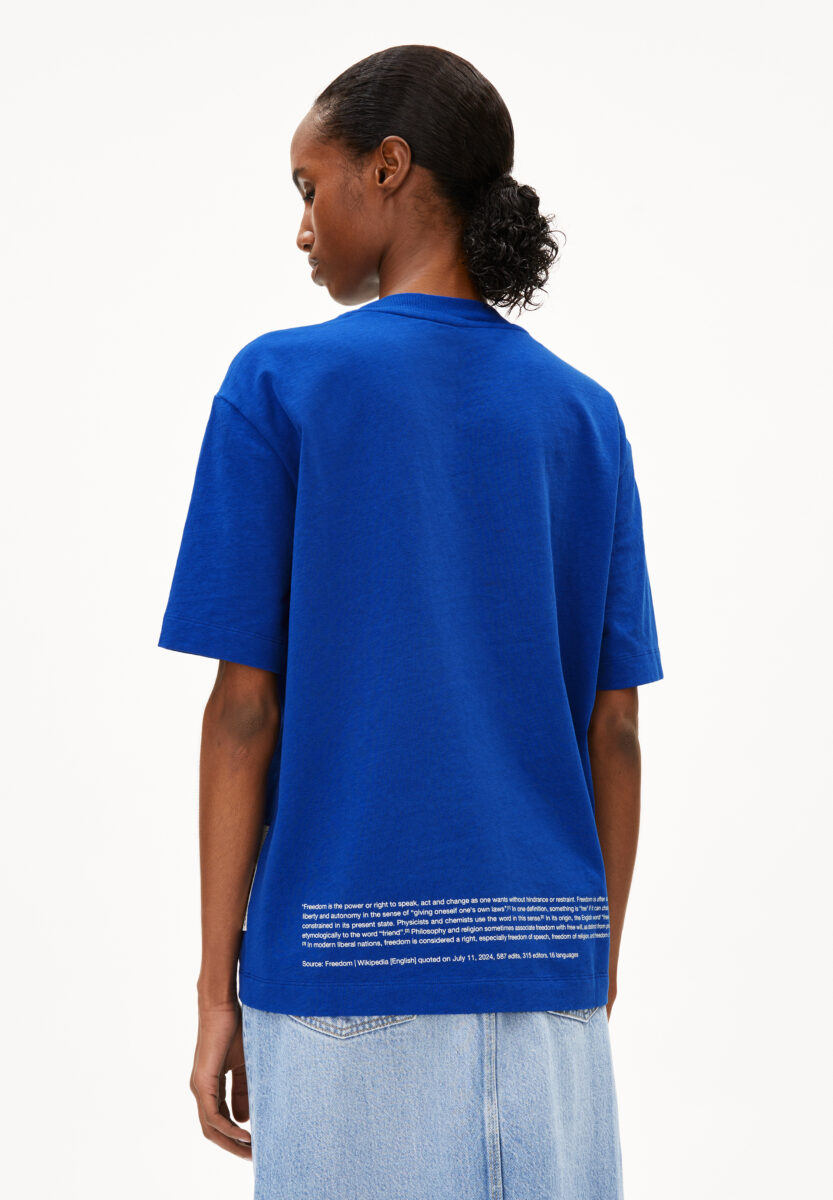
Courtesy of ARMEDANGELS
What’s one piece of knowledge you wish you’d known before founding ARMEDANGELS?
MH: That ‘doing good’ is a constant, evolving journey — not a destination. When we started, we thought using organic cotton was enough. Today, we know that real change means questioning everything: materials, supply chains, circularity, and beyond. To look for creative solutions where others don’t even recognise a problem.
What was the last thing you searched on Wikipedia?
MH: The last thing I looked up on Wikipedia? Why the 1. FC Köln mascot is a goat.
Turns out, it all started as a carnival joke back in the 1950s – someone gifted the club a real goat during a press conference. Instead of returning it (as any sensible club might have done), they named it Hennes and made it their official mascot. Now it’s tradition, and we’re already on Hennes IX.
Only in Cologne could a spontaneous carnival prank turn into a football icon. I love how this city turns the unexpected into legacy.
Tell us about the pieces that make up the collaboration. How did you manage to incorporate Wikipedia’s visual language into your own brand’s aesthetic?
MH: We started with a shared question: Why does knowledge matter? Our answer shaped everything — from the words we printed to the color palette. We took cues from Wikipedia’s simplicity and paired them with our own visual clarity. It’s bold yet minimal, informative yet wearable. Every design choice was intentional: to educate, inspire, and connect.
Some pieces feature words such as “Freedom” and “Equality.” Why was it important for you to highlight these themes?
MH: Because knowledge protects these values. Without access to facts, we can’t uphold freedom, equality, or peace. These words are not just slogans — they are reminders of what we stand to lose if we let misinformation win and the right to information is restricted.
A major touchpoint for this campaign is encouraging people to “think responsibly.” Can you expand on that? What does that mean to you?
MH: To ‘think responsibly’ means asking questions. Where does this come from? Who made it? At what cost? In our world of fast fashion and fast content, slowing down to think critically is radical. This collection is an invitation to do exactly that.
The capsule collection uses innovative technology, such as the RCO100® technology laid out by Säntis Textiles. Can you tell us a little more about this?
MH: RCO100® by Säntis Textiles allows us to use 100% recycled cotton from post-consumer waste — without blending it with virgin fibers. It’s a game changer for circular fashion, and it means that more sustainable production processes with innovative partners who share our vision are achieving ever better quality, opening up new areas of application. Sustainability thrives on innovation. Which brings us back to the topic of knowledge.
Do you find that access to information regarding recycled textiles and sustainable fashion is difficult to access?
MH: Yes. The industry is full of buzzwords, but short on substance. Data is fragmented, often hidden, or too technical. That’s why we advocate for open access and transparent communication — to make sustainability understandable, not just marketable. We also believe that conscious consumption can only be made possible through transparency along the supply chain. That is a responsibility that we take very seriously.
Have you found that Wikipedia has helped you in this aspect? How so?
MH: Absolutely. Wikipedia is one of the few places online where you can find collective, unbiased information on topics like circularity, textile innovation, and ethical fashion. It’s not perfect — but it’s free, accessible, and always improving.
If you could sum up this collaboration in three words, what would they be?
MH: Knowledge empowers people.


