Not many bands could lose their cardinal member and come back stronger without even replacing them; welcome to Black Country, New Road’s peerless path to seminality. Fresh from their richly revered third studio album, Forever Howlong, one half of the sextet meet Ben Tibbits to talk overcoming crises, The Windmill, and the joy of uncertainty.

“It always happens at really inopportune times,” chuckles Charlie Wayne, drummer of Black Country, New Road, on the rare occasion he gets recognised. “I was comparing prices of cereal in the supermarket and holding three different boxes of Coco Pops, the different shapes, trying to figure out which one I wanted. Someone tapped me on the shoulder and I dropped all of the boxes.”
By the conclusion of initial niceties, standing outside The Jackalope in Marylebone as we wait for the hearty Irish pub owner to welcome us in at its midday opening time, any doubt of the unassuming nature of Black Country, New Road is dismantled. It’s mightily refreshing. There’s no placidity here; just friendship, quips and gargantuan creativity.
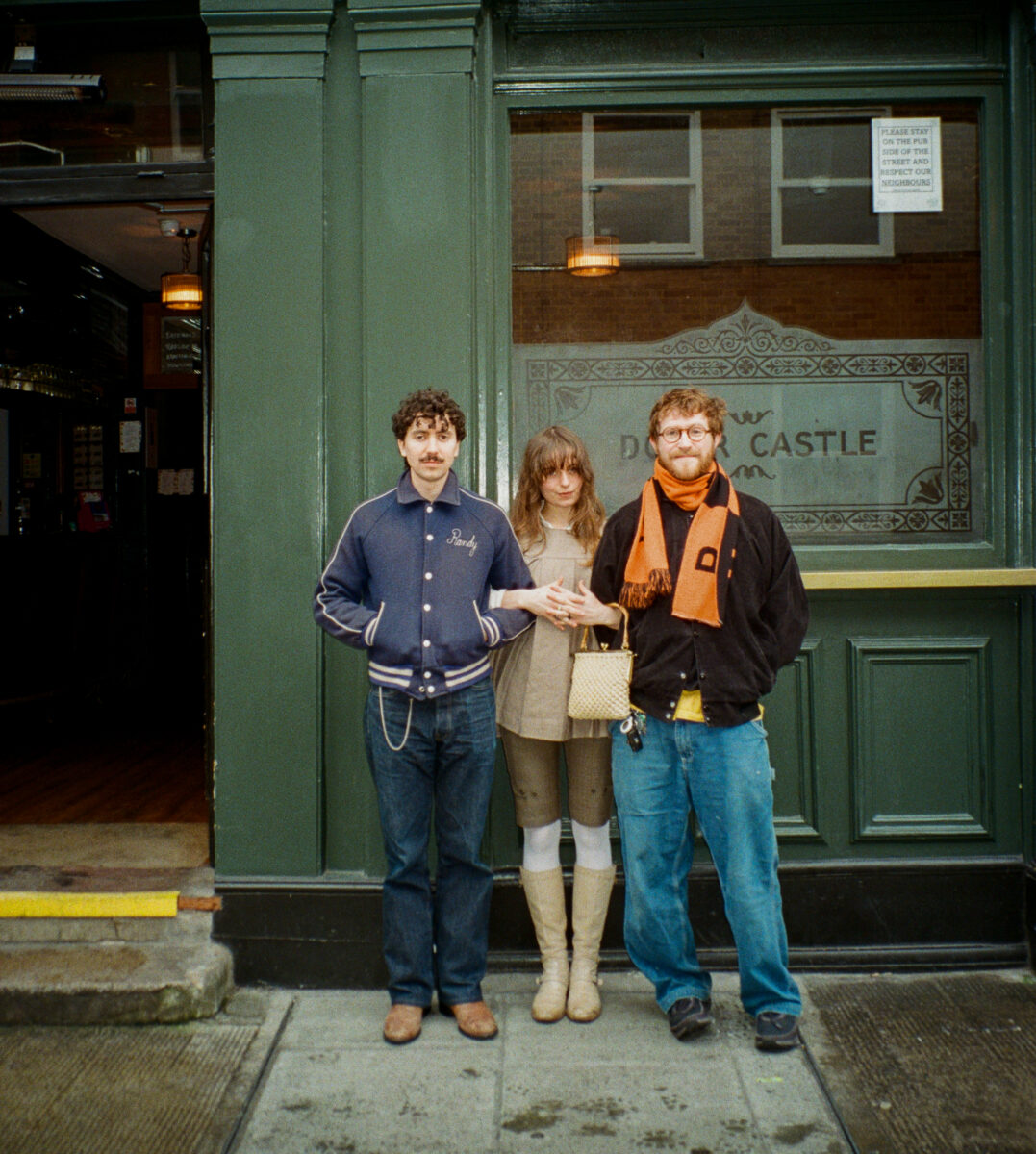
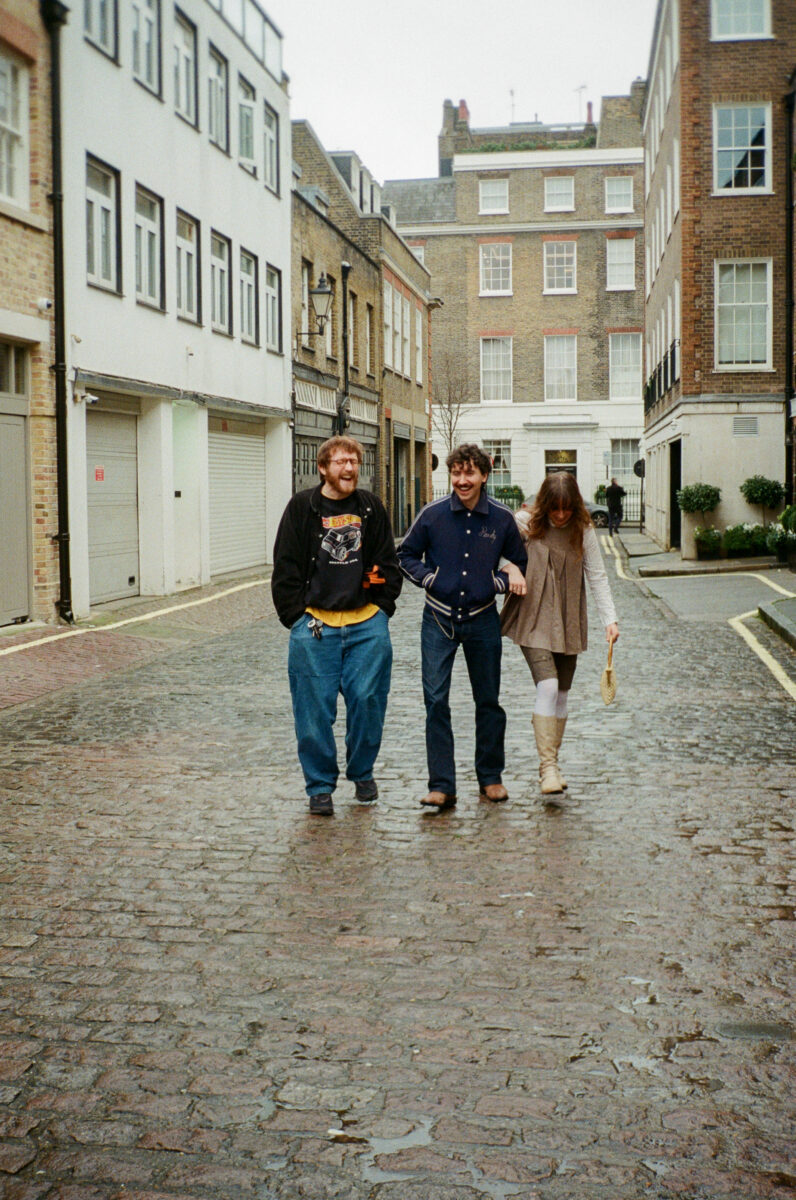
Wayne arrives first, followed by disarmingly friendly guitarist Luke Mark and lastly the charismatic Tyler Hyde, bassist and now one third of the band’s triadic lead vocalists. The other half of the sextet — violinist and singer Georgia Ellery, keys and voice May Kershaw and saxophonist and woodwind virtuoso Lewis Evans — are sitting this interview out. But there’s no hint of regret from my side at the sparser numbers for our rendezvous. Partly because a six-pronged interview would be a bugger to transcribe. And partly because of the collectivity with which the band speak. Sure, they’re individuals in their own right, who form different opinions, tastes and personas. But there’s an authentic sense of coalition — beyond any orthodox circumference.
We settle in with a light tipple and talk of allotments, Alec Baldwin and West London, where the majority of the band now call home. They initially met and formed in their native Cambridge, at first under the sobriquet Nervous Condition, before disbanding and remodelling as Black Country, New Road. Incipiently fronted by mercurial maven of sizzling satire Isaac Wood, the then seven-piece joined the calvary of the UK’s post-punk renaissance at the backend of the 2010s, blowing up reddit forums with devastatingly daring inaugural singles “Sunglasses” and “Athens, France”, and finding a home in London’s favourite left-field gig spots like Moth Club, The George Tavern, and of course, The Windmill.
The Windmill was emblematic with the purple patch for avant garde acts in the UK, with the likes of BCNR, Squid, Shame and Black Midi all ubiquitous with the Brixton watering hole in their formative years as bands. “Still to this day, the Windmill is a versatile place,” Hyde says. “That is a passion that it will always have, that will stand the test of time. It’s weird, I was there last week, and you feel like an alumni student going back. The school has changed, and you don’t recognise any of the students anymore. You feel so old. But the essence is still there; kids that are really excited and thirsty for something. And as much as the essence of punk and post-punk will always remain, there’s still this big open-mindedness. We were there because we were throwing a fundraiser last minute, booked it two days before we played and there were people there that didn’t even necessarily know the music that was going to be happening but they just came because something was happening. In the world that we inhabit, [The Windmill] is one of less than five places I could list that are still like that.”
Black Country, New Road’s 2021 debut album, For The First Time, is a visceral blend of post-punk, klezmer and experimental rock, driven by Wood’s gloriously angsty lyricism and the band’s toweringly progressive compositions; “eclectic…but not particularly focused,” as Wayne puts it. Their sophomore, Ants From Up There, came a year or so later, a broader, prettier and more approachable oeuvre, with breathtaking, sweeping arrangements, flawless melodic resonance and a growing emotional brevity from Wood. Both records placed in the Top 5 in the UK album charts, with the band finding great critical and commercial success through exigent and individualistic art, amassing a loyal and passionate fanbase in the process. But days before the release of their second album, the course of Black Country, New Road’s trajectory shifted perpetually.
“We had a sort of summit meeting to decide what we were going to do as a band,” Wayne explains about the aftermath of frontman Wood’s decision to call it a day on his involvement with BCNR, citing mental health reasons. Many topics were up for discussion at the affable parle, not least another change in moniker. “Obviously it was in the conversation,” the percussionist continues. “But it just never really felt right. The band was always constructed as more than just the sum of one part. And the music had a completely shifting identity from one album to the next anyway. So it didn’t seem like it would make sense to totally disregard that. Also we’ve worked so hard for such a long time and it would have seemed like a regression, which was unnecessary.”
So, what to do when your alpha voice flies the nest? Resettle. The six remaining members started again, immediately jettisoning their previous material from live shows and embarking on finding a new sonic angle. Some fans were unsure whether it would work, as BCNR were previously so synonymous with Wood’s cataclysmic ability to pierce one’s soul. But actually his departure gifted the band freedom; their structure became more collective-led, with each member’s unique brilliance given an opportunity to shine.



Bolstered by a fresh musical modus operandi, the band returned in March 2023 with “Live at Bush Hall”, a recording of their performance at the iconic West London venue in the prior December. Although, as Mark defines it, it was somewhat a “means to an end,” it sees the band trimming their ideas to great avail, with luscious choral arrangements and a variety of members taking on lead vocals on different cuts across the project, which was a sign of things to come on. “The Bush Hall stuff was figuring out what could be done with the idea of then going in and writing something more concise,” Wayne says. “But what made Bush Hall more interesting in the first place was that it was exploring lots of different voices. And that still remains—how do you tie together what could potentially be much more disparate threads and different kinds of musical ideas, and try to create something that feels linear or coherent.”
When they did eventually sit down to write their third studio album, it felt almost as though Black Country, New Road were working on a debut yet again, with a need to instigate a wholly new era. The record’s direction didn’t come straight away, as the six musicians meandered around various pathways of reinvention, propelled by nothing but their own yearning to make something fresh and exciting. “There was no pressure on when it had to be done from anywhere exterior,” Mark says. “It was just us wanting to make an album and see if we could make these things come together or come up with a new thing in that process.”
To perfect the album, one of Britain’s most revered producers James Ford (whose credits sprawl from Fontaines D.C. to Jessie Ware, Arctic Monkeys to Gorillaz) was recruited. After Ants From Up Here was produced by the band’s live sound engineer Sergio Maschetzko, it was the first time Black Country, New Road had “done the whole working with a producer thing, as we operate on quite a sort of contained creative level as six people,” Wayne says. And at first, the band was hesitant for an outside voice to enter their symbiotic Eden, “scared it would precede the expectation of what the record was going to be.” Doubts were quickly dismantled though, with Ford perhaps one of the only British producers capable of handling the sheer scale and ambition of the album. “It called for having another person who could see the whole thing objectively and just be an extremely competent facilitator,” Wayne continues. “Because we weren’t just going to be recording in a room together. We wanted to use the studio as much as we possibly could and create something that was really complex and interesting with lots of different instruments, and not just be limited to one take and let some other things fall by the wayside.”
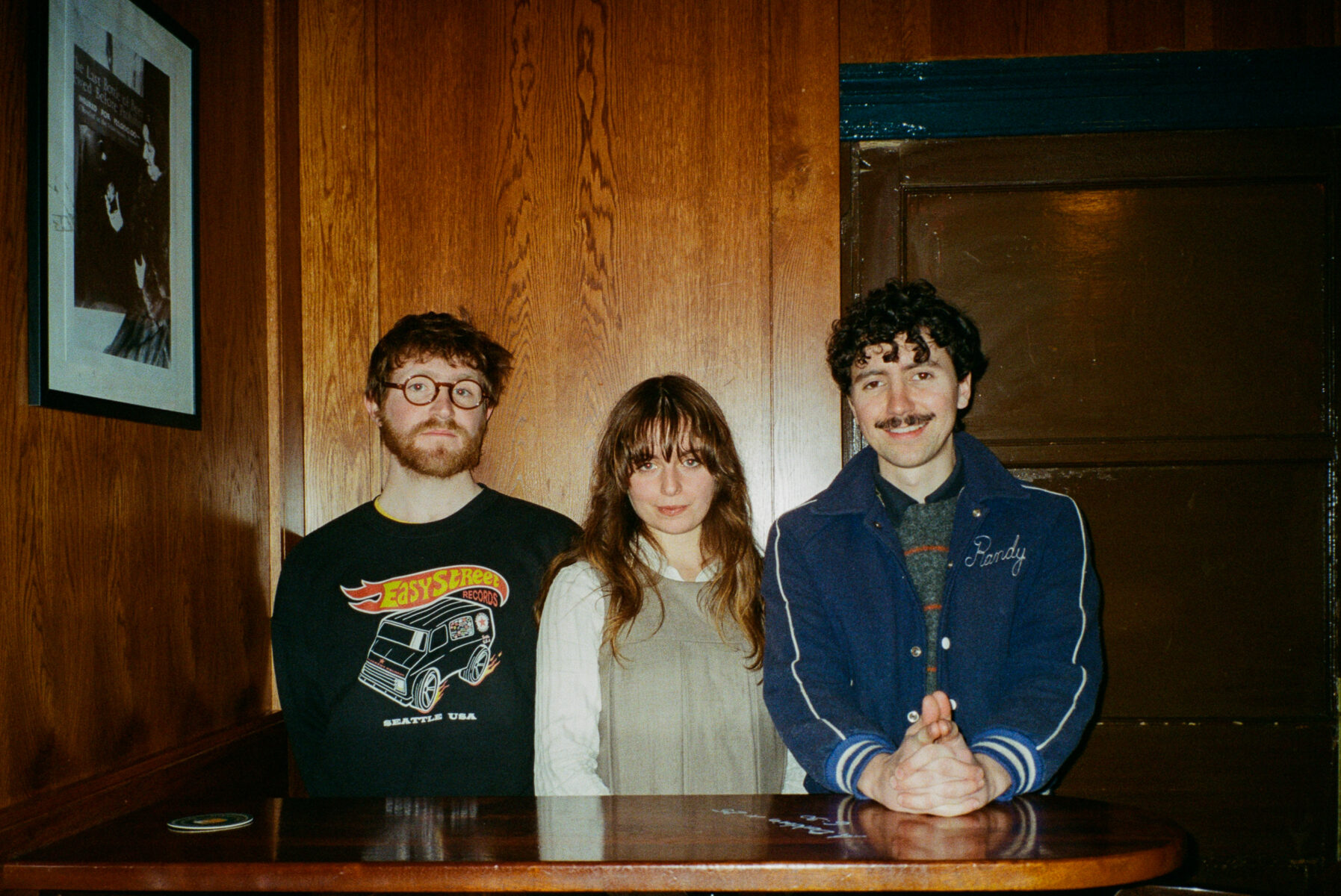

Forever Howlong is undoubtedly a comprehensive achievement. It sees the band members challenging their own musicianship, performing across several instruments each, with the three women—Hyde, Ellery and Kershaw—offering some of the most gorgeous songwriting you’re likely to hear this year. It is six sonic, academic and emotional perspectives blended into a folk-tinged mosaic that is pensive and resonant, and often idiosyncratically uplifting. There’s etches of Fiona Apple, of The Band, of Randy Newman and Joni Mitchell, and is a tapestry of feeling and fervour, of exploration and subtly. Black Country, New Road’s first two records are groundbreaking works, but in many ways this third opus is their most impressive; especially considering what they’ve overcome to make it. What the band has lost in Wood’s murky Byronism and instinctive genius, Forever Howlong more than makes up for in its brightening unison and deft understanding of the smallest details.
“I’d definitely call it the most accessible era that we’ve ever entered,” Hyde reflects. “There are more things on offer for more people. We’ve been very exclusive in our sound before, a lot of darkness, a lot of calling to a more specific kind of person that was not relatable for a lot of people—sometimes, myself included. But now it feels more expansive. More people will be able to find something in it.”
If their topsy-turvy tenure so far is anything to go by, it seems unlikely that the band will return sounding anything like they do on Forever Howlong. They’ll grow and evolve, as unassuming and unsure of any sort of resounding answer as ever. And that’s just how they like it. “No, I don’t think we’ll ever know,” Hyde concludes when quizzed as to whether the band know now what Black Country, New Road really means. “I sound like such a dick saying this, but it’s the truth: as soon as we know that, then we should just stop. Because that’s the full stop. At the end of this album, we got in a really good flow of how we wanted something to sound that we just ended up popping out songs that fit together and were concise. And ideally we would have gone on and made another album after that but we didn’t so therefore we’ve got places to go now that we didn’t get to go on this album. And it should constantly be like that. Therefore we’ll never know. And that’s a good thing.”
Listen to Forever Howlong…
See Black Country, New Road live in 2025—tickets here.
Words – Ben Tibbits
Photography – Bluebell Ross