“At 15, I spent Valentine’s Day with Taylor Swift. At 25, I am now the age that she was when I met her,” writes Sophie Wang.
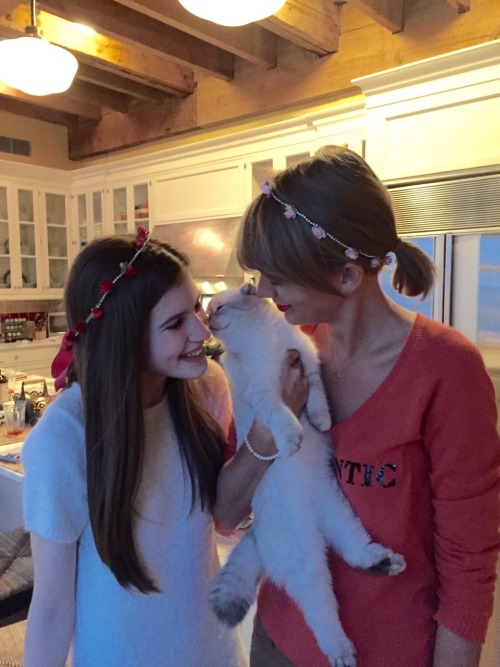
Growing up, I heard my dad tell the story of how he met Bruce Springsteen to anyone who would listen. Time and time again, he’d recall how he waited at the bar for the artist to finish up dinner before respectfully approaching him and ultimately shaking his hand. It was a counterargument to everyone who warned, “don’t meet your heroes.” I’d roll my eyes, but I knew — if I ever met Taylor Swift, I’d be telling the story over and over again for the rest of my life.
What I did not expect was for my dad to get to tell this story to Taylor, sitting around her kitchen counter drinking Shirley Temples on Valentine’s Day.
“There are no rules here!”
That’s the first thing I remember Taylor Swift saying as my family walked slowly into her Tribeca duplex. My dad, who did not suffer from the same momentary speech paralysis my 15-year-old self was struck with (hence his ability to share the Springsteen story), had quickly asked if we should remove our shoes. She shook her head and pulled us each in for a hug.
Taking the flowers from my mom’s arms and leading us into the kitchen, Taylor started showing us around. Her home was as intricate and warm as it was spacious, with vintage rugs over wood floors and walls covered in framed photographs. She had a pool table and a wet bar, and velvet and leather furniture infused with the scent of sandalwood. She waved us along on a tour through her home, pointing out the antique nightgowns in her guest rooms, a signed Oscar de la Renta sketch, Grammys, her cat Olivia, a framed photograph of her grandmother, and the piano she wrote my favourite songs on. (Later in the afternoon, we would sit there together as she’d sing “Wildest Dreams.”) This was not your average 25-year-old’s apartment, but then again, Taylor was not your average 25-year-old.
Back in the kitchen, which had a brighter feel than the cozy living room, I presented her with an eclectic array of presents I had put together — more flowers, letters, cat-shaped cookies, and a delicate string of pearl-white beads and little heart charms I had scoured the city for that morning, on a mission to find the perfect matching friendship bracelets. She slipped hers on, then placed a flower crown on my head before serving us sandwiches.
If you’re waiting for me to explain how this happened, here you go: Since I was about nine years old, when the Fearless album was released, I looked up to Taylor as a role model. She was the epitome of everything I wanted to be — hardworking and talented, yes, but also generous, witty, and strong-minded. I begged for tickets to her first headlining tour, then for each one following. I put on a sparkly dress and bedazzled my guitar for Halloween. I choreographed dance routines to Speak Now in my bedroom. I made a Tumblr account. (It’s hard not to tell this story without sounding like a stalker, but I swear I had a totally normal and only slightly parasocial relationship with her and her music growing up.)
Pretty soon, Taylor made her own Tumblr and began following fan accounts – mine included. She’d “like” album theories and bridge interpretations and memes, spending entire nights online with the rest of us. She invited groups of people to hear her record early and mailed “Swiftmas” packages to dozens of us. Then, one day, I posted that I was going to New York for the weekend to visit my sister, a freshman at NYU. And, long story short, Taylor invited my family and me to her home.
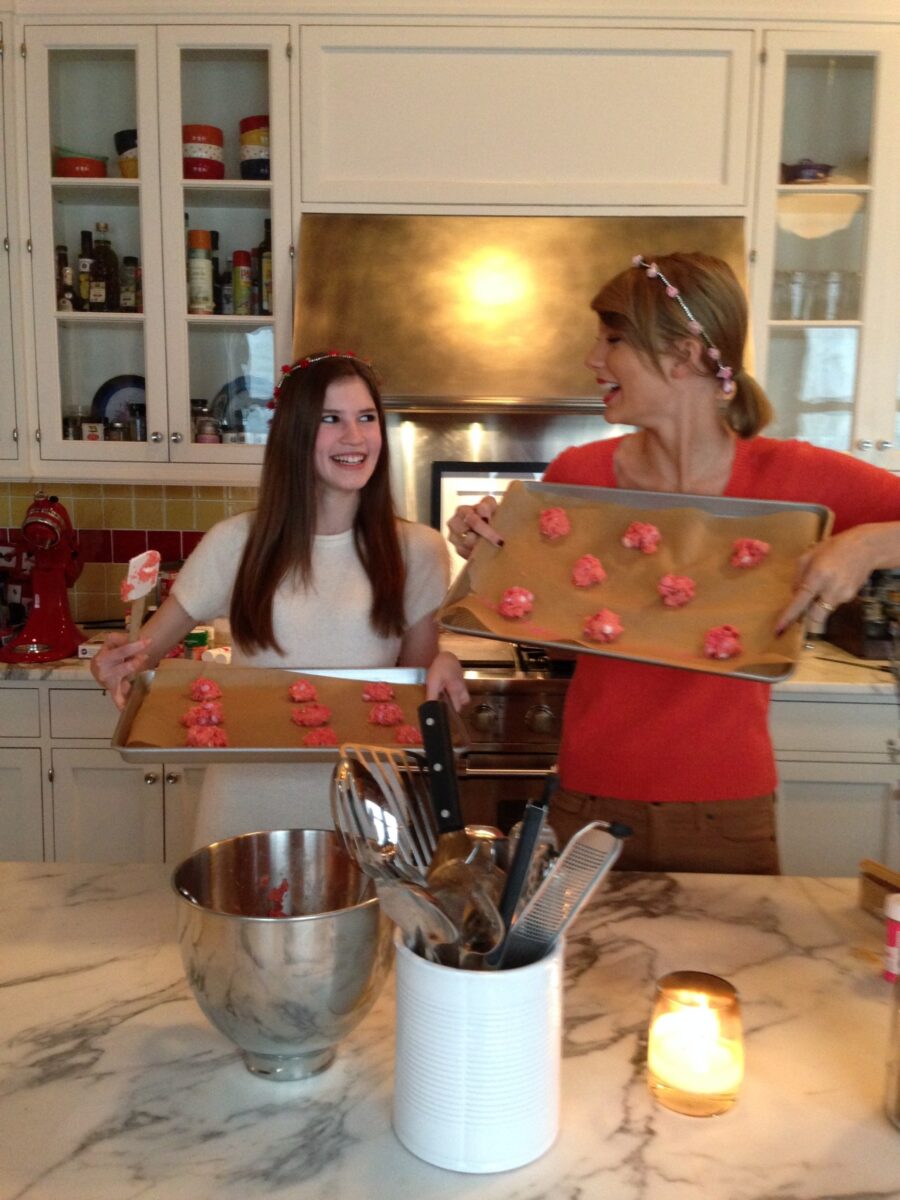
This was 2015, and as we ate lunch and baked pink cookies, we talked about her recently released “Style” music video. She asked about my sister’s college crushes and my dance competitions and we asked about her tour preparation, her family, and her favourite spots in Nashville. It was a few months after she released 1989, firmly making the definitive transition from country to pop, and she was — in my eyes at least – on top of the world. It was her era of girlfriends and singledom, of dipping her toes into conversations about gender equality and artists’ rights, of exploring a new city with a new haircut. In many ways, at age 25, she was in her first season of Friends. She was at the precipice of her entire life.

But in her career, she was almost a decade in. She had five studio albums, four of which went #1 on US charts. She had seven Grammys and three-going-on-four world tours under her belt. While the average 25 year old is just starting to build a career, she was already a veteran in hers. In fact, with songs like “The Lucky One,” a tale on Red grappling with fame and public perception, and “Nothing New,” a vault track added to the re-recorded version that touches on the fear of being replaceable, of the next shining star coming in and rendering her irrelevant, it is clear she was already worrying about the end.
While you could toss away these concerns to anxieties and insecurities, she wasn’t wrong. In 2016 — any Swiftie will remember the year — the hashtag #taylorswiftisoverparty went viral, trending around the globe as the world decided it was time for the popstar’s reign to end. It was the digital version of a guillotine, a crowd forming to point and laugh at the execution of a stranger, a young woman they never knew.
This Valentine’s Day, I will be the one who is 25 years old. I will have girls over for an evening of sparkling wine, chocolate hearts, and arts and crafts with doilies. We will talk about work and friends and dating, about life’s obstacles and the futures that lay ahead.
At 15, you think of 25-year-olds as adults. Then you reach 25, and in many ways, you still feel like a kid. You host dinner parties but burn the main course, declare you’re over gossiping then abandon all resolutions after a glass of wine, pay bills and then call your parents to make sure you did it right. You don’t have life all figured out, but you’re starting to know what you want it to look like when you do. And most of us live in rented apartments with roommates and faulty taps that remind us of the stage of life we’re in.
If you listen to 1989, it is full of the dichotomies of early adulthood, of metaphorical shiny new heels and old t-shirts. The world demanded perfection from her, when her music was powerful because it was real, because she was human, because she experienced all the emotional ups and downs like the rest of us. She made space for the parts of girlhood and womanhood that were previously trivialised, giving words to feelings we can’t describe and reminding us that no emotion is unworthy of being felt. She made an entire generation of young women feel seen, and then was crucified without the same empathy.

When Taylor released 1989 (Taylor’s Version), I gained a new understanding of the album I had long declared my favourite. Listening with fresh ears, new lyrics jumped out at me a decade after I committed them to memory, songs replaced others in my order of favourites, and I felt more connected to the artist than ever. While her life in the spotlight made it different from mine in so many ways, the emotions and headspace she wrote from back then were nearly identical to my own now. And I wasn’t surprised.
Thinking back to the young woman I met a decade ago, knowing what I know now about mid-twenties and what was to come for her, I look up to her more than ever before. I feel a new anger towards the 2016 spectacle and a new pride for how she climbed her way back from it. She is powerful today not because her career was a straight line to success, but because of the resilience she built to keep going even when others tried to push her down. She built a new foundation brick by brick, all while staying true to her core. Now, six albums and an additional four re-records since she fell down the rabbit hole, she’s at the top of her career once more. And though she still touches on the music industry’s habit of replacing women with younger versions in songs like “Clara Bow” on The Tortured Poets Department, she is living proof that the prophecy can be undone. The story, as she says in “The Manuscript,” isn’t hers anymore.
In my own life these days as a 25-year-old, living in a big city away from my family, working as a fashion and culture writer and spending my nights with my best friends (and cats), I feel Taylor’s influence daily. She is in the way I work towards what I want, in how I celebrate the things I love and remind the people in my life that I’m there, in how I bake cookies and let guests leave their shoes on, and how I try, every day, to use my words honestly and for good.
I tell the story of The Valentine’s Day I Spent With Taylor Swift often, but it takes on a different meaning as I get older – much like her albums do when I listen to the new versions she now owns. I’ve always emphasised her generosity, her humility, her kindness to me, but recently, I’ve found myself in awe of the young woman I met for reasons I never could have seen back then. When I tell the story now, I tell it in the context of her life and mine now. How during a time when Taylor was both at a peak in her career and the start of her adult life, she welcomed a teenage fan into her home and spent the afternoon with her. How normal she was in her abnormally nice apartment, sharing real stories from her unreal life.
I tell the story often, but rarely do I share the things she said and what we talked about. Maybe that’s to protect her privacy, maybe that’s because it’s too sacred to me, maybe a bit of both. Instead, I tell people about the young woman I met who was about to deal with the unimaginable, and how I can only hope to handle life’s obstacles with as much perseverance and grace as she did. I tell people that she instilled in my teenage self a sense of self worth, of confidence, of loyalty, of trust, of resilience, of determination, and that now, at 25, I’m learning what all that means all over again. I tell people she is a big part of why I am the way I am today — and I’ll tell anyone who will listen.
Words & Images — Sophie Wang
Taylor Swift
Taylor Swift
Taylor Swift


