Maker of the cult ‘Lit Clip’ worn by Dua Lipa, Hamburg-based American-Greek jewellery and objects designer Corrina Goutos talks upcycling and the multiplicity of her work with materials.

Words by Akanksha Kamath
Corrina Goutos
In a world where fast fashion reigns and trends disappear as quickly as they arrive, Corrina Goutos stands apart as a designer weaving sustainability, storytelling, and craftsmanship into every creation. For the Hamburg-based American-Greek artist, jewellery isn’t just an accessory—it’s a canvas, a conversation, and, often, a confrontation with the throwaway culture of our times. Her pieces blur boundaries between art and adornment, balancing playfulness with profound narratives. Think smashed porcelain figures fused with discarded AirPods or hair clips that double as miniature sculptures—each design is a dialogue between the natural and industrial worlds.
Sitting down with Goutos, it’s clear her creative journey began long before the launch of her eponymous brand. The designer’s childhood, shaped by a resourceful immigrant grandmother, instilled in her a sense of empowerment through making. By 14, she was crafting jewellery from Coca-Cola cans and selling her creations at craft fairs. Today, her pieces, worn by audiences from Berlin to Brooklyn, have been spotted on Dua Lipa and Erykah Badu. She’s also received recognition for her creativity, winning the Sustainability Prize at the ITS (International Talent Support) Awards and Vogue Talents, and appearing in a pop-up at Selfridges last March.
In a conversation with Wonderland, Goutos reflects on the challenges of staying fluid in a world that craves labels, the transformative power of materials, and her ongoing quest to reshape the way we wear and perceive jewellery. Keep scrolling to read the full interview…


All images are courtesy of Corrina Goutos
Corrina Goutos
Akanksha Kamath: Let’s start at the beginning. How long ago did you start your brand, and what inspired you to take the leap?
Corrina Goutos: It all began so organically for me. Honestly, I think I owe a lot of my creativity to my grandma. She passed away when I was six, but she was this incredibly resourceful woman—DIY out of necessity. She was a Dutch immigrant in the US with very little money, so she sewed her own clothes and did everything herself. I vividly remember this one birthday where I was looking through a toy catalogue and said, “I want this Barbie.” She just looked at me and said, “You already have a Barbie. What’s different about this one?” Then she had me bring my Barbie and my favourite dress. We cut off a bit of the dress, and she made a miniature version of it for my Barbie.
That was a defining moment for me. At just five years old, I felt this immense empowerment. I wasn’t the disadvantaged kid who couldn’t afford the fancy new toy. I was the kid with skills—the one who could create things others couldn’t buy. By the time I was 10 or 12, I was already making jewellery. At 14, I started selling at craft fairs. It was always in my blood.
AK: Wow. And what kind of pieces were you making back then?
CG: I was really into upcycling—making art from what others might consider trash. I remember cutting up Coca-Cola cans and turning them into jewellery. It was very folk art-inspired. The idea was to take something discarded and give it a new purpose. I’ve always been drawn to the concept of transforming waste into something valuable. Beyond that, I loved painting and sculpture, but jewellery was what tied it all together for me.
Eventually, I found the Savannah College of Art and Design (SCAD) in the US. They had this unique program called Jewellery and Objects, which was the perfect mix of fine arts, goldsmithing, and creative exploration. I graduated with a strong foundation in both technical and conceptual work.
AK: Jewellery and objects? That’s an unusual combination for a course. What did it actually entail?
CG: It was fascinating. Objects could range from metal teapots to sculptural works. I gravitated towards making sculptural pieces for the body. For me, the body was just another canvas.
We had these assignments where we’d create classical pieces but always had to infuse them with our own signature. It was a lot of mixing disciplines—goldsmithing for both jewellery and objects. The freedom to blur boundaries was what I loved most.
Corrina Goutos
Corrina Goutos
AK: You graduated in 2013 and moved to Berlin to start your brand. Did you face challenges as you built your brand? Especially since your work is interdisciplinary and doesn’t conform to traditional categories?
CG: So many challenges! I’ve always resisted being boxed in. I didn’t want to separate my work into “craft,” “fashion,” or “art.” It felt outdated to me. But staying fluid isn’t easy—it’s confusing for people. Sometimes I still wonder if I’m making it harder for myself.
One of the biggest challenges in the craft field was the romanticized idea of the maker transforming raw materials into masterpieces. It felt disconnected from reality—like we’re ignoring the value of the materials themselves, treating Earth’s resources as dormant things waiting for human intervention. I’ve always wanted to challenge that narrative.
AK: Your perspective on materials is fascinating, especially when you say, “there’s no such thing as a raw material.” What led you to this understanding, and how has it shaped your work?
CG: It’s true—nature has an intention for everything on this planet. The concept of “raw materials” is just a human construct. That’s why I’ve always gravitated towards found objects. They tell a story, they’ve had a life before me, and now I get to reinterpret that. I love a challenge, and I get bored working with the same materials for too long. I’ll often go to flea markets and let my intuition guide me. Amid the overwhelming chaos, certain objects will catch my eye—things that seem to have an inexplicable tension between them. I’ll buy them, take them to the studio, deconstruct them, and figure out why they spoke to me.
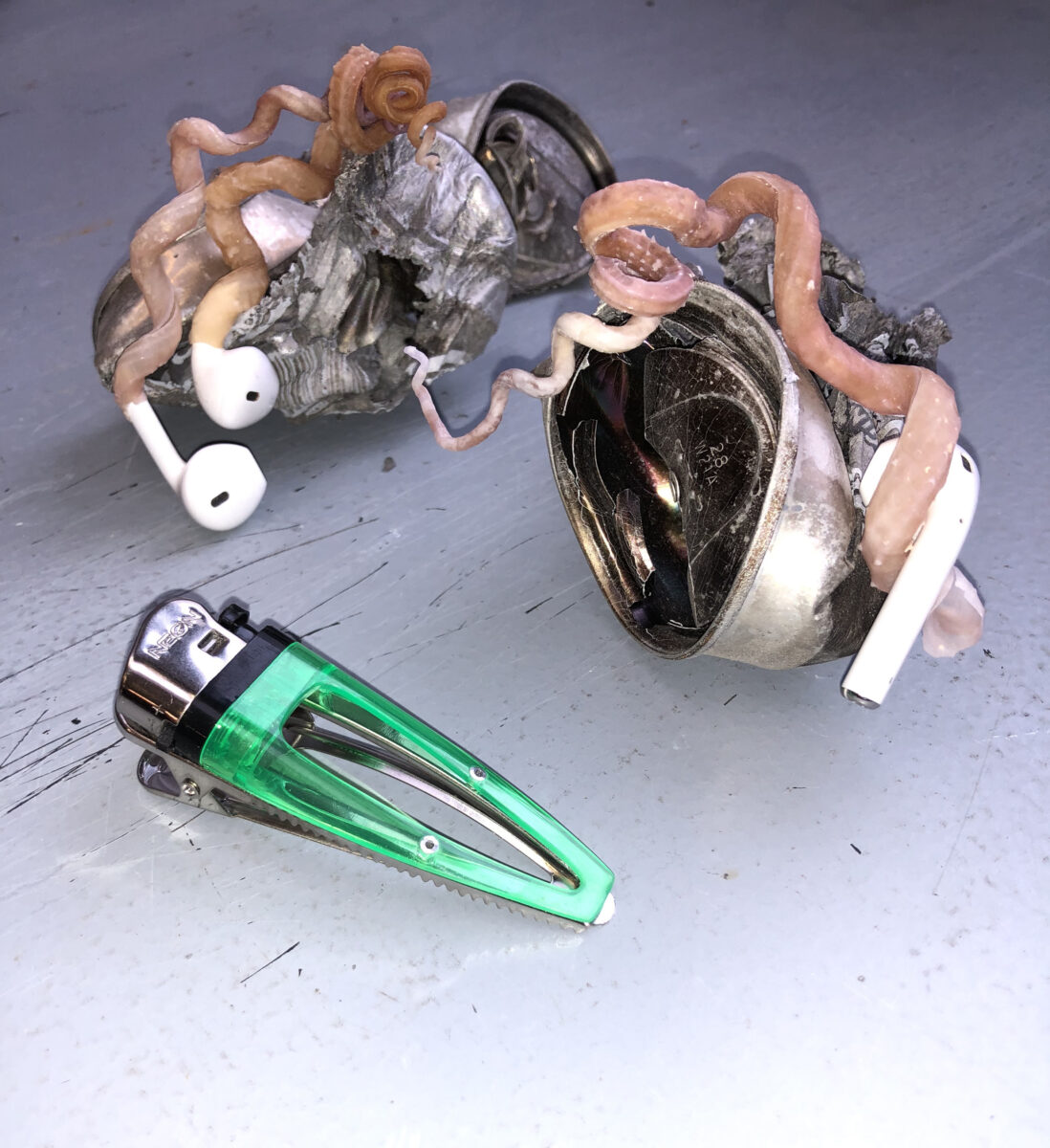
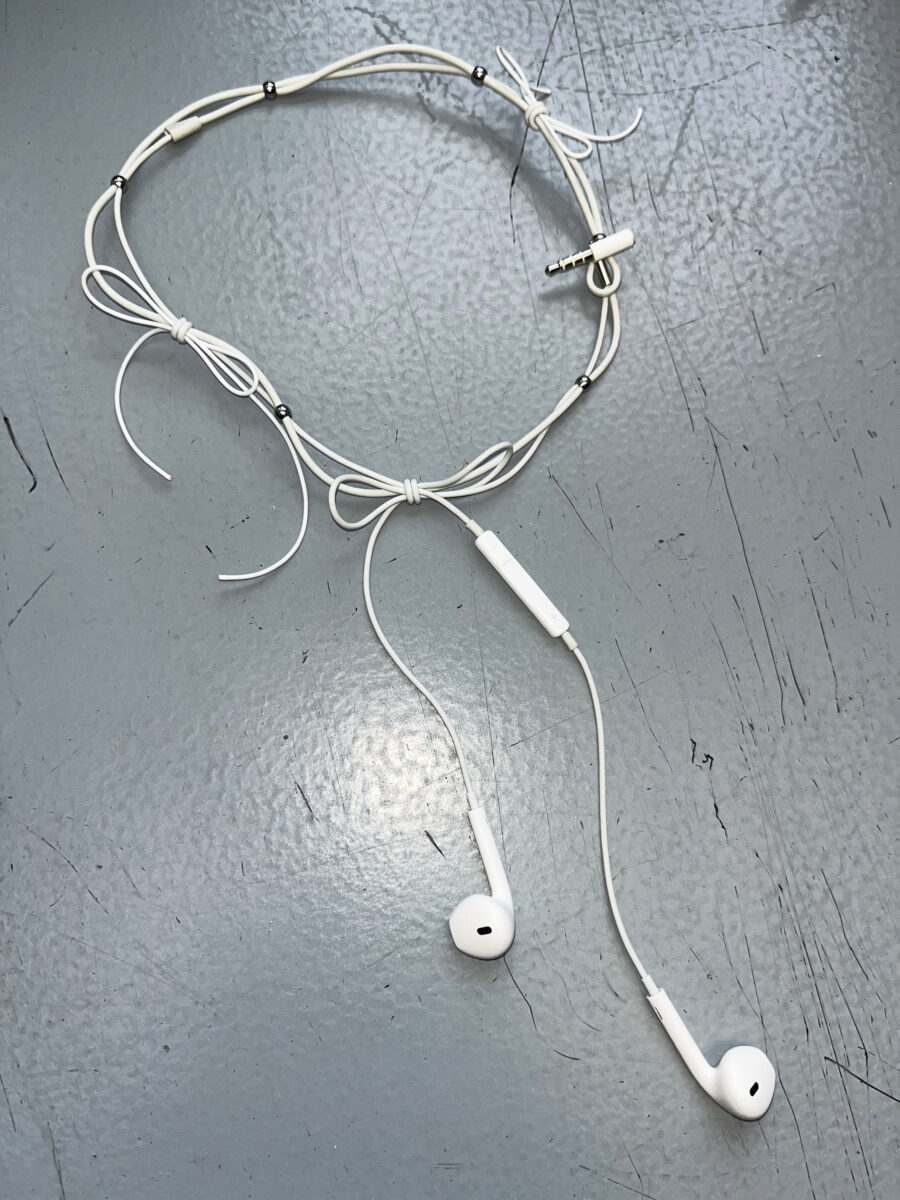
For example, when I was in Greece, I found myself drawn to these white porcelain figures—Buddhas, cherubs, angels. They reminded me of Apple products with their sleek, shiny surfaces. That unexpected connection led to a new collection combining smashed porcelain figures with discarded Apple tech like AirPods and their cases. It’s not something I could’ve planned—it’s about being present and receptive to what’s around me.
AK: You’ve often used post-consumer waste as your primary material. Why does that resonate with you?
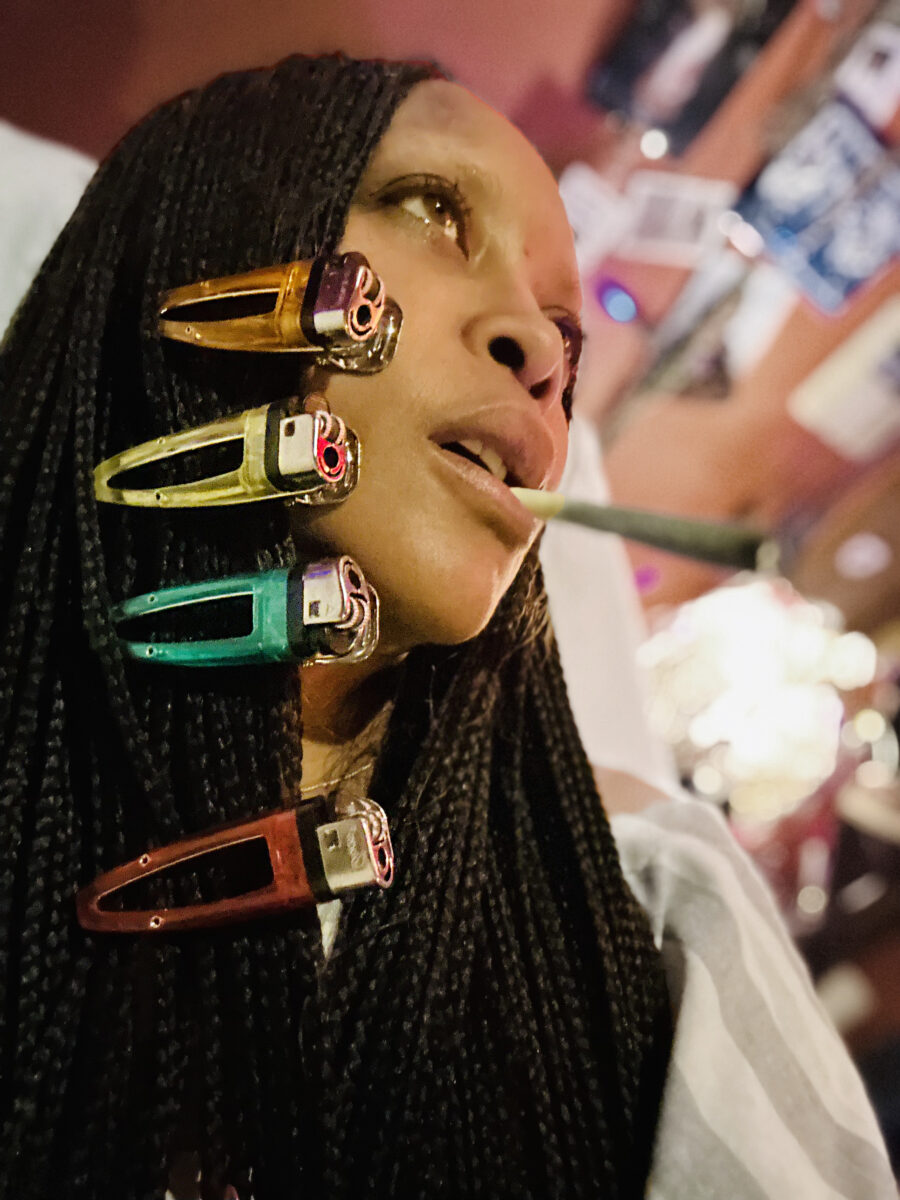
CG: Post-consumer waste is universal—it’s deeply familiar. I love playing with those tactile memories and subverting expectations. For instance, my lighter hair clip merges two everyday objects everyone recognizes: the silhouette of a lighter and that of a hair clip. It’s surreal yet obvious once you see it.
I never take jewellery too seriously. I enjoy referencing traditional tropes—beauty, femininity—but in a playful way. The lighter is more masculine, the hair clip feminine. Together, they create this tension: Is it girly? Is it something else entirely? It’s that ambiguity that excites me.
Corrina Goutos


Corrina Goutos
AK: And that playful approach seems to resonate with so many audiences. Even Dua Lipa has worn your pieces multiple times! How did that happen?
CG: It was such a sweet surprise. She bought some hair clips directly from my site—no stylist, no special request. I remember seeing her name on the order and thinking, “This sounds familiar.” A quick Google search confirmed it was the Dua Lipa.
Later, she posted photos wearing my designs, including pieces she hadn’t even purchased. Someone must have gifted her more of my work. That first post in 2021 changed everything—I made my annual income in a month. I was crying in my studio, overwhelmed by the orders. It’s amazing how life can shift overnight.
AK: Despite being a one-woman show, you’ve had some incredible moments over the years. Apart from Dua Lipa, are there other celebrity highlights?
CG: Oh, Erykah Badu! She’s an absolute angel. I’ve loved her music since I was young—I’m a huge fan of hip hop, R&B, and soul. FKA Twigs wore a big shell piece for her album artwork. Her stylist reached out, saying she loved my work, and they borrowed some pieces. It’s surreal because I manifest these connections—I jot down names of people I admire, and somehow, they find me!
AK: How do you approach creating your collections? Do you work seasonally or follow another rhythm?
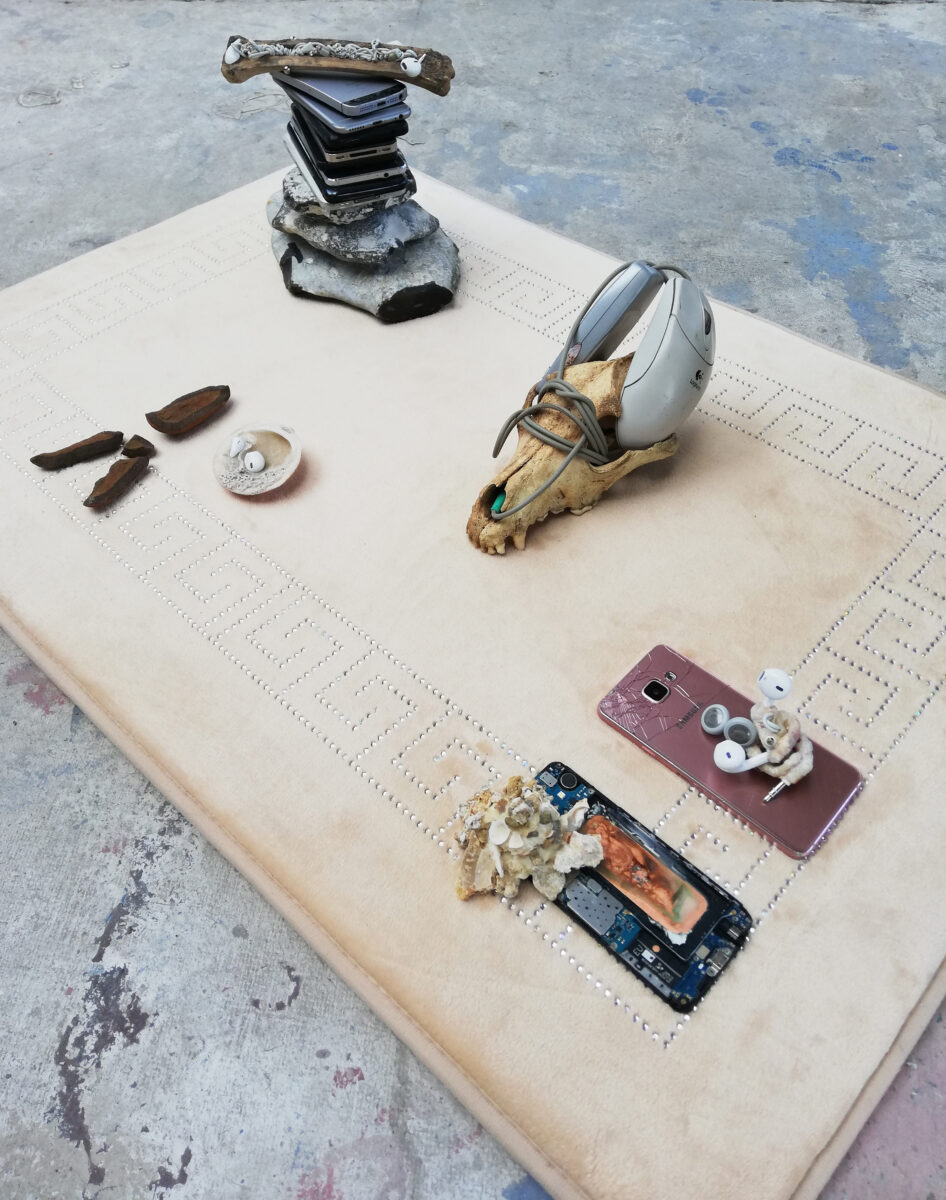
CG: It’s pretty fluid. I don’t follow traditional fashion cycles. My process usually starts with larger art installations, which act like sketches. They’re loose, experimental, and allow me to explore materials and concepts freely. From there, I distill elements into more polished jewellery or wearable pieces. Sometimes I focus entirely on art; other times, I’ll dive into creating multiples of wearable designs. It all feeds into each other.
AK: You’ve described your brand as “anthro smithing.” What does that mean?
CG: It’s about reimagining the role of the traditional smith in the Anthropocene—the era we’re in now, defined by humanity’s impact on the planet. My work always carries traces of the human touch, whether it’s wearable or part of a gallery installation. It’s about bridging the material world with human expression. I also think of it as the “extended body”—everything I create connects back to the body, either physically or metaphorically. My focus remains on staying fluid and pushing boundaries. Whether it’s jewellery, installations, or new forms of expression, I want to keep exploring the tension between materials, the body, and the environment. There’s so much more to discover, and I’m excited for where the journey will take me next.
Corrina Goutos
Corrina Goutos
AK: Speaking of materials, you’ve been working with shells recently. Why did you choose them?
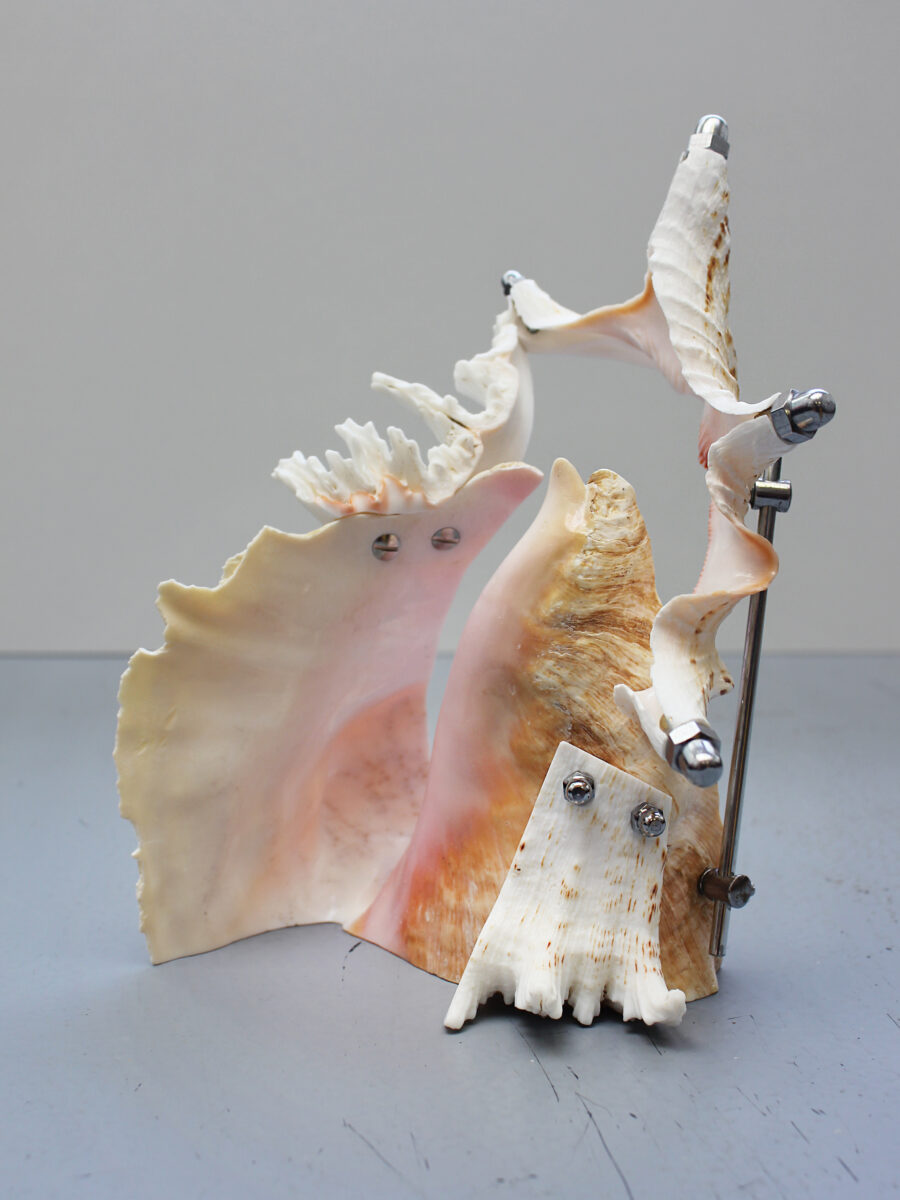
CG: There are so many reasons, I could talk all day. Shells really visualize this visceral connection to nature. They evoke awe, wonder, and appreciation for the earth. There’s something so intrinsic to humankind about finding a shell and thinking, “What is this? How is this masterpiece even possible?” It’s magical and otherworldly.
On a deeper level, shells also carry a feminine energy. They can symbolize girlhood, even resembling a vulva, which adds another layer to their meaning. I love juxtaposing that with industrial materials—creating this tension between the natural and the manmade.
AK: That’s such a beautiful way to look at it. And shells are so timeless, right? I think of kids collecting them on the beach, marveling at the colours and shapes.
CG: Exactly. They represent this magical thing we’ve respected for centuries. In fact, shells are the oldest known form of jewellery. Humans have always adorned themselves with objects tied to meaningful experiences—tokens from the earth that carry a memory, like the first time you visited a beach.
Even now, we still put shells on a string and wear them, feeling connected to the earth. Shells were also seen as divine objects in many cultures and even used as currency. But colonisers erased that—they couldn’t allow people to just “find money.” They imposed their own systems of trade, stripping shells of their sacredness and turning them into another exploited resource.
I love playing with those loaded narratives—the tension between heritage and the erasure imposed by Western systems. That history gives shells an added layer of meaning in my work.
Corrina Goutos
Corrina Goutos
AK: You’ve also worked with porcelain. How does it compare to shells?
CG: Porcelain shares some qualities with shells—it’s beautiful, smooth, and timeless—but it’s also incredibly durable. That gives me confidence in the final pieces. I’m exploring ways to combine porcelain and shells, maybe even integrating headphones or other tech elements. It’s all about experimenting and finding what works.
AK: Your use of post-consumer waste is so innovative. What materials are you drawn to next?
CG: I’m obsessed with MacBook aluminum right now. My friends have donated their old MacBooks, and I want to transform them into organic, fluid forms. It’s about making something industrial feel alive, revealing its vitality in a surprising, surreal way.
AK: What does your studio look like?
CG: It’s in Hamburg—a small, 25-square-meter space with lots of windows. I have a custom oval table with four workstations, and I move around constantly. Most jewellers sit at one bench, but I embrace my ADHD and keep it dynamic. If I don’t feel inspired, I switch to something else. There are no rules.
AK: Looking ahead, what’s next for your brand?
CG: I hope to keep straddling all the categories I work in—wearables, art installations, and larger objects. I’d love to experiment with functional art, like chairs, while staying selective about projects. For now, I’m grateful for everything that’s happened and just want to keep building on this momentum.
AK: What strikes me about your work is how it marries narrative and functionality. There’s a larger picture at play, but the pieces are also so accessible and wearable.
CG: Exactly. I love the relatability of jewellery. It’s totemic—it carries meaning but also integrates into everyday life. I don’t want my work to feel too highbrow or inaccessible. Whether it’s the concept or the price point, I try to create access points for everyone.
Visit corrinagoutos.com for more information.